


When most people think of the "Executive Branch," they immediately picture the President of the United States delivering a televised address or signing a high-profile bill into law. While the President is the visible face of executive power, the actual implementation of law, the management of the economy, and the protection of public safety are carried out by a massive, complex network of thousands of individuals and agencies. To understand the executive, one must look beyond the Oval Office and examine the vast bureaucratic machinery that powers the modern state.
The Visible Executive: The Presidency
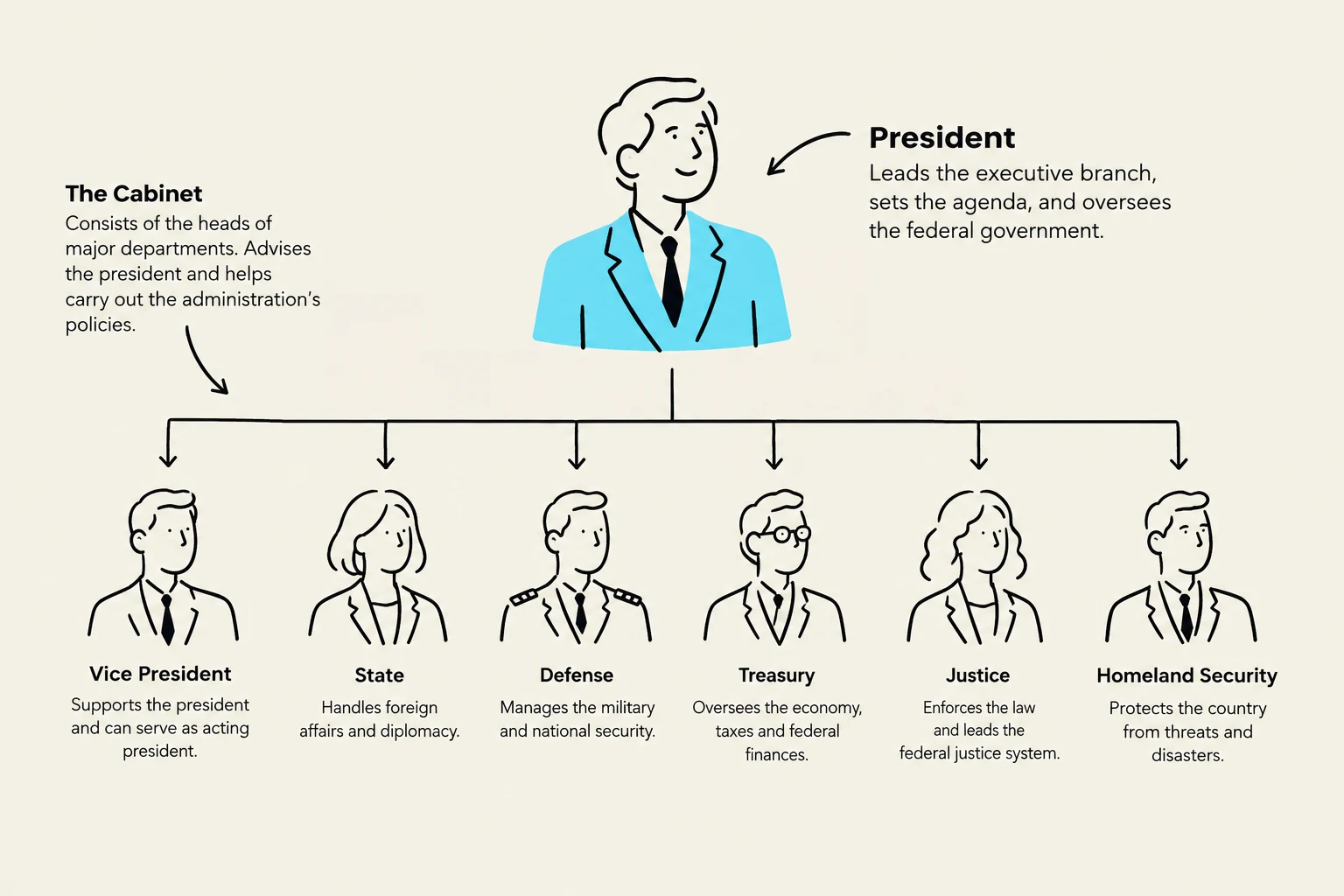
The President serves as the head of the executive branch, acting as the chief executive, commander-in-chief, and the primary diplomat of the nation. The President’s role is to ensure that the laws passed by the legislature are "faithfully executed." However, the President cannot personally manage the millions of tasks required to run a country. Instead, the President relies on a hierarchy of political appointees and professional staff to translate policy goals into action.
This relationship creates a fundamental tension: the President has the authority to direct the branch, but the sheer scale of the government makes total control nearly impossible.
The Invisible Executive: The Bureaucracy
Beneath the President lies the bureaucracy—a vast network of departments (like the Department of Defense), agencies (like the EPA), and commissions (like the SEC). Unlike the President, who is elected every four years, most members of the bureaucracy are career civil servants. They are hired based on expertise and merit rather than political affiliation, providing the government with institutional memory and technical stability.
Keep reading for free.
Create an account to finish this reading and make it part of your study routine.
Continue reading freeAlready have an account? Log in
Updated