


Economics is often described as a social science, but it relies heavily on rigorous logical frameworks to make sense of a complex, ever-changing world. To navigate this complexity, economists use a specific mental framework known as the economic way of thinking. This approach is not just about studying money or markets; it is a method of logical reasoning designed to isolate variables and predict how changes in one part of a system will affect another.
However, even the most disciplined thinkers can fall into logical traps. Because the real world is messy and interconnected, applying economic logic requires a high degree of precision. If we are not careful, we can arrive at conclusions that are mathematically sound but practically false.
The Role of Economic Models
At the heart of the economic way of thinking are models. A model is a simplified representation of reality used to understand and predict the impact of changes in economic variables. Think of a model like a map: a map of a city doesn't show every single blade of grass or every pebble on the road, because doing so would make the map too cluttered to be useful. Instead, a map simplifies the world to show only the most important features, like streets and landmarks, so you can navigate effectively.
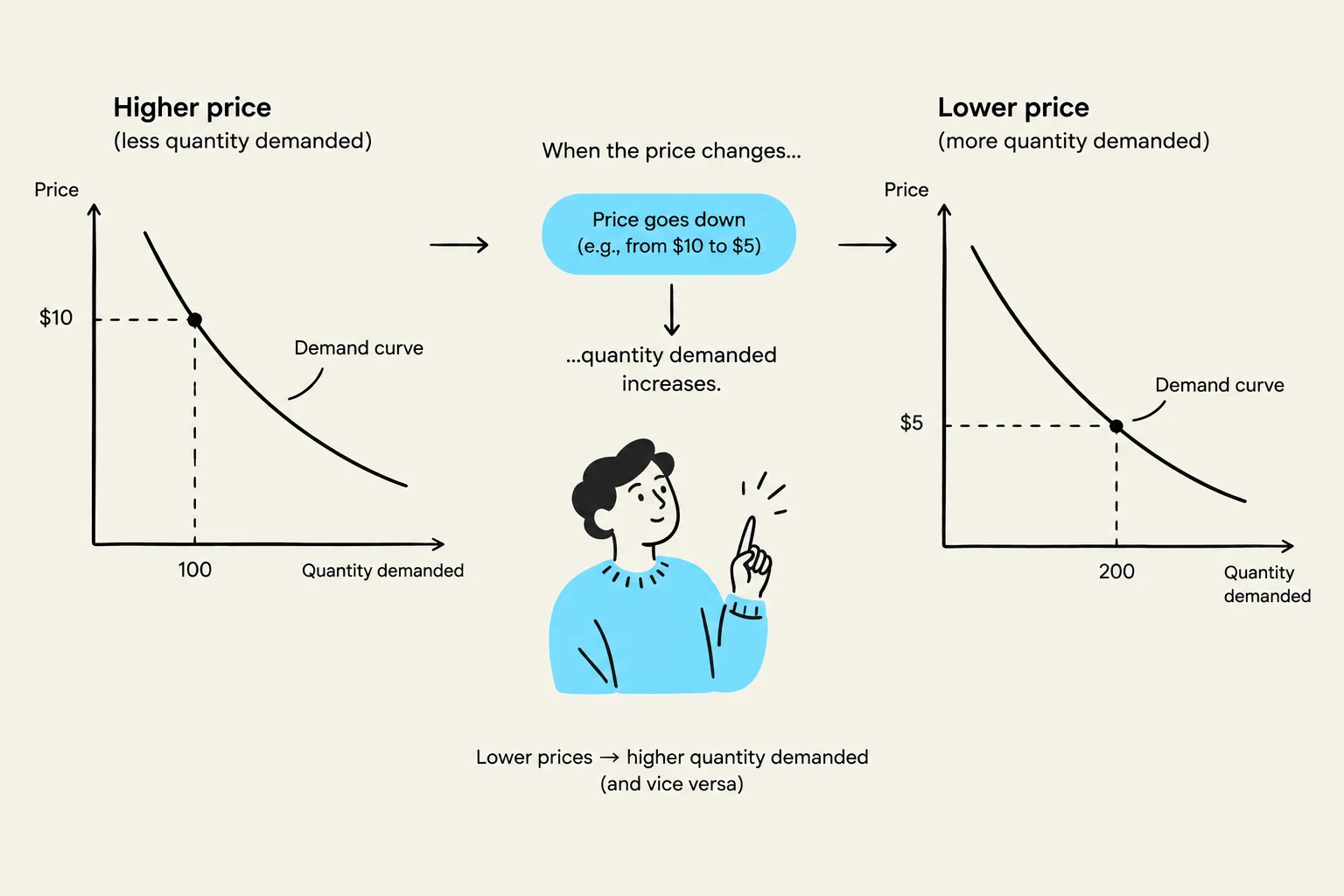
In economics, models simplify the world by focusing on a few key variables—such as price, quantity, or income—while ignoring the infinite "noise" of the real world. This simplification allows economists to test hypotheses and predict outcomes.
Keep reading for free.
Create an account to finish this reading and make it part of your study routine.
Continue reading freeAlready have an account? Log in
Updated