


Understanding the relationship between mental health and physical rest is essential for psychological well-being. Stress and sleep do not exist in isolation; rather, they share a bidirectional relationship where high stress levels negatively impact sleep quality, and poor sleep quality further exacerbates stress levels. This cycle can create a self-sustaining loop that impacts both physiological and psychological health.
The Mechanisms of Stress
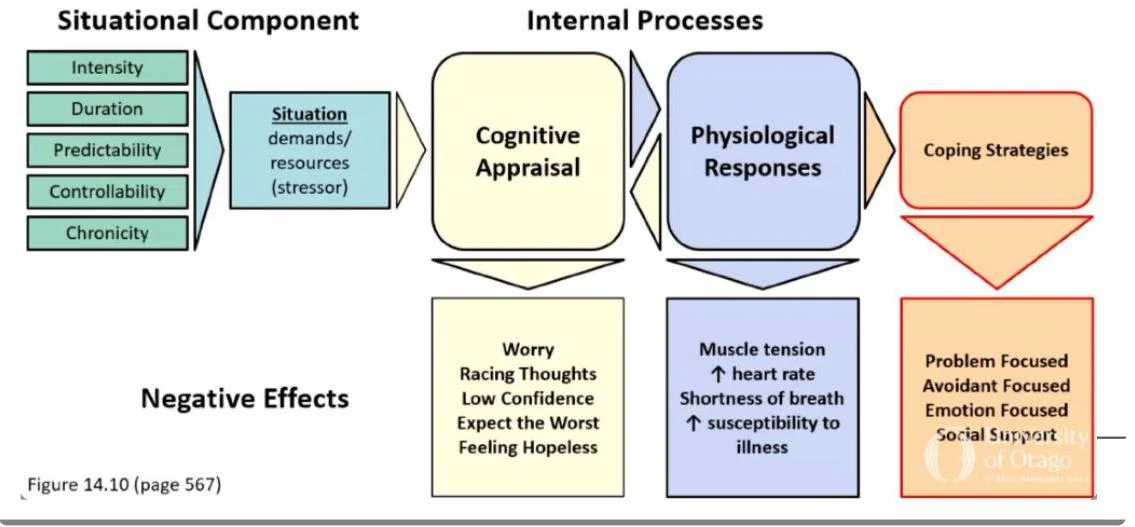
Stress affects the body and mind through two primary pathways: physiological activation and psychological interference.
Physiological Impacts
When we encounter stressors, our body initiates a biological response to prepare for action. This involves the activation of the HPA axis (Hypothalamic-Pituitary-Adrenal axis) and the SAM system (Sympathetic Adrenal Medullary system). These systems release hormones like cortisol and adrenaline, which increase heart rate and alertness—states that are fundamentally incompatible with the relaxation required for sleep.
Psychological Impacts
Beyond the physical "fight or flight" response, stress manifests through cognitive processes. This includes anxiety, rumination (repetitive thinking about problems), and racing thoughts. These mental states prevent the brain from "switching off," making it difficult to transition into sleep.
Exam Tip: If asked about the relationship between stress and sleep, always use the term "bidirectional" to indicate that the two factors influence each other in a circular fashion.
Understanding Insomnia
Insomnia is more than just a "bad night's sleep." It is clinically characterized by dissatisfaction with sleep for at least three months. It is important to distinguish between two different dimensions of sleep:
Keep reading for free.
Create an account to finish this reading and make it part of your study routine.
Continue reading freeAlready have an account? Log in
Updated