Understanding the Autonomic Nervous System and Its Pharmacology
This content provides a comprehensive overview of the Autonomic Nervous System (ANS), detailing the functions of the Sympathetic (SNS) and Parasympathetic (PSNS) branches. It explains their neurotransmitters, receptors, physiological responses, and how various medications interact with these systems, covering adrenergi
The Autonomic Nervous System (ANS) is the silent conductor of our internal orchestra, orchestrating vital involuntary functions without conscious thought. It's a crucial division of the Peripheral Nervous System (PNS) that maintains the delicate balance of our internal environment, known as homeostasis. The ANS achieves this through two primary, often opposing, branches: the Sympathetic Nervous System (SNS) and the Parasympathetic Nervous System (PSNS). Understanding their roles, the chemicals they use, and how medications interact with them is fundamental to comprehending many physiological processes and therapeutic interventions.
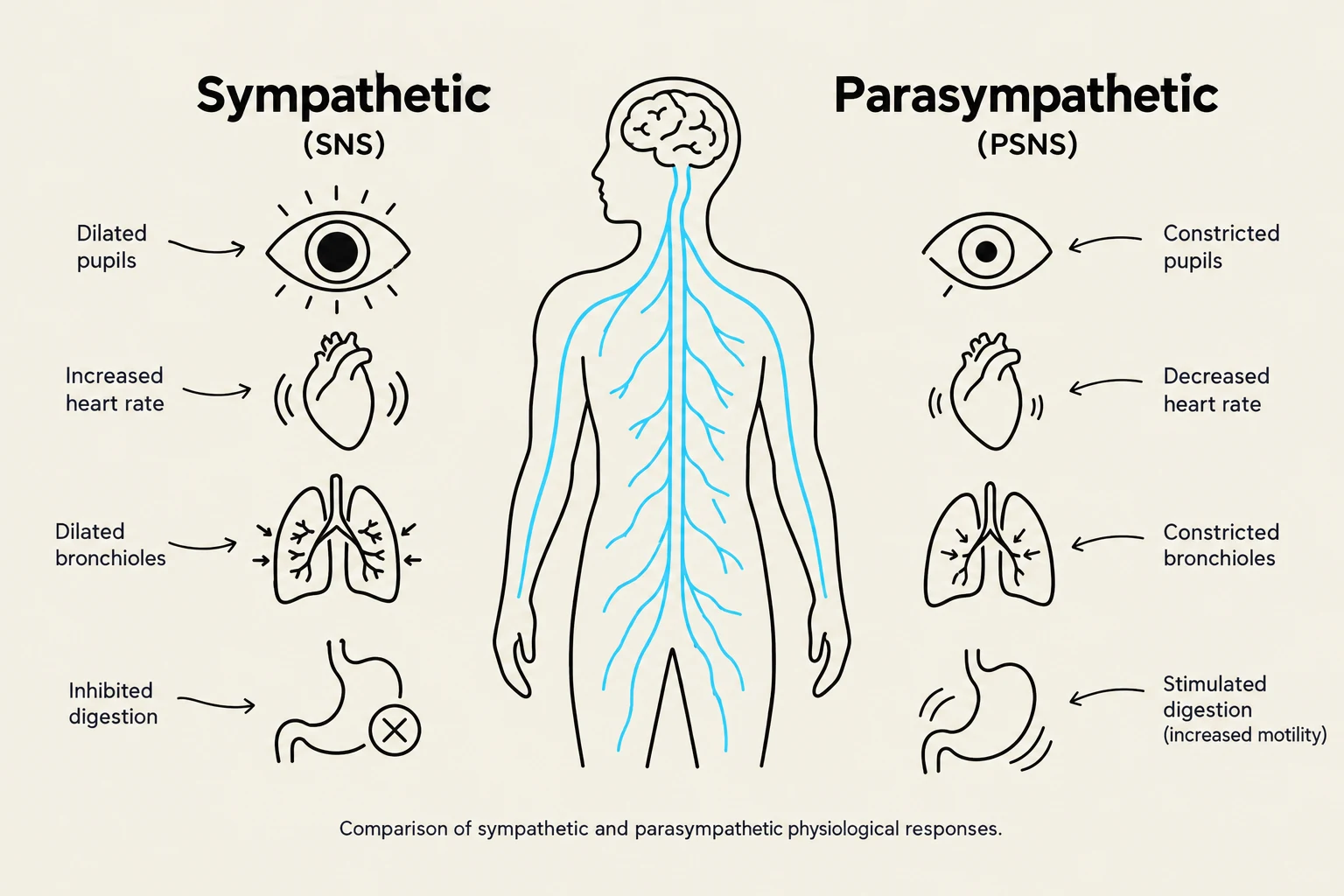
Comparison of sympathetic and parasympathetic physiological responses.
The Sympathetic Nervous System: "Fight or Flight"
The Sympathetic Nervous System (SNS) is our body's alarm system, preparing us to face perceived threats or engage in strenuous activity. This is famously known as the "Fight or Flight" response. When activated, the SNS triggers a cascade of physiological changes designed to mobilize energy and resources.
Neurotransmitters and Receptors of the SNS
The primary chemical messengers of the SNS are Norepinephrine (NE) and Epinephrine, both classified as catecholamines. These neurotransmitters exert their effects by binding to specific Alpha (α) and Beta (β) receptors located on target cells.
Norepinephrine (NE): Primarily released at sympathetic nerve endings, NE's main role is to cause vasoconstriction, thereby increasing blood pressure.
Epinephrine: Released from the adrenal medulla into the bloodstream, epinephrine has more widespread effects, influencing various organs and systems.
Physiological Responses of the SNS
The activation of the SNS leads to a range of noticeable effects:
Cardiovascular: Increased heart rate, force of contraction, and electrical conductivity (automaticity).
Metabolic: Stimulation of glycogenolysis (breakdown of glycogen into glucose) and gluconeogenesis (synthesis of glucose from non-carbohydrate sources) in the liver, and lipolysis (breakdown of fats) in adipose tissue, all aimed at increasing available energy.
Respiratory: Bronchodilation, widening the airways to allow for greater oxygen intake.
Ocular: Pupillary dilation (mydriasis), enhancing vision in low light conditions.
Gastrointestinal and Urinary: Decreased gastrointestinal motility and relaxation of the bladder detrusor muscle, along with constriction of the urethral sphincter, which conserves resources during stress.
Alpha and Beta Receptors
The specific effects of SNS activation depend on which receptors are stimulated:
Alpha (α) Receptors: Primarily found on smooth muscle of blood vessels, α1 receptor activation leads to vasoconstriction, increasing blood pressure.
Beta (β) Receptors:β1 receptors are predominantly found in the heart, increasing heart rate and contractility. β2 receptors are located in the lungs and smooth muscle, mediating bronchodilation and vasodilation in certain vascular beds.
The Parasympathetic Nervous System: "Rest and Digest"
In contrast to the SNS, the Parasympathetic Nervous System (PSNS) is responsible for conserving energy and promoting "housekeeping" functions. This is known as the "Rest and Digest" response. The PSNS helps the body return to a state of calm and recovery after periods of stress.
Neurotransmitter and Receptors of the PSNS
The primary neurotransmitter of the PSNS is Acetylcholine (ACh), a cholinergic transmitter. ACh acts on two main types of receptors: Nicotinic and Muscarinic receptors.
Nicotinic Receptors: These receptors are found at the neuromuscular junction, mediating voluntary muscle movement (N1 receptors), and in autonomic ganglia (N2 receptors), where they stimulate the release of various neurotransmitters.
Muscarinic Receptors: These receptors (M1-M5) are located on target organs and are responsible for mediating the "rest and digest" functions.
Physiological Responses of the PSNS
The PSNS promotes actions that conserve energy and restore the body:
Cardiovascular: Decreased heart rate.
Respiratory: Bronchoconstriction.
Gastrointestinal: Increased motility and secretion, aiding digestion.
Ocular: Pupillary constriction (miosis).
Urinary: Contraction of the bladder detrusor muscle and relaxation of the urethral sphincter, promoting urination.
Maintaining Homeostasis: Autonomic Tone and Reflexes
The continuous interplay between the SNS and PSNS, known as autonomic tone, is crucial for maintaining homeostasis. This balance is further regulated by autonomic reflexes. Specialized sensory receptors, such as baroreceptors (which detect changes in blood pressure) and chemoreceptors (which monitor blood pH and CO2 levels), provide feedback to the central nervous system, primarily the hypothalamus, allowing for adjustments to maintain stable internal conditions.
Signal Transduction
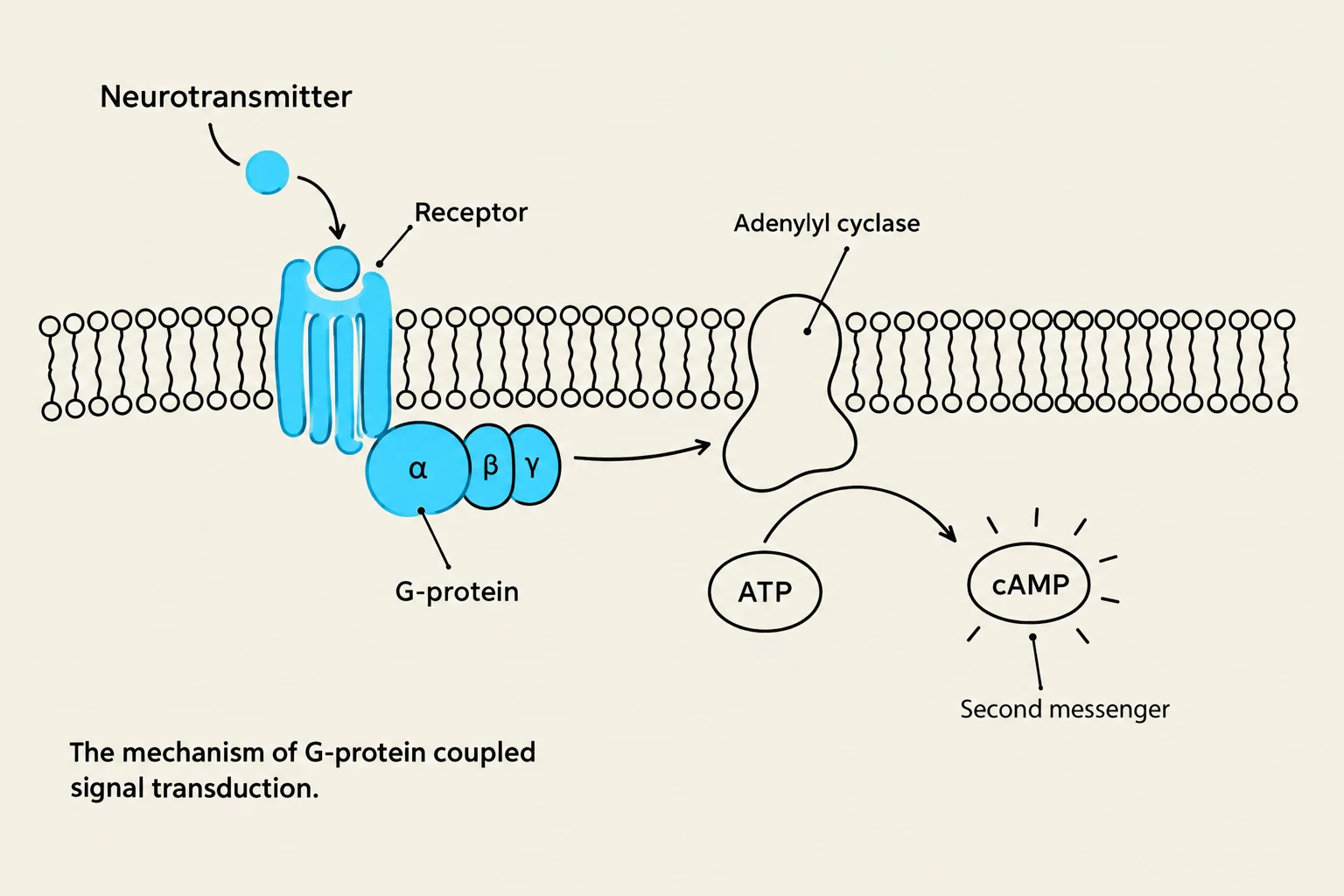
The mechanism of G-protein coupled signal transduction.
At the cellular level, autonomic responses are often mediated by signal transduction mechanisms. A first messenger (like a neurotransmitter or hormone) binds to a receptor on the cell surface. This binding often activates a G-protein, which then triggers an enzyme (e.g., adenyl cyclase) to convert ATP into a second messenger (e.g., cAMP). This second messenger then initiates a cascade of intracellular events leading to the physiological response.
Autonomic Pharmacology: Medications and Their Actions
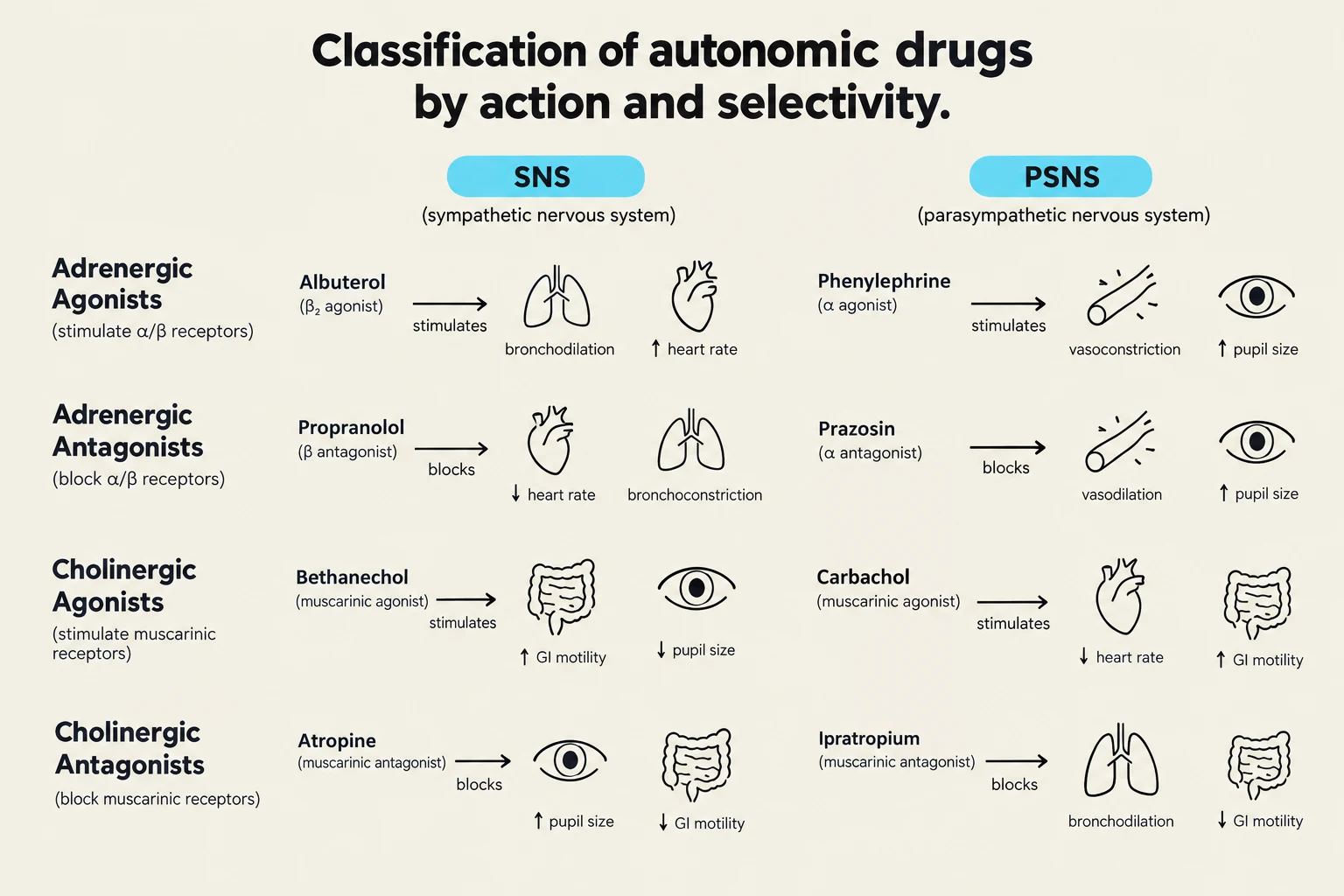
This diagram classifies autonomic drugs based on their action and selectivity, differentiating between the sympathetic nervous system (SNS) and the parasympathetic nervous system (PSNS). It illustrates various agonists and antagonists, their target receptors, and their effects on organs like the lungs, heart, pupils, and gastrointestinal tract.
Understanding the ANS is vital for pharmacology, as many medications target its receptors. Drugs are classified based on their selectivity (whether they affect one or multiple receptor types) and their action as agonists (stimulating receptors), antagonists (blocking receptors), or partial agonists (having intermediate effects).
Key Drug Classes
Adrenergic Agonists (Sympathomimetics): These drugs mimic the effects of the SNS. Examples include Albuterol (a β2 agonist used for bronchodilation) and Clonidine (an α2 agonist used to lower blood pressure).
Adrenergic Antagonists (Sympatholytics): These drugs block the effects of the SNS. α1 blockers cause vasodilation and lower blood pressure. β-blockers, such as Propranolol and Metoprolol, reduce heart rate and blood pressure.
Cholinergic Agonists: These drugs stimulate the PSNS. Examples include Bethanechol (used to treat urinary retention) and Pilocarpine (used to treat glaucoma).
Cholinergic Antagonists (Anticholinergics): These drugs block the effects of the PSNS. Atropine (used to increase heart rate and dilate pupils) and Scopolamine (used for motion sickness) are common examples.
Exam Tip: When considering autonomic medications, always think about the primary neurotransmitter and receptor involved, and whether the drug is an agonist or antagonist. This will help predict its effects on the body. For example, a β-blocker will decrease heart rate because it blocks the action of norepinephrine and epinephrine on β1 receptors in the heart.
By understanding the intricate balance and opposing actions of the sympathetic and parasympathetic nervous systems, we gain insight into how our bodies maintain internal stability and respond to the demands of our environment. This knowledge is foundational for comprehending human physiology and the mechanisms of numerous therapeutic interventions.
Keep reading for free.
Create an account to finish this reading and make it part of your study routine.