


Why do some people find it easy to head to the gym after a long day of work, while others struggle to find the motivation to even put on their running shoes? The answer often lies in the complex interplay between our immediate feelings and our long-term goals. The Affective-Reflective Theory (ART) provides a psychological framework to explain and predict these decisions, focusing on how we process information through both automatic and deliberate pathways.
The Core of Affective-Reflective Theory
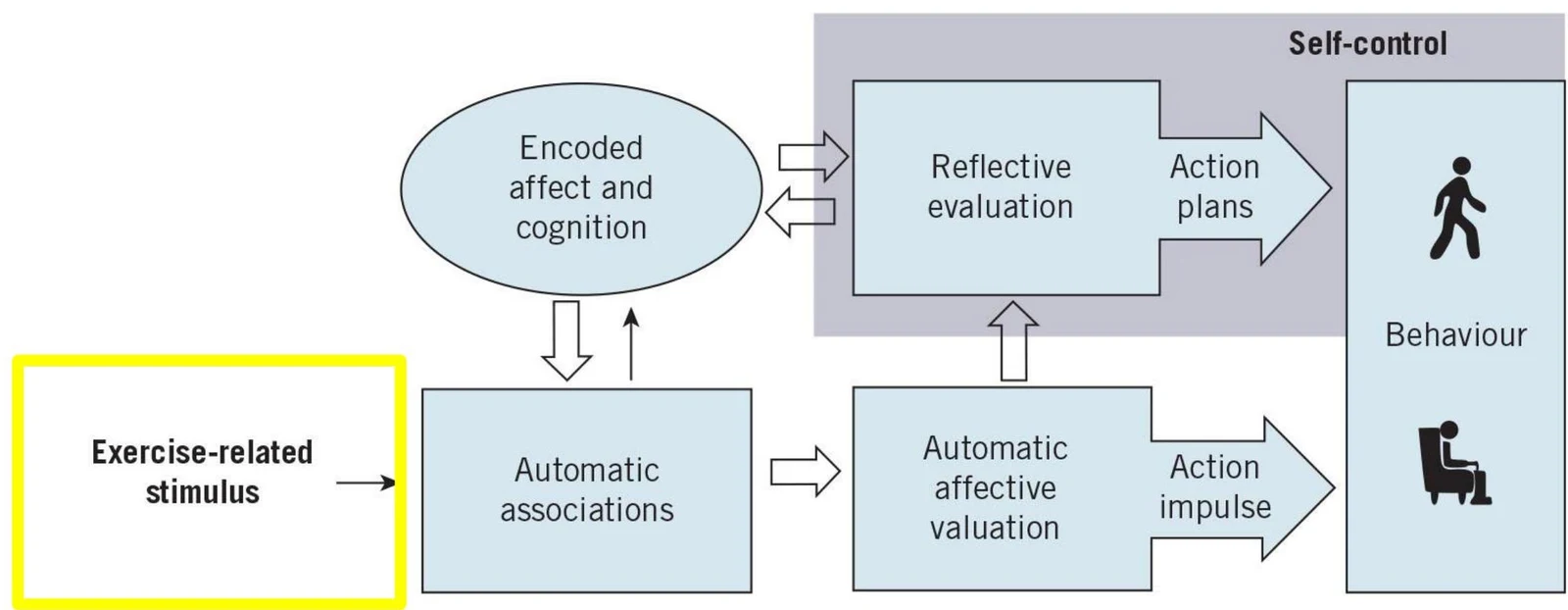
The Affective-Reflective Theory was developed to understand the decision-making processes that lead to physical activity or inactivity. At its heart, the theory suggests that our behavior is triggered by various stimuli—such as a notification from a smartwatch, a reminder that exercise is healthy, or even the physical sensation of being out of breath while climbing stairs.
Once a stimulus is encountered, it triggers two distinct types of cognitive processing: Type 1 (automatic) and Type 2 (reflective).

Type 1 Processes: The Automatic Pathway
Type 1 processes are "non-conscious" in nature. They are fast, require minimal effort, and operate without our active awareness or control. When we encounter an exercise-related stimulus, Type 1 processing creates an immediate mental connection between that stimulus and a feeling.
Automatic Affective Valuations
A key component of Type 1 processing is automatic affective valuations. This is the "tacit assignment" of a positive or negative value to an activity. For example, if you have had many unpleasant experiences while exercising, your brain might automatically associate the sight of running shoes with discomfort or fatigue.
Keep reading for free.
Create an account to finish this reading and make it part of your study routine.
Continue reading freeAlready have an account? Log in
Updated