


In the study of science—particularly in thermodynamics and thermochemistry—we rarely attempt to analyze the entire universe at once. Instead, we focus our attention on a specific portion of matter or a specific process. To do this effectively, we must establish a clear distinction between what we are observing and everything else that exists. This distinction is defined by two fundamental concepts: the system and the surroundings.
The System: The Focus of Interest
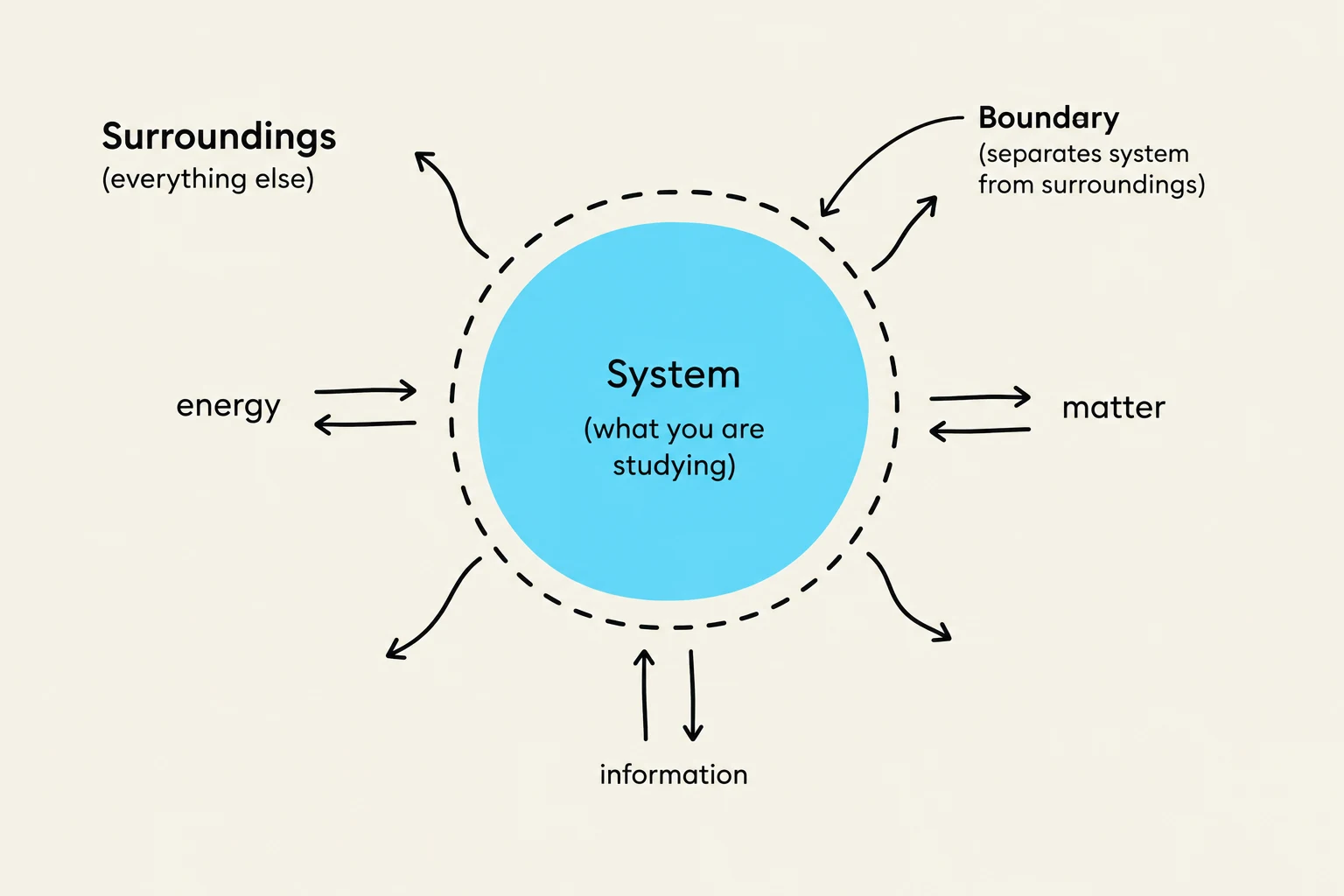
The system is the specific part of the universe that is being studied or observed. When a chemist performs an experiment, the system might be the molecules reacting inside a test tube, the gas expanding inside a piston, or even a single atom being tracked in a vacuum.
The definition of a system is often arbitrary; it is determined by the researcher based on the question they are trying to answer. For example, if you are studying the combustion of methane, your system is the methane and oxygen molecules undergoing the chemical change.

The Surroundings: Everything Else
The surroundings consist of everything in the universe that is not part of the system. If you are conducting an experiment in a laboratory, the laboratory equipment, the air in the room, and even the person performing the experiment are all part of the surroundings.
The relationship between the system and the surroundings is dynamic. Energy, in the form of heat or work, is constantly being exchanged across the boundary that separates them.

Keep reading for free.
Create an account to finish this reading and make it part of your study routine.
Continue reading freeAlready have an account? Log in
Updated