


In the modern era, the term "sustainability" is frequently used in political, corporate, and environmental discussions. However, at its core, sustainability is a profound ethical and practical framework. It is defined by the fundamental principle of meeting the needs of the present generation without compromising the ability of future generations to meet their own needs. This concept requires us to look beyond immediate gratification and consider the long-term health of our social, economic, and environmental systems.
The Core Definition of Sustainability
The most widely accepted definition of sustainability emphasizes intergenerational equity. This means that the resources we consume today—whether they are mineral, biological, or atmospheric—must be managed so that those who live a hundred years from now have access to the same quality of life and environmental stability that we enjoy today.
Sustainability is not merely about "saving trees" or "protecting animals"; it is a holistic approach to how human societies interact with the natural world. It involves a delicate balance between human development and the regenerative capacity of the Earth.
Exam Tip: If asked to define sustainability, always include the "intergenerational" aspect. A common mistake is to define it only as "environmental protection," but true sustainability must account for future human needs as well.

The Three Pillars of Sustainability
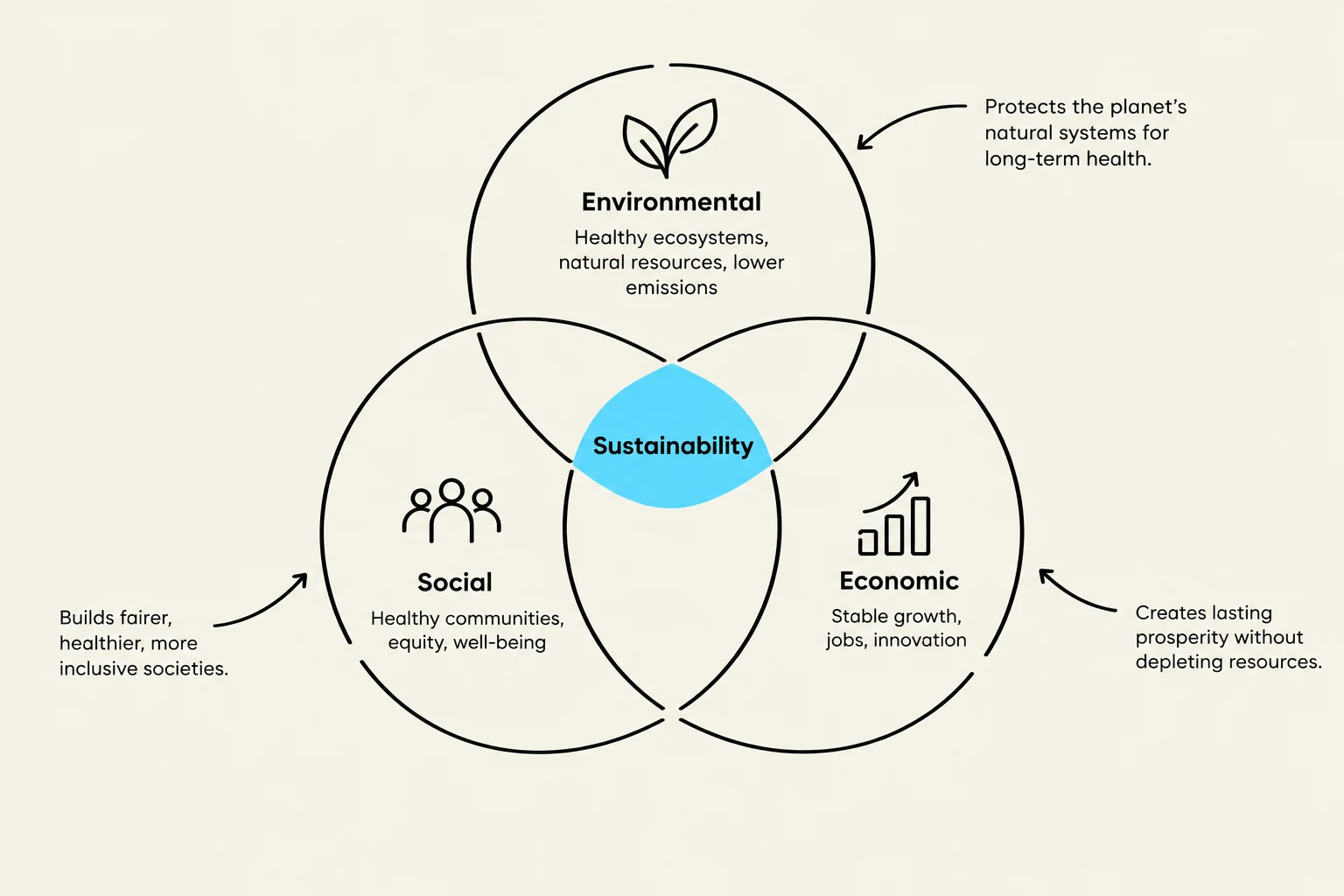
To achieve a sustainable state, we cannot focus on a single dimension of life. Instead, sustainability is often visualized through the "Triple Bottom Line" or the three pillars: Environmental, Social, and Economic. For a system to be truly sustainable, all three of these pillars must be in balance.
Keep reading for free.
Create an account to finish this reading and make it part of your study routine.
Continue reading freeAlready have an account? Log in
Updated