


In the study of social work, healthcare, and community psychology, understanding how individuals receive assistance is crucial for effective practice. Support systems are not monolithic; they are composed of various types of interventions that address different human needs. Whether a person is facing a medical crisis, a financial hardship, or a psychological struggle, the nature of the help they receive determines the type of support being provided.
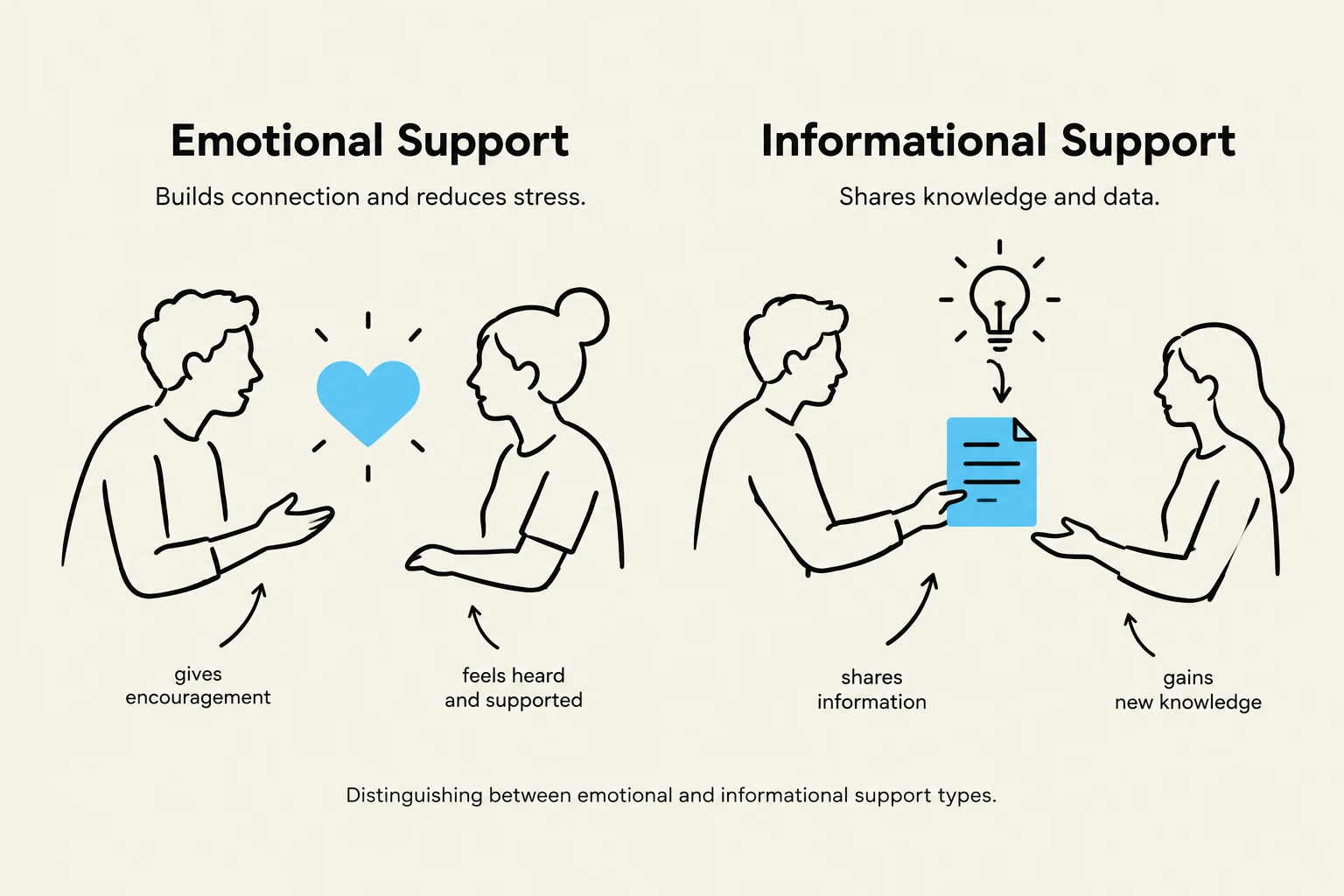
This article explores the four primary categories of support defined in the Chapter 5 Practice Settings curriculum: emotional, informational, concrete, and informal support.
Emotional Support: The Psychological Foundation
Emotional support is centered on the psychological and affective needs of an individual. It is not about solving a problem through logic or money, but rather about providing a sense of belonging, value, and security.
This type of support is typically delivered by "close people"—individuals with whom the recipient has an established bond, such as friends, partners, or family members. The core components of emotional support include:
- Active Listening: Giving full attention to the individual without judgment.
- Comfort: Providing a soothing presence during times of distress.
- Encouragement: Offering verbal affirmation to boost a person's confidence or resilience.
Student Tip: On exams, look for keywords like "listening," "empathy," "validation," or "comfort." If the intervention is aimed at the person's feelings rather than their circumstances, it is emotional support.
Worked Example: Imagine a student who has just failed a major exam. A friend sits with them, listens to them vent about their frustration, and says, "I know how hard you worked; don't let this one grade define you." This is a classic example of emotional support.
Keep reading for free.
Create an account to finish this reading and make it part of your study routine.
Continue reading freeAlready have an account? Log in
Updated