


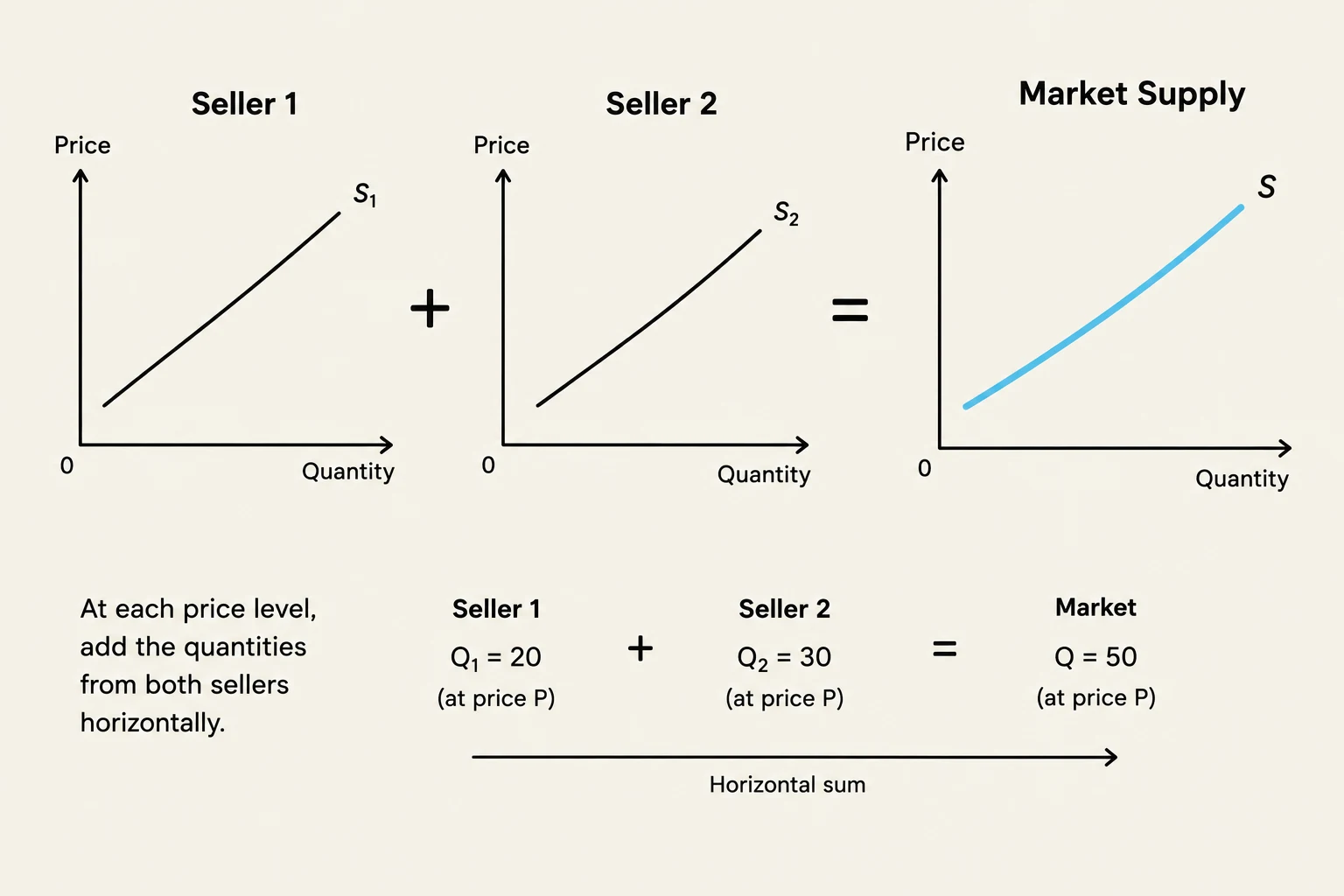
In economics, we often look at the world through two different lenses: the micro level, which focuses on individual actors, and the macro level, which looks at the entire market. When we talk about supply, we are describing the relationship between the price of a good and the quantity that sellers are willing and able to offer. To understand how a whole industry behaves, we must first understand how a single person or company makes decisions, and then learn how to combine those individual decisions into a single market-wide picture.
Individual Supply
Before we can understand a market, we must understand the individual seller. Whether you are selling used items online, selling your time to an employer, or running a large gasoline refinery, you are acting as an individual supplier.
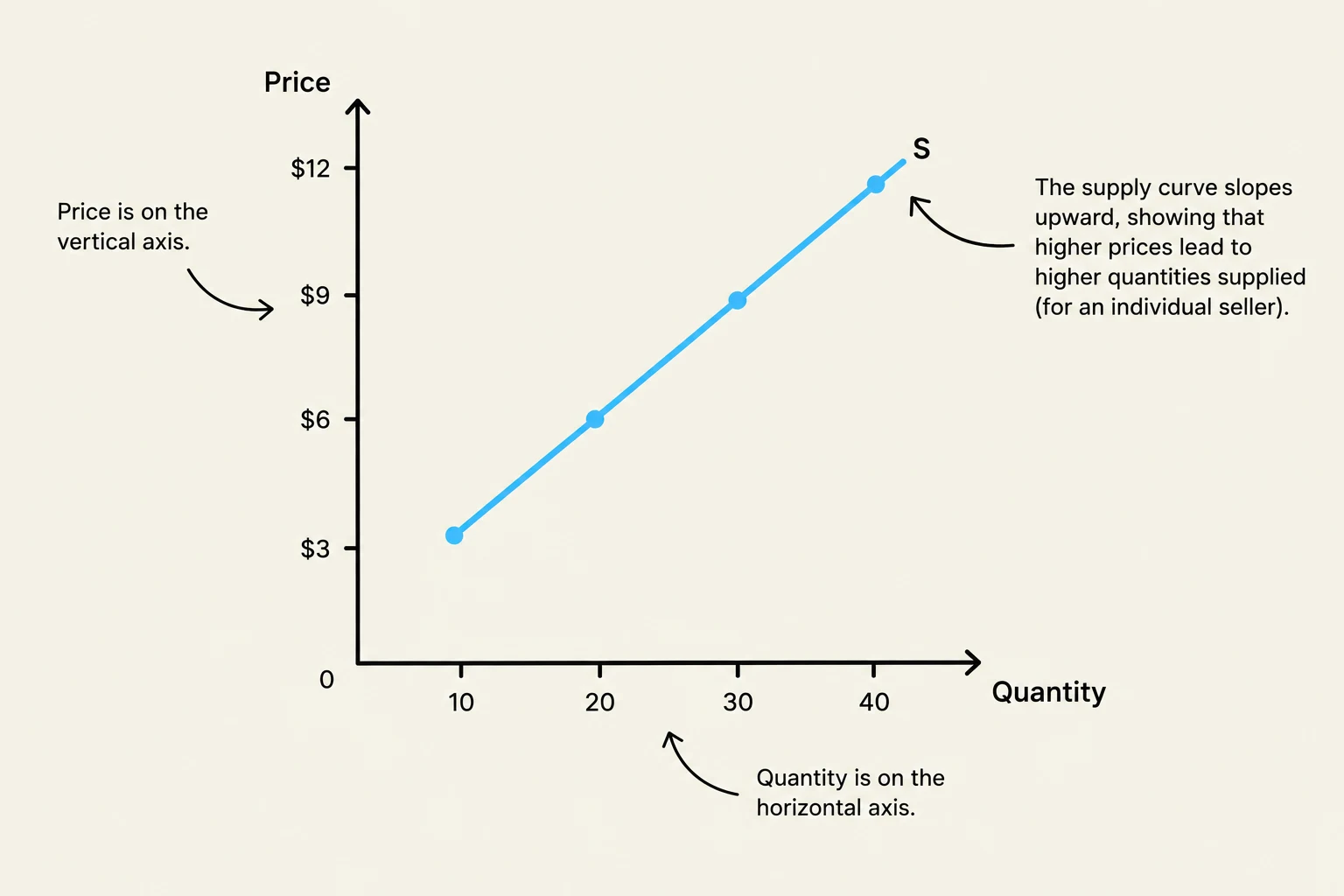
The "Law of Supply" states that, all else being equal, the quantity supplied rises as the price rises. This relationship is typically represented by an upward-sloping supply curve. For a rational seller in a competitive market, the decision of how much to produce is driven by a specific rule: sell until marginal benefit equals marginal cost.
In a competitive market, the marginal benefit a seller receives from selling one more unit is simply the market price. Therefore, the supply curve is essentially a visual representation of the seller's marginal cost curve.
Why does the curve slope upward? As a firm expands production, they often encounter "diminishing marginal product" or rising input costs. This means that producing each additional unit becomes increasingly expensive (due to things like bottlenecks or rising resource costs), so a seller will only produce more if the market price increases to cover those higher costs.
Keep reading for free.
Create an account to finish this reading and make it part of your study routine.
Continue reading freeAlready have an account? Log in
Updated