


In the construction industry, understanding the distinction between how wood is labeled and how it actually measures is fundamental to accurate material estimation and structural planning. Softwood lumber—typically species like fir, spruce, or pine—is the backbone of structural framing, used for joists, beams, columns, and walls. However, if a builder orders a "2x4" expecting it to measure exactly two inches by four inches, they will encounter significant errors in their calculations. This article explores the nuances of nominal versus actual dimensions, standard lengths, and the mathematical methods used for pricing lumber.
Nominal vs. Actual Sizes
The most critical concept for any student of construction is the difference between nominal size and actual size. The "nominal" size is a rounded, approximate label used for convenience in trade and commerce. The "actual" size is the real-world measurement of the piece after it has undergone the manufacturing process.
Lumber is typically sawn close to its nominal size, but it must then be dried (seasoned) and surfaced to make it smooth and dimensionally precise. During the drying process, wood undergoes shrinkage, and the surfacing process (planing the wood to make it smooth) removes additional material. Consequently, the actual dimensions are always smaller than the nominal dimensions.
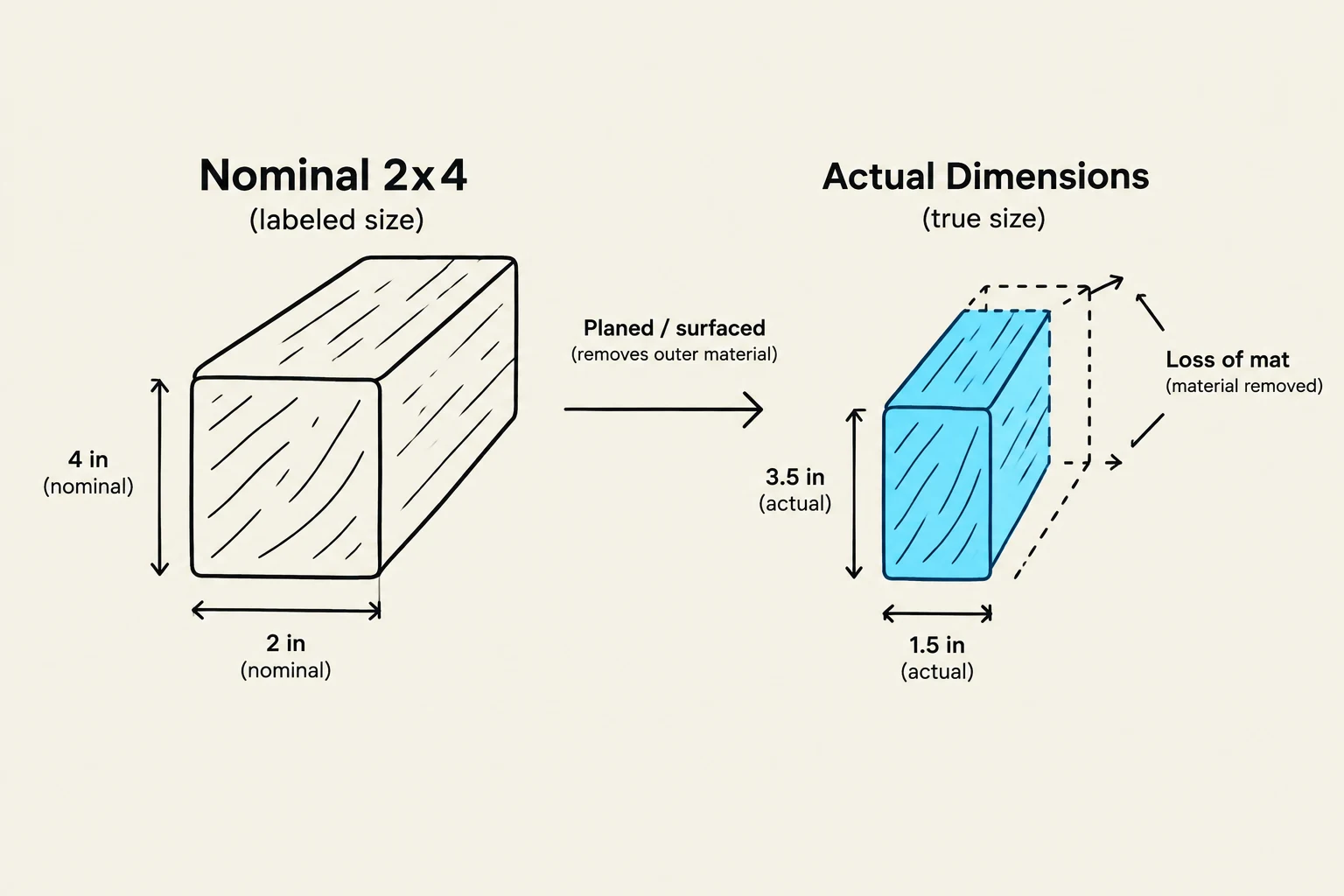
Lumber Thickness and Width
To determine the actual size of a piece of lumber, you cannot simply subtract a single constant value. Instead, the amount of reduction depends on the starting nominal thickness. There are three general rules of thumb used to calculate the actual dimensions:
Keep reading for free.
Create an account to finish this reading and make it part of your study routine.
Continue reading freeAlready have an account? Log in
Updated