An overview of Sodium-Glucose Cotransporter-2 (SGLT2) inhibitors, their mechanism of action in managing Type 2 Diabetes, key medications, and clinical considerations.
In the management of Type 2 Diabetes Mellitus (T2DM), clinicians are increasingly looking beyond simple glucose lowering to medications that offer holistic benefits, such as weight management and organ protection. One of the most significant advancements in this area is the class of drugs known as Sodium-Glucose Cotransporter-2 Inhibitors (SGLT2i). Unlike many other diabetes medications that rely on insulin secretion, SGLT2 inhibitors work through an insulin-independent mechanism by targeting the kidneys to promote the excretion of glucose through urine.
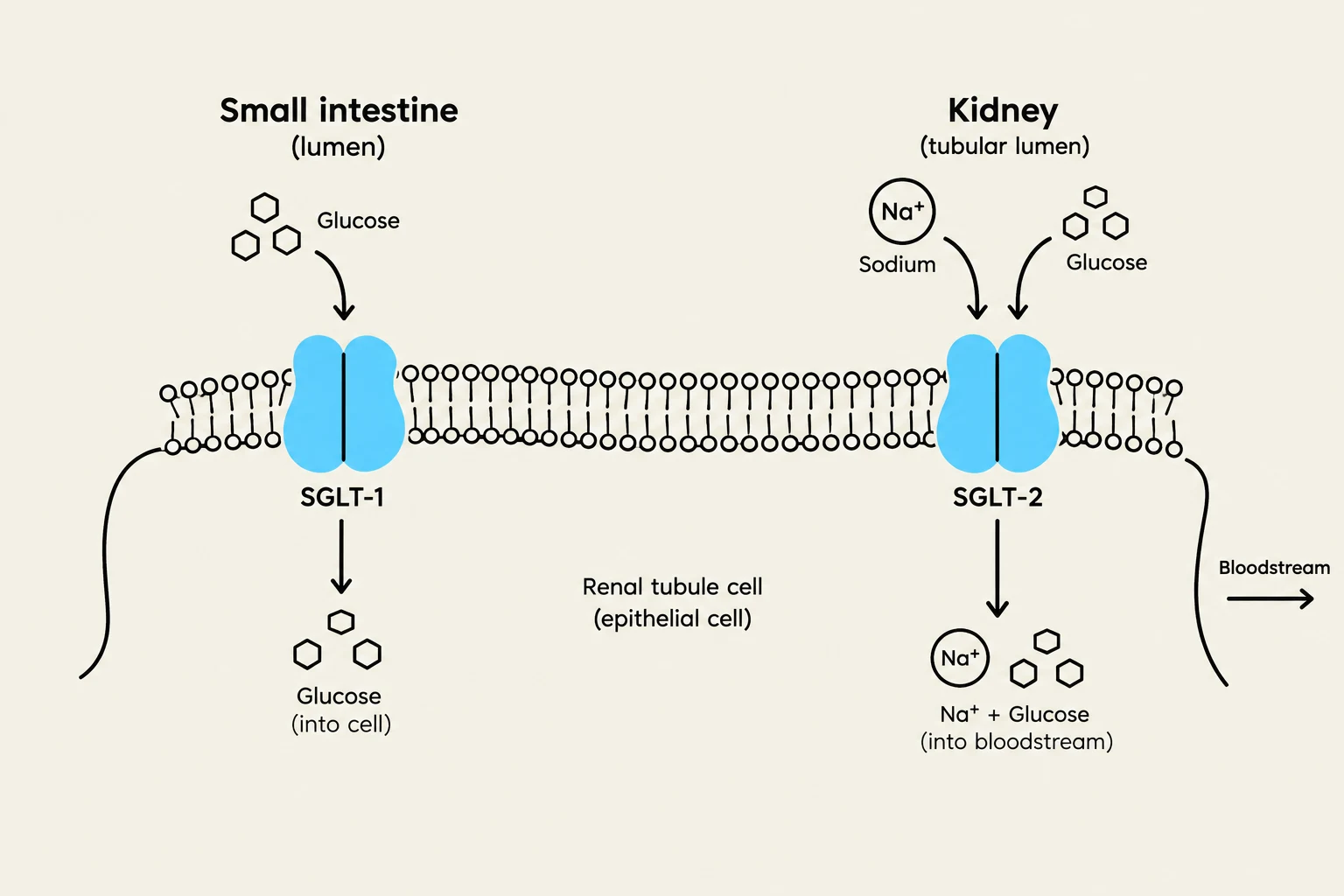
Diagram illustrating the function of SGLT-1 in the small intestine and SGLT-2 in the kidney for glucose and sodium transport across cell membranes.
To understand how these drugs work, one must first understand the physiological role of sodium-glucose cotransporters. These are protein channels found primarily in two locations: the small intestine and the kidneys. Their primary job is to move glucose into the body by "co-transporting" it alongside sodium.
There are two main types of these transporters:
SGLT-1: Located primarily in the small intestine, these are responsible for the absorption of glucose from the diet.
SGLT-2: Located primarily in the kidneys, these are responsible for re-absorbing the glucose that has been filtered by the kidneys back into the bloodstream.
In a healthy, non-diabetic individual, the kidneys work efficiently to ensure that glucose is not lost in the urine. The SGLT-2 protein channels facilitate this re-absorption by exchanging sodium for glucose.
Mechanism of Action (MOA) of SGLT2i
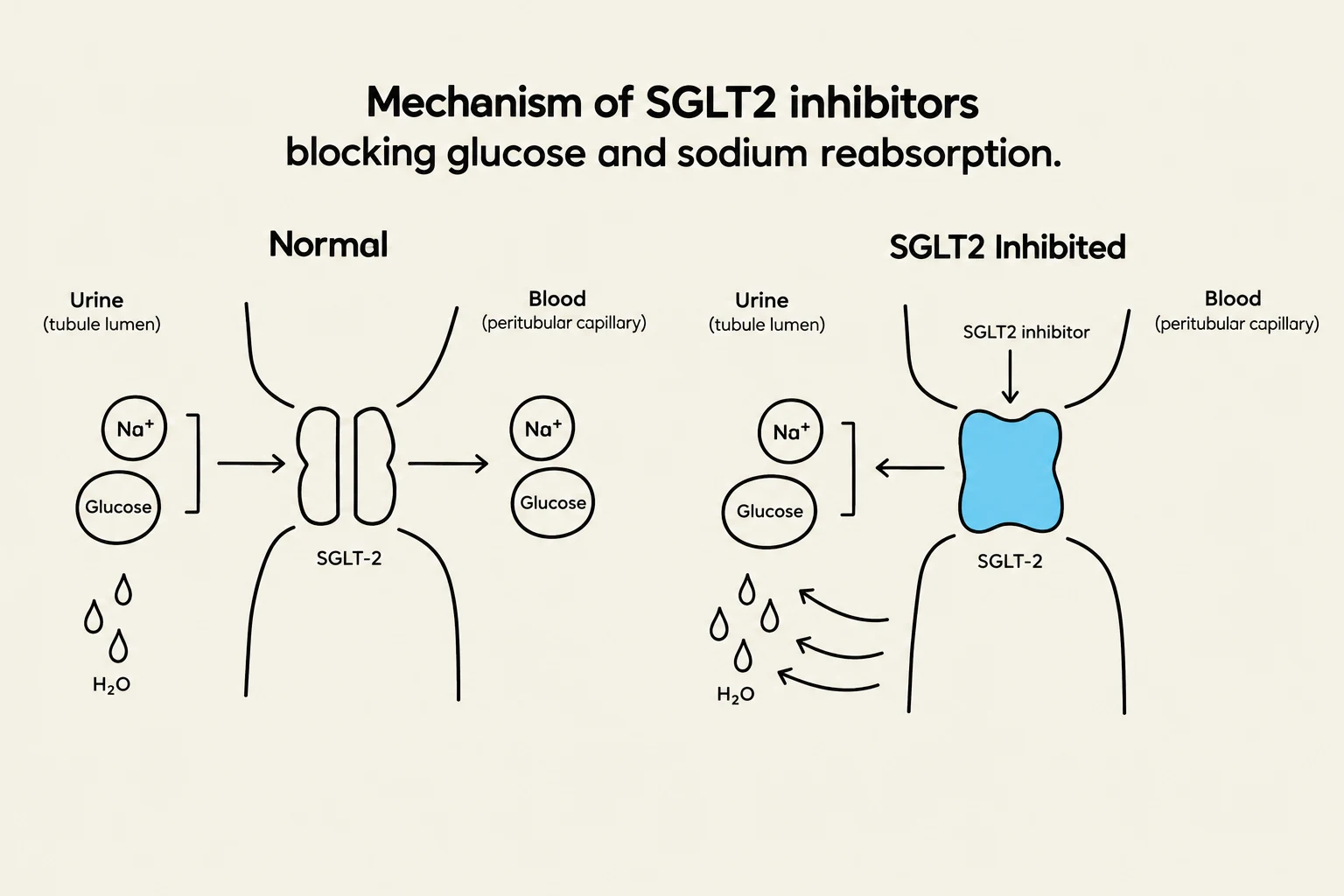
Diagram illustrating the mechanism of SGLT2 inhibitors in blocking glucose and sodium reabsorption in the kidneys. The left side shows normal reabsorption, while the right side depicts inhibition by an SGLT2 inhibitor.
The primary mechanism of SGLT2 inhibitors is to block the SGLT-2 protein channels in the kidneys. When these channels are inhibited, the kidneys are prevented from reclaiming glucose from the filtered urine. This results in a significant amount of glucose—approximately 60–100g per day—being excreted through the urine.
Because the transport of sodium is also blocked, sodium remains in the urine. This creates an osmotic effect where water follows the sodium to maintain a concentration gradient, leading to increased urinary output (diuresis).
This mechanism provides several clinical advantages:
Insulin Independence: Because the drug works on the kidney's filtration process rather than the pancreas's insulin production, it does not require insulin to function.
Weight Management: The loss of calories through glucose excretion typically results in modest weight loss, often around 2–3 lbs.
Cardio-Renal Protection: SGLT2i have shown significant benefits in protecting the heart and kidneys, even in patients whose A1C levels do not change significantly.
Key Medications in the SGLT2i Class
While all drugs in this class share a similar mechanism, they differ in their availability and specific clinical approvals.
Medication
Brand Name
Common Strengths
Clinical Notes
Empagliflozin
Jardiance®
10mg, 25mg
Approved for Heart Failure regardless of diabetes status.
Dapagliflozin
Forxiga®
5mg, 10mg
Most cost-effective due to generic availability; approved for Heart Failure.
Canagliflozin
Invokana®
100mg, 300mg
Standard SGLT2i for T2DM management.
Side Effects and Clinical Considerations
While SGLT2i are generally well-tolerated and carry a low risk of hypoglycemia (since they do not increase insulin levels), they do present specific side effects that clinicians must monitor.
Common Side Effects
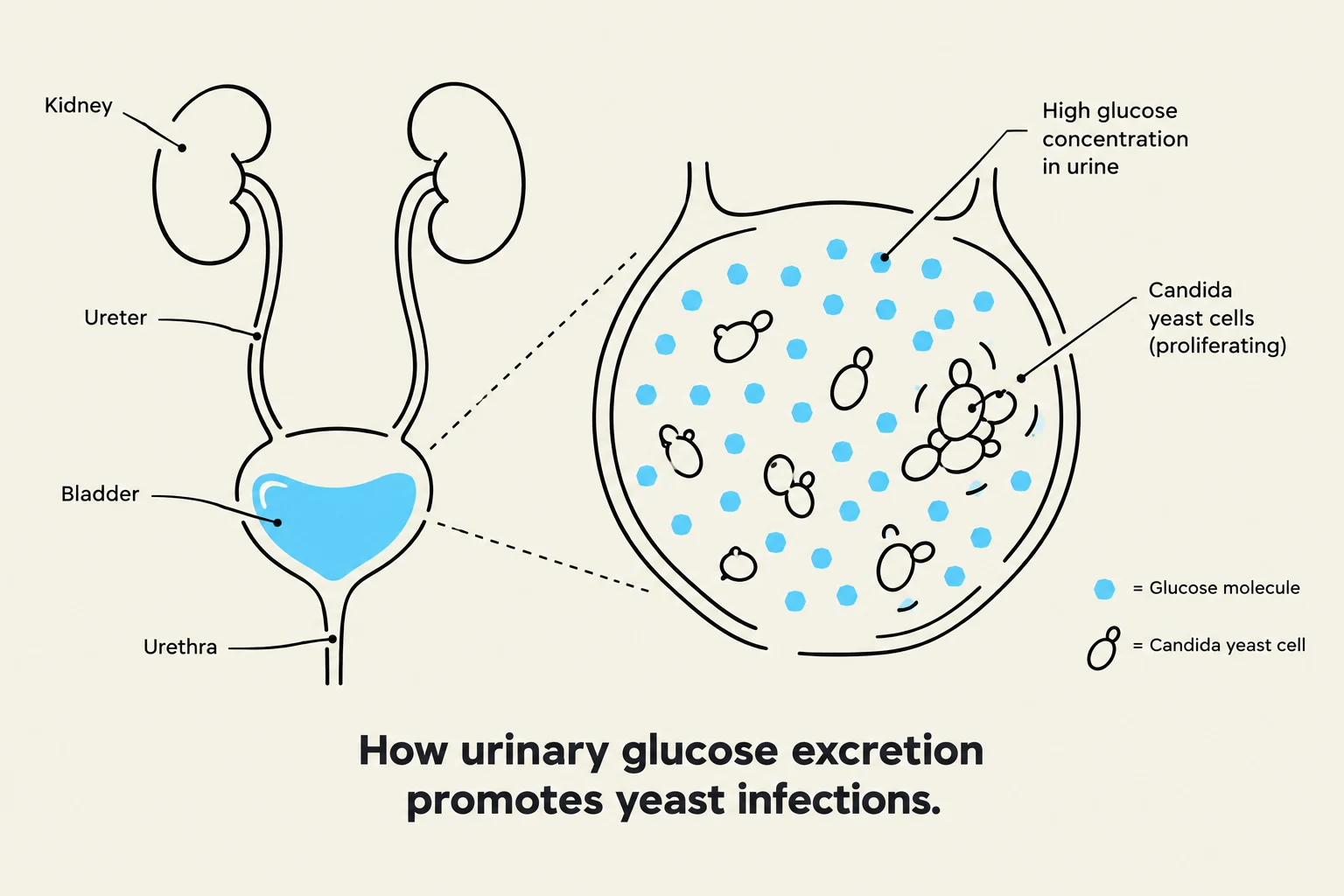
Diagram illustrating how high glucose concentration in urine promotes the proliferation of Candida yeast cells, leading to urinary tract infections.
Yeast Infections: Because glucose is being excreted in the urine, the urinary tract becomes a sugar-rich environment, which can promote the growth of yeast.
Hypotension: The diuretic effect (loss of water and sodium) can lead to lowered blood pressure.
Electrolyte Abnormalities: The loss of sodium and water can disrupt the balance of electrolytes in the body, requiring caution in patients with existing kidney disease.
Gangrenous Wounds: There is a noted risk associated with gangrenous wounds, particularly in patients who are incontinent.
Exam Tip: If a patient on an SGLT2i reports recurrent vaginal yeast infections, the medication is the most likely culprit due to the increased glucose concentration in the urinary tract.
Drug Interactions
Clinicians must be vigilant regarding medications that might compound the effects of SGLT2i, particularly those that increase the risk of dehydration or kidney damage:
Anti-hypertensives: Can cause compounded hypotensive (low blood pressure) effects.
Diuretics: May increase urination and the risk of dehydration.
NSAIDs: Can increase the risk of kidney damage when combined with the dehydration caused by SGLT2i.
Metformin: While often used together, caution is required in patients already suffering from kidney disease or dehydration.
Clinical Case Study: Application of Knowledge
Patient Profile: Mary is a 62-year-old female with Type 2 Diabetes and Heart Failure (HF).
Current Medications:
Metformin 500mg BID
Dapagliflozin 5mg daily
Gliclazide 30mg once daily
Saxagliptin 5mg once daily
Clinical Issue: Mary reports recurrent vaginal yeast infections.
Analysis:
Cause of Yeast Infection: The most likely cause is Dapagliflozin (or any SGLT2i). By increasing glucose excretion in the urine, it creates an ideal environment for yeast overgrowth.
Heart Failure Management: It is appropriate that Mary is on Dapagliflozin, as this medication is approved for use in Heart Failure regardless of whether the patient has diabetes.
Pharmacist Flag: A pharmacist should also monitor Mary for signs of dehydration or hypotension due to the combination of her SGLT2i and her underlying condition.
Keep reading for free.
Create an account to finish this reading and make it part of your study routine.