Understanding Social Anxiety Disorder and Cognitive Behavioral Therapy
An overview of Social Anxiety Disorder (SAD), its diagnostic criteria, prevalence, and the effectiveness of Cognitive Behavioral Therapy (CBT) as a treatment. Explores CBT's cognitive restructuring and exposure techniques, and compares it with medication.
Social anxiety is a natural evolutionary adaptation; being vigilant about social threats, such as job interviews or class presentations, helps humans navigate complex social hierarchies. However, when this vigilance becomes excessive and paralyzing, it may transition into a clinical disorder. Cognitive Behavioural Therapy (CBT) has emerged as the "gold standard" for treating this condition, targeting the complex interplay between thoughts, physical sensations, and behaviors.
Understanding Social Anxiety Disorder (SAD)
To meet the diagnostic criteria for Social Anxiety Disorder (SAD), an individual must experience a marked and persistent fear of one or more social situations where they might be scrutinized or embarrassed. This fear is not merely shyness; exposure to these situations almost always provokes anxiety, and the individual either avoids the situation entirely or endures it with intense distress. Crucially, the symptoms must persist for at least six months and cause significant impairment in daily functioning.
A specific variation known as the performance only subtype exists for individuals whose fear is strictly limited to public speaking or performing in front of an audience.
Prevalence and Cultural Context
The prevalence of SAD varies significantly across different demographics:
General Prevalence: In the US, the 12-month prevalence rate is approximately 7% for both adults and adolescents, though rates tend to be lower outside of the US.
Age: SAD is significantly more common in young people (aged 16–29), with some studies showing rates as high as 36%.
Demographics: Research suggests SAD is more common in men than women. Furthermore, sexual and gender minorities are more likely to experience social anxiety symptoms than heterosexual and cisgender individuals.
Culture: People of Asian heritage often score higher on social anxiety symptoms compared to those of European heritage.
Exam Tip: When distinguishing between "normal" social anxiety and SAD, look for the duration (6+ months) and the level of impairment or avoidance.
The CBT Model of Social Anxiety
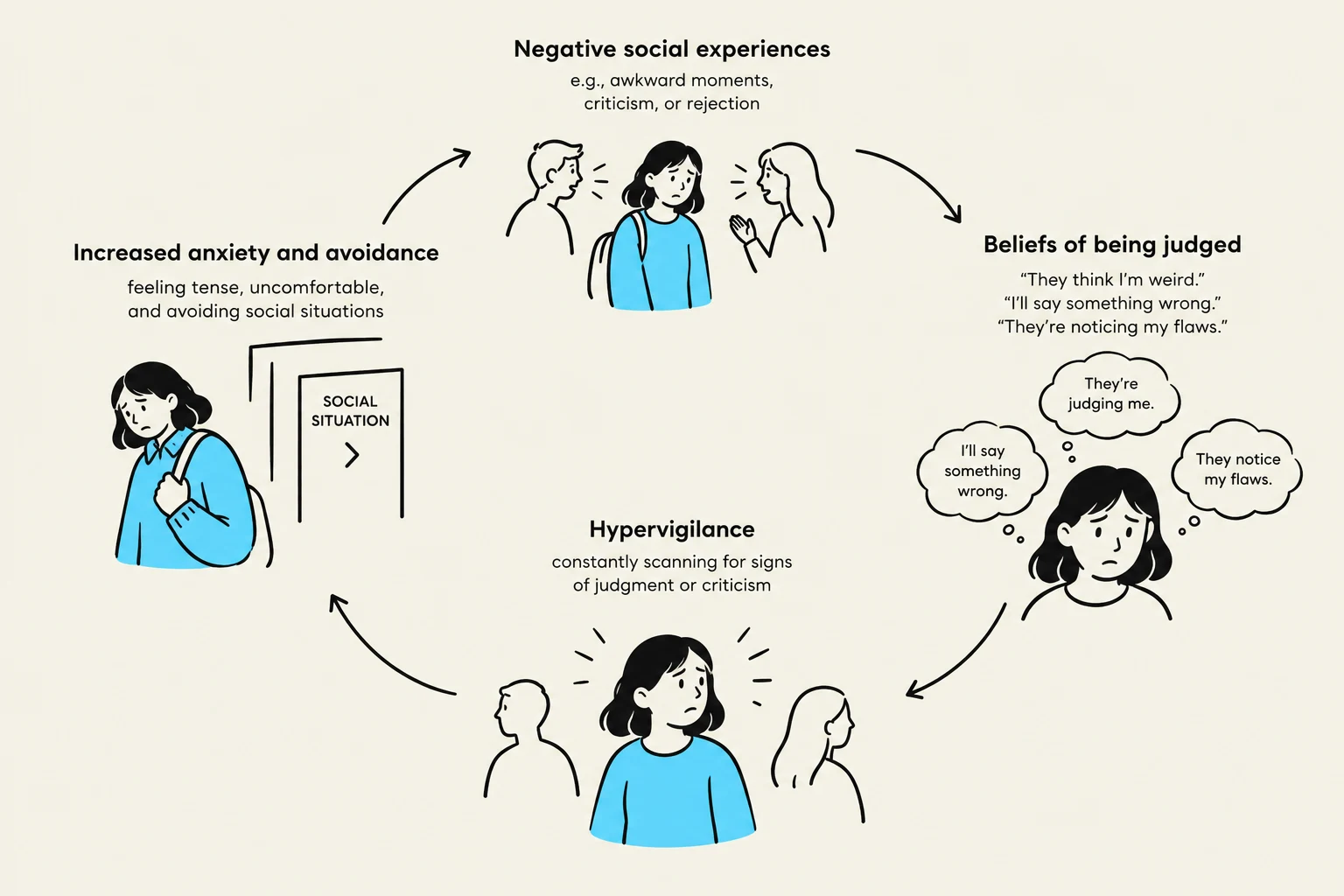
The CBT model posits that SAD is maintained by a reciprocal relationship between irrational thoughts, bodily sensations, and maladaptive behaviors. Often, negative initial social experiences (such as parental or peer criticism) lead to the core belief that others are hyper-critical and that it is vital to be appraised positively.
This creates a cycle: negative beliefs motivate hypervigilance, where the individual focuses intensely on potential social threats. This focus often leads to a negative self-image and a fear that one does not match the perceived standards of the audience.
This diagram illustrates the cycle of social anxiety, showing how negative social experiences can lead to beliefs of being judged, hypervigilance, and increased anxiety and avoidance of social situations.
The Role of Avoidance and Safety Behaviors
A critical component of the model is the role of avoidance. When an individual avoids a feared situation, they experience immediate relief. This relief acts as negative reinforcement, making the anxiety more likely to return in the future. Furthermore, avoidance can lead to actual performance deficits, creating a self-fulfilling prophecy where the person performs poorly because they were too anxious or distracted to engage effectively.
Commonly observed behaviors include:
Avoidance/Escape: Not attending a party or leaving a meeting early.
Safety Behaviors: Using substances (like alcohol) to cope with social settings.
Therapeutic Interventions: Cognitive and Behavioral
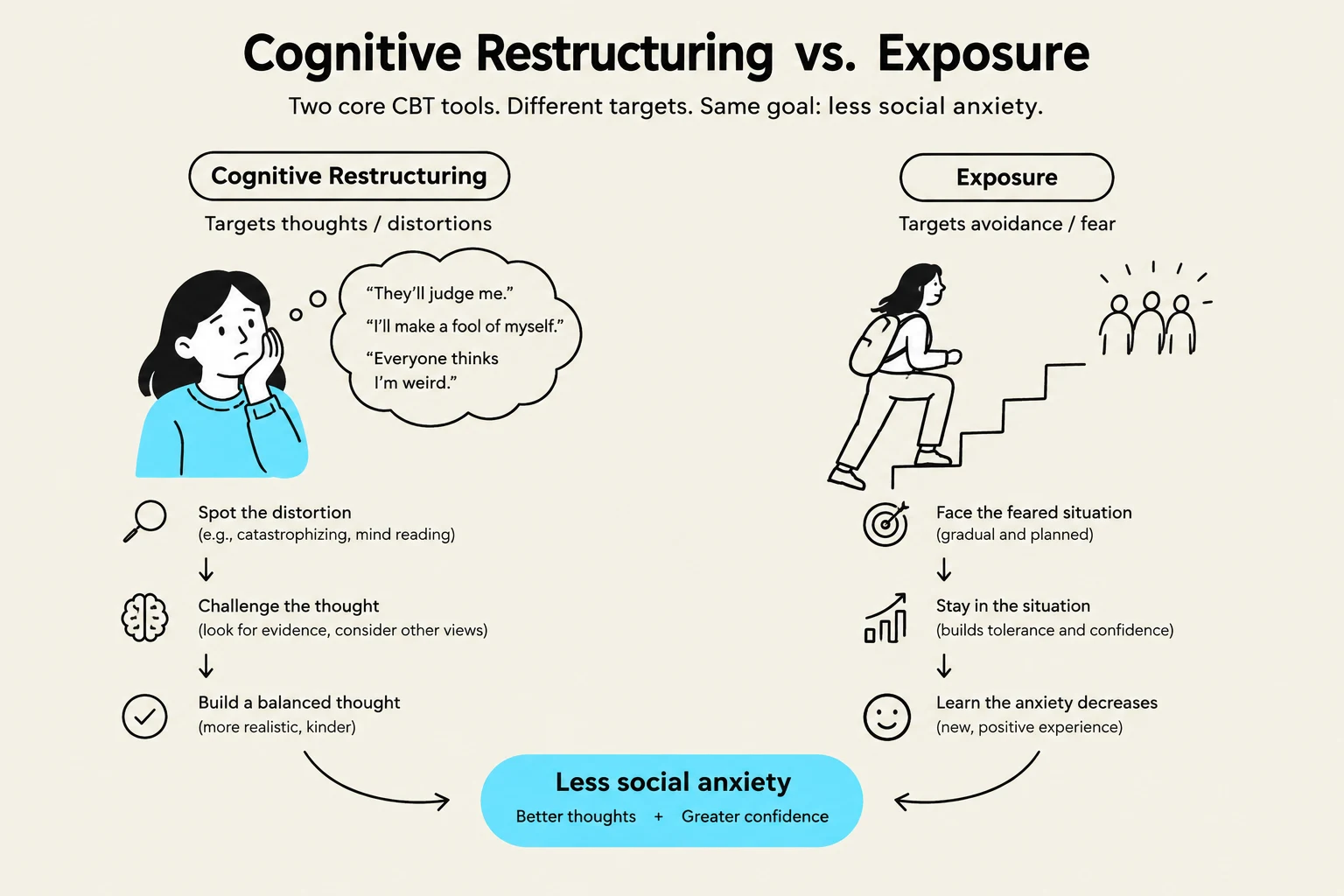
CBT interventions are primarily divided into two pillars: cognitive restructuring and exposure techniques.
1. Cognitive Restructuring
This technique aims to increase a patient's awareness of their automatic thoughts—the rapid, often unconscious evaluations that occur in social situations. Patients learn to identify cognitive distortions, which are irrational patterns of thinking, such as:
Mindreading: Assuming you know what others are thinking (e.g., "They think I'm boring").
Fortune Telling: Predicting a negative outcome without evidence (e.g., "I'm going to fail this presentation").
All-or-Nothing Thinking: Viewing performance in extremes (e.g., "If I stumble once, the whole speech is a disaster").
Patients use "coping questions" to challenge these thoughts by looking for evidence for and against them, helping to develop more balanced perspectives.
2. Exposure Techniques
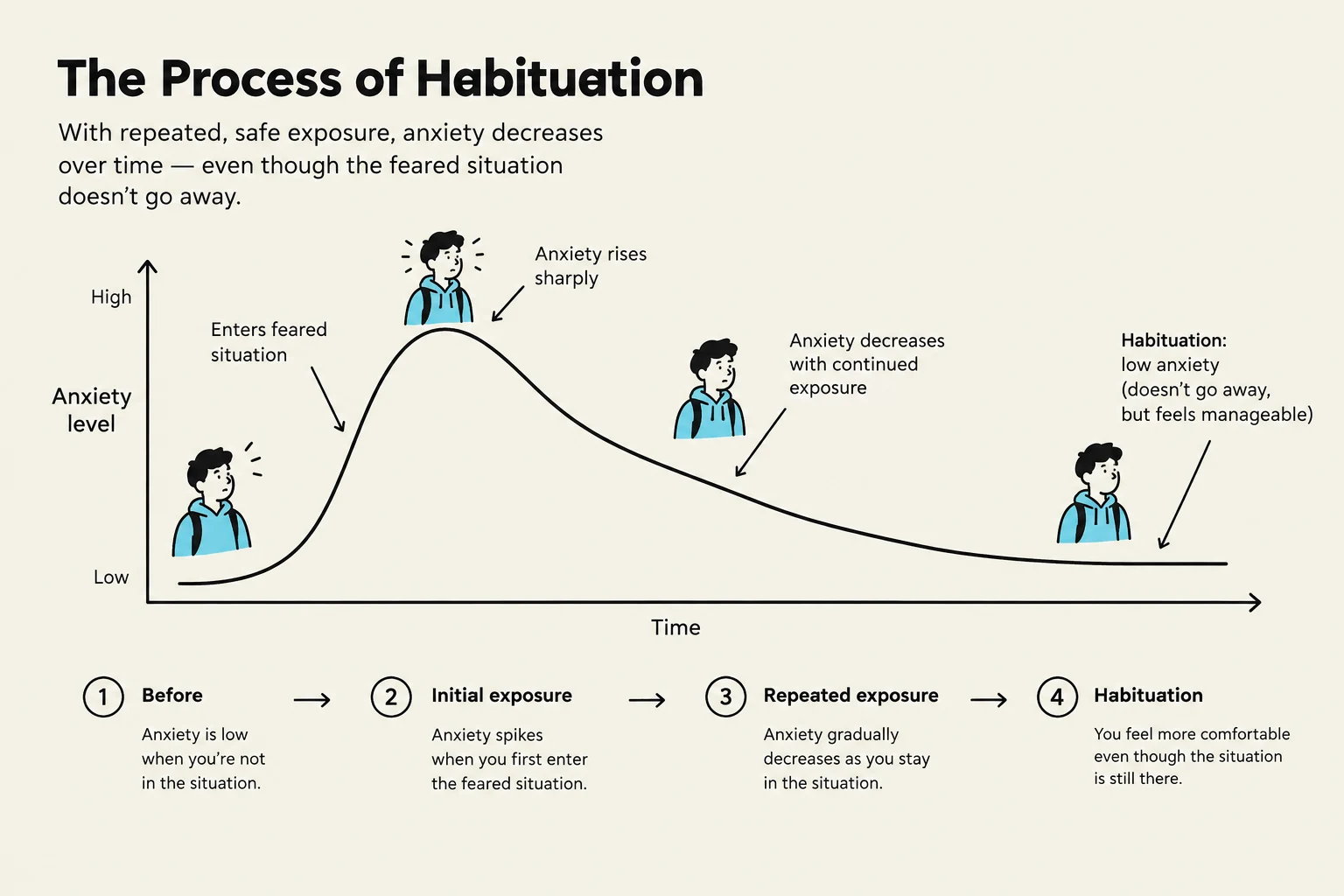
While cognitive work addresses the "software" of the mind, exposure addresses the "hardware" of the behavior. Patients are instructed to remain in feared situations rather than escaping. The goal is to facilitate habituation—the process where, through repeated exposure, the physiological and psychological anxiety response naturally decreases.
Exposures often follow a hierarchy, beginning with less threatening scenarios and progressing to more difficult ones. In a clinical setting, this may start with roleplays before moving to real-world applications.
This diagram illustrates the process of habituation, showing how repeated exposure to a feared situation can decrease anxiety over time, even if the situation itself does not change.
Efficacy, Medication, and Outcomes
CBT is highly efficacious. Meta-analyses have shown significant effect sizes compared to control conditions, with many patients maintaining or even improving their symptoms 12 months after treatment. Internet-based CBT has also shown promising, sustained results, making treatment more accessible.
CBT vs. Medication
When comparing psychological and pharmacological approaches, the following trends emerge:
SSRIs: Selective Serotonin Reuptake Inhibitors (such as Paroxetine) are the first-line medication for SAD.
Comparison: CBT is often preferred because medications can have higher relapse rates and lower long-term maintenance of gains.
Combination Therapy: Research suggests that combining both medication and CBT may be more efficacious than using either alone.
Mediators and Moderators
Understanding why and for whom CBT works is essential for clinical practice:
Mediators (What drives change?): Improvements are driven by changes in self-esteem, a reduction in self-focused attention, and a decrease in subtle avoidance behaviors.
Moderators (Who responds better?): Outcomes may vary based on the patient's initial symptom severity, the presence of comorbid depressive symptoms, and the patient's level of optimism regarding the therapy.
This diagram illustrates two core Cognitive Behavioral Therapy (CBT) tools: Cognitive Restructuring and Exposure, both aimed at reducing social anxiety.
Summary Table: CBT Components
Component
Primary Target
Goal
Cognitive Restructuring
Automatic thoughts & distortions
Challenge irrationality with evidence
Exposure
Avoidance & safety behaviors
Facilitate habituation & new learning
Keep reading for free.
Create an account to finish this reading and make it part of your study routine.