Understanding Sleep: Stages, Disorders, and Hygiene
An overview of sleep's biological necessity, its stages (NREM and REM), common sleep disorders like insomnia and sleep apnea, and strategies for improving sleep hygiene.
Sleep is a fundamental biological necessity, as essential to human survival as food and water. While it may often feel like a luxury—especially for students balancing heavy workloads and the distractions of social media—sleep serves critical functions ranging from energy conservation and physical repair to cognitive processing and emotional regulation. For most adults, experts recommend a target of 7–9 hours of sleep per night to maintain optimal health.
The Architecture of Sleep: Stages and Cycles
Sleep is not a uniform state of unconsciousness; rather, it is a dynamic process consisting of several distinct stages that repeat in cycles throughout the night. A typical person may cycle through these stages five to six times in a single night, with each cycle lasting approximately 90 minutes.
Non-REM Sleep
The first three stages of the sleep cycle are categorized as non-REM sleep. These stages are characterized by a lack of rapid eye movement and focus heavily on restorative functions:
N1 (Light Sleep): The transition from wakefulness to sleep where muscles relax and heart rate slows.
N2 (Deeper Sleep): A stage where body temperature drops and breathing becomes more regular.
N3 (Deep/Restorative Sleep): This is the most critical stage for physical recovery. During N3, the body releases growth hormones to repair tissues and strengthen the immune system.
The progression of non-REM sleep stages (N1, N2, and N3) is illustrated, showing changes in brain waves, physiological characteristics, and ease of waking.
REM Sleep
The final stage is REM (Rapid Eye Movement) sleep. During this stage, brain activity increases to levels nearly identical to wakefulness, and rapid eye movements occur under the eyelids. REM sleep is vital for "mental housekeeping"—it is the stage where the brain processes information, consolidates learning, and facilitates creativity and dreaming.
Sleep Quantity, Quality, and the Concept of Sleep Debt
When discussing sleep, it is important to distinguish between how long you sleep (quantity) and how well you sleep (quality).
Sleep quantity refers to the total number of hours slept. Because individual needs vary by age and gender, the best way to gauge your requirement is to monitor how energized you feel upon waking. Sleep quality is measured by how quickly you fall asleep (ideally under 30 minutes) and whether you stay asleep with minimal interruptions.
If you consistently fail to meet your target sleep hours, you accumulate sleep debt. This is the cumulative total of missed sleep hours relative to your target. For example, if your target is 8 hours but you only sleep 6, you have accrued a 2-hour sleep debt.
Exam Tip: If a question asks about the difference between sleep quantity and quality, remember that quantity is the duration (hours), while quality is the efficiency (how uninterrupted and restful the sleep was).
While napping can be a tool to improve alertness and mood, it should be managed carefully. To avoid disrupting your nighttime sleep and increasing your sleep debt, naps should be short (about 20 minutes) and taken in the early to mid-afternoon.
Key Sleep Disorders
When sleep architecture is disrupted, it can lead to significant health issues and impaired daily functioning.
Insomnia and Restless Legs Syndrome
Insomnia is the most common sleep complaint, characterized by difficulty falling asleep, staying asleep, or waking up too early and feeling unrefreshed. It is more prevalent in women and older adults and can be caused by stress, caffeine, or medical conditions.
A related condition is restless legs syndrome, a neurological disorder where individuals feel an uncomfortable urge to move their legs, particularly during periods of inactivity or when trying to fall asleep.
Sleep Apnea
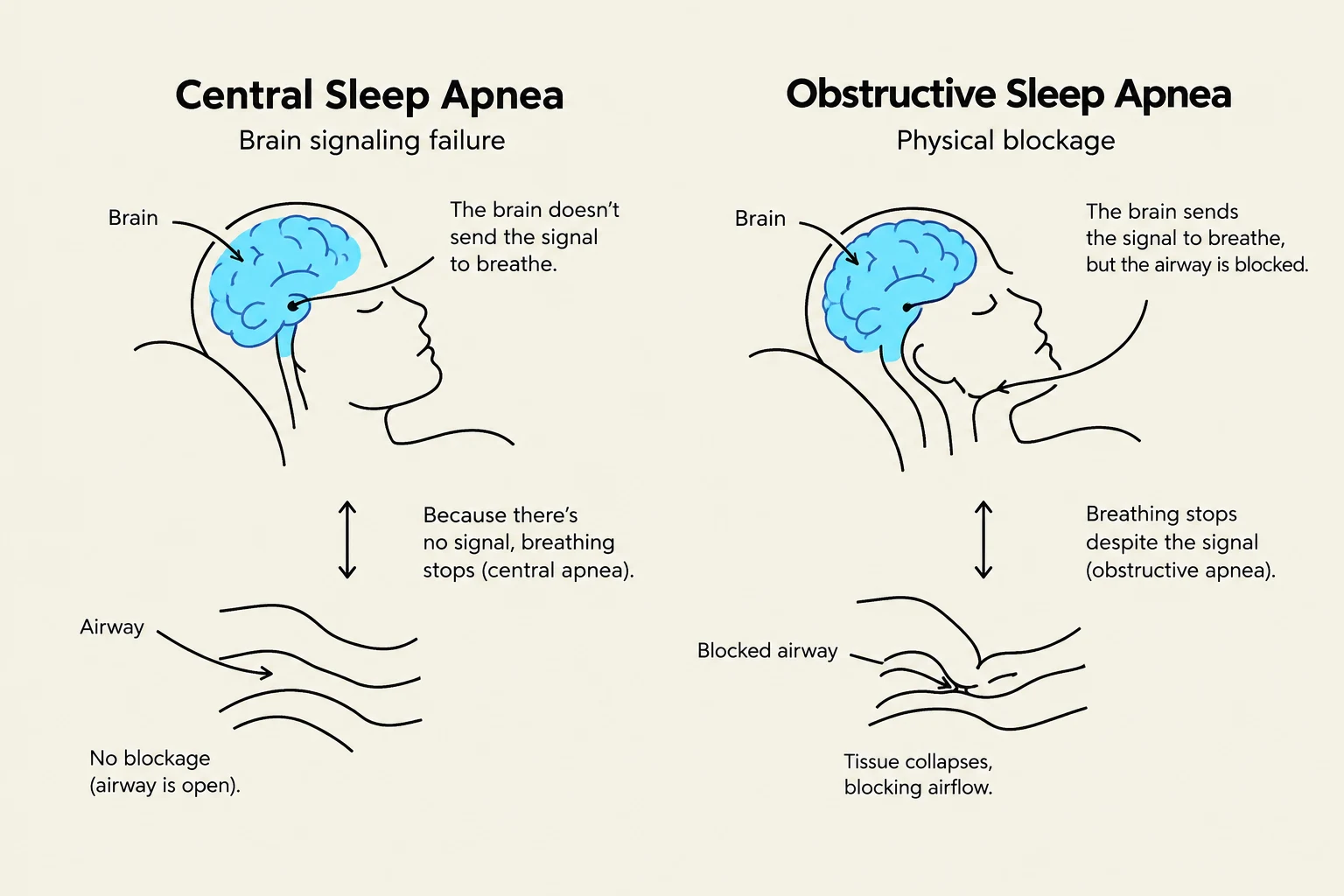
Sleep apnea is a serious disorder where breathing is repeatedly interrupted for at least 10 seconds during sleep. There are two primary types:
Central Sleep Apnea: The brain fails to send the proper signals to the muscles that control breathing.
Obstructive Sleep Apnea (OSA): The most common form, where physical obstructions (like tissue in the throat) prevent airflow, leading to drops in blood oxygen levels.
Common symptoms of OSA include loud snoring and gasping for air. A common treatment is the CPAP (continuous positive airway pressure) device, a mask that blows air into the airways to keep them open. While CPAP is highly effective, weight loss is considered the most important long-term cure for OSA.
This illustration compares Central Sleep Apnea, caused by brain signaling failure, with Obstructive Sleep Apnea, caused by physical airway blockage.
Narcolepsy
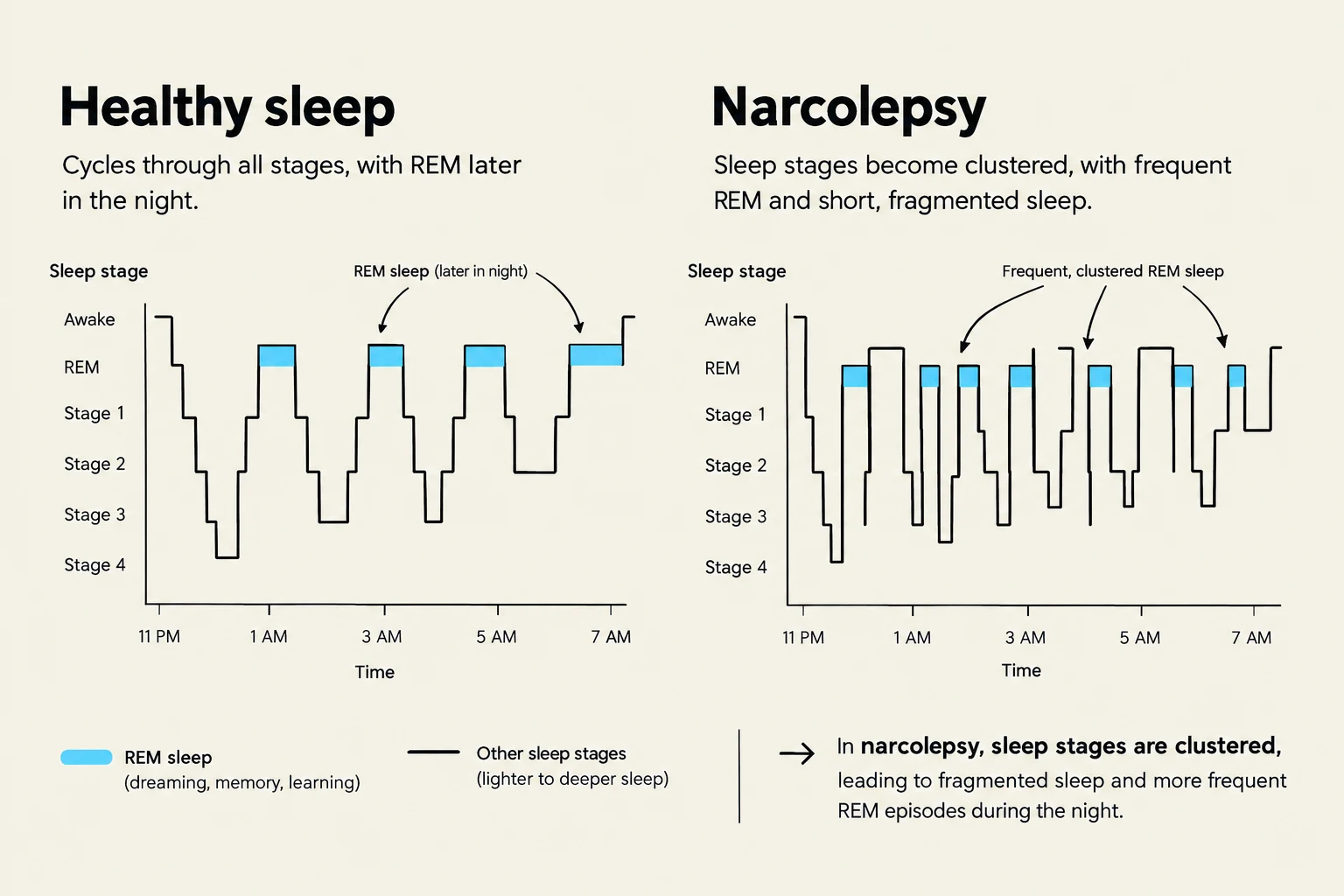
Narcolepsy is a rare disorder characterized by sudden "sleep attacks" and excessive daytime sleepiness. A hallmark symptom is cataplexy, which is a sudden loss of muscle control. Research suggests narcolepsy is caused by the loss of brain cells that secrete hypocretin, a hormone essential for regulating wakefulness.
This illustration compares the sleep stages of healthy individuals with those experiencing narcolepsy, highlighting the fragmented and REM-clustered sleep patterns in narcolepsy.
Improving Sleep Hygiene
You can take proactive steps to improve your sleep through better "sleep hygiene":
Consistency: Maintain a regular schedule by going to bed and waking up at the same time every day.
Environment: Optimize your bedroom to be dark, quiet, and cool.
Stimulant Control: Avoid caffeine, nicotine, and alcohol before bed.
Digital Detox: Limit the use of technology (phones, tablets) in the bedroom.
Association: Use your bed strictly for sleep and sex to reinforce the mental association between the bed and rest.
If you find yourself unable to sleep after 20 minutes of tossing and turning, it is often better to get out of bed and engage in a relaxing activity, such as reading a physical book, rather than staying in bed frustrated.
Keep reading for free.
Create an account to finish this reading and make it part of your study routine.