In the modern era of livestock breeding, producers aim to maximize productivity while minimizing the risk of hereditary diseases. While large-scale genomic tools provide a broad overview of an animal's potential, specialized tools exist to target specific, high-impact genetic issues. One of the most practical and cost-effective tools in a producer's arsenal is the single gene test. These tests allow breeders to look directly at a known gene to identify the presence of specific alleles that can lead to undesirable physical traits or severe health conditions.
Understanding Single Gene Tests
A single gene test is a targeted diagnostic tool designed to identify the genotype of an animal at a specific locus in the genome. Unlike broader genomic evaluations, these tests focus on a "known gene"—a specific sequence of DNA where the relationship between the genotype and the resulting phenotype (the physical expression) is well-understood.
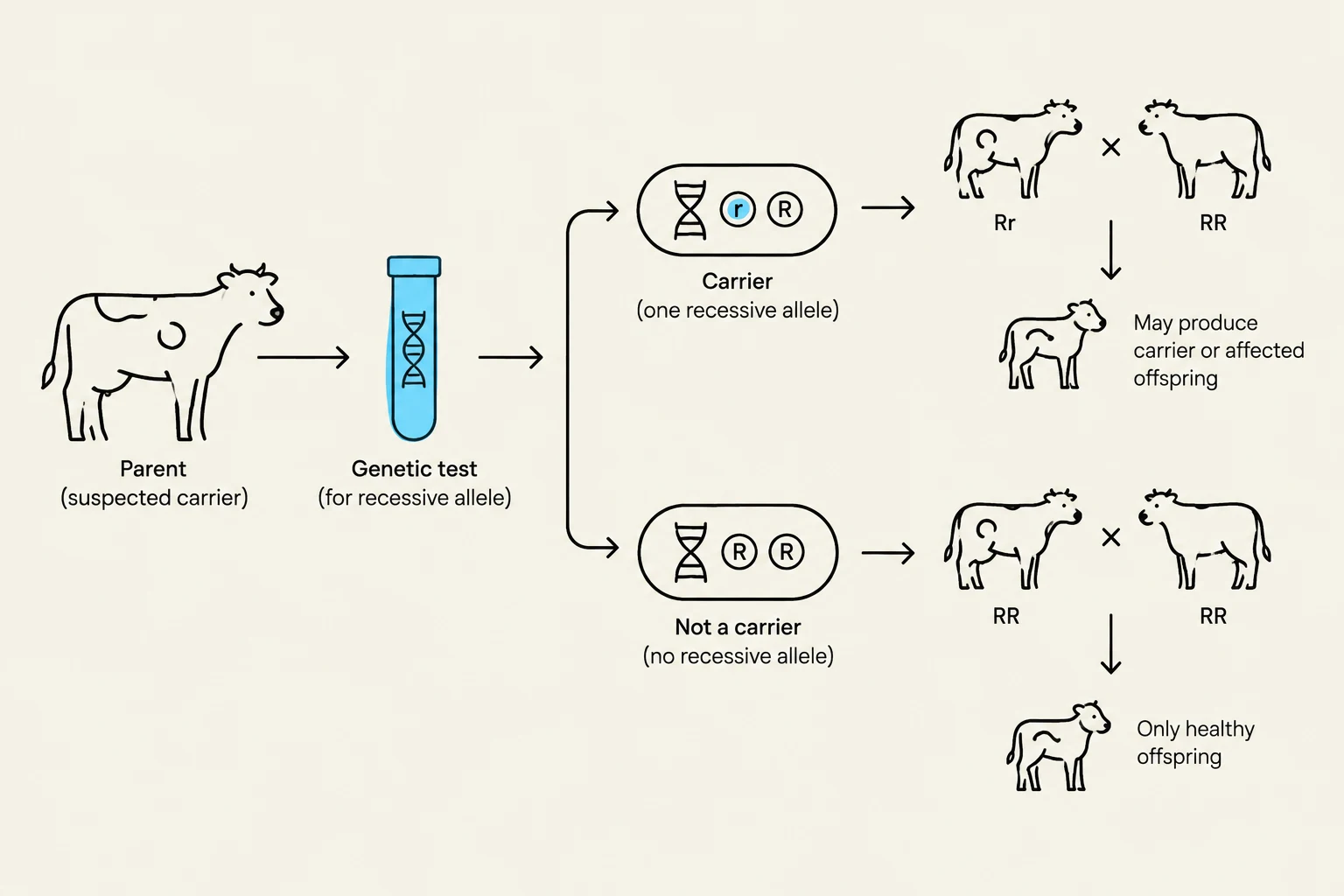
These tests are primarily used to identify carriers of recessive alleles. In many genetic scenarios, an animal can carry one copy of a harmful mutation (a heterozygote) without showing any symptoms. However, if two carriers are mated, there is a statistical probability that their offspring will inherit two copies of the recessive allele (a homozygote), resulting in the expression of a detrimental condition.
Exam Tip: Remember that single gene tests are highly effective for "qualitatively inherited traits." These are traits that are controlled by a single gene and typically fall into discrete categories (e.g., presence or absence of a color or a specific disease) rather than a continuous range of values like weight or milk production.
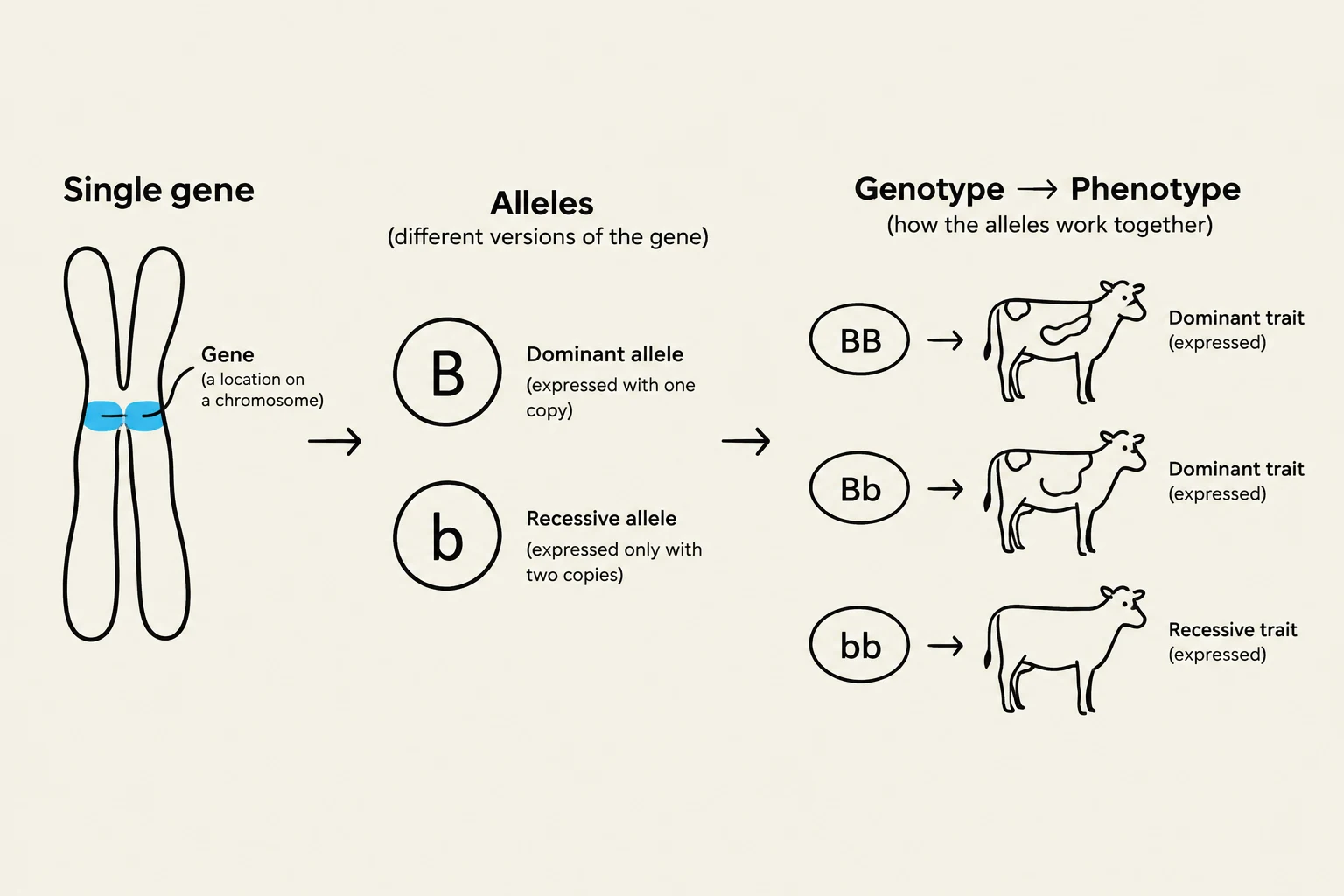
This diagram illustrates the relationship between genotype and phenotype, showing how alleles (different versions of a gene) determine observable traits, using a cow as an example.
Practical Application: Sampling and Cost
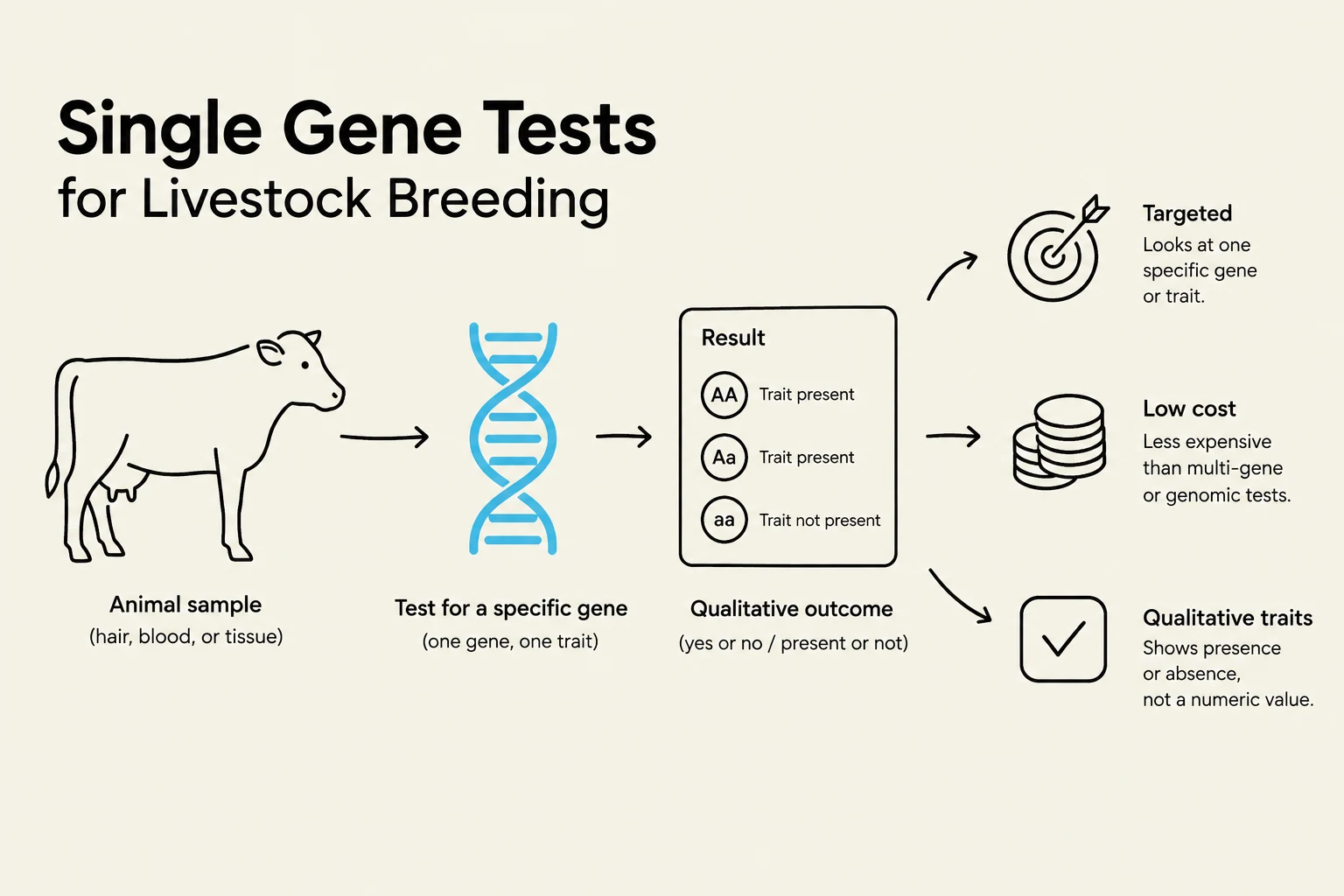
One of the primary advantages of single gene testing is its accessibility. Because the test is looking for a very specific genetic marker, it does not require the massive data processing of a full genome sequence. Instead, a simple sample of hair or blood is sufficient to extract the necessary DNA.
From an economic perspective, these tests are highly affordable, often costing less than $50 per test. This low price point allows producers to test large numbers of animals within a herd, ensuring that breeding decisions are based on genetic reality rather than visual guesswork. Major companies in the United States, such as Neogen, Inc. and Zoetis Genetics, market these specialized tests to help manage herd health and trait consistency.
Identifying Detrimental Conditions
Detrimental conditions are genetic defects that can cause significant economic loss through mortality, reduced growth, or poor physical conformation. Single gene tests are specifically engineered to detect the carriers of these conditions.
Examples of Genetic Defects in Cattle
Several specific tests exist to identify problematic traits in beef and dairy cattle. Below are some of the most common conditions addressed by single gene testing:
Contractual Arachnodactyly (CA): Often referred to as the "Fawn Calf" condition in Angus cattle, this is an abnormality of skeletal development. Testing can identify heterozygotes (carriers) for a cost of approximately $25.00.
Arthrogryposis Multiplex (AM): Known as the "Curly calf" condition, this is a severe defect where affected animals (homozygous recessive) are often stillborn or born with twisted spines and extended or contracted limbs. The test for this condition is also priced around $25.00.
Neuropathic Hydrocephalus (NH): This condition, colloquially called "Water Head," results in animals being born dead with extremely large heads and little to no brain material or spinal cord. The test is available for approximately $25.00.
Maple Syrup Urine Disease (MSUD): This is a metabolic defect involving an enzyme that breaks down complex amino acids. When the enzyme fails, a buildup of these amino acids occurs, leading to brain damage and a distinct odor in the urine.
This diagram illustrates a genetic test for recessive alleles in cattle. It shows how a parent suspected of being a carrier is tested, and the potential offspring outcomes depending on whether the parent is a carrier or not. If the parent is a carrier (Rr), mating with a non-carrier (RR) can result in carrier or affected offspring. If the parent is not a carrier (RR), mating with another non-carrier (RR) will only produce healthy offspring.
The Broader Genomic Context
While single gene tests are vital for managing specific diseases, they represent only one part of a modern breeding program. To get a complete picture of an animal's value, producers often use more complex tools:
SNP Arrays: These are used to scan thousands of points across the entire genome to provide a much broader genetic profile than a single gene test.
Genomic Index/Trait Evaluation: This involves using the data from SNP arrays to calculate a comprehensive score for an animal, predicting its performance for complex, polygenic traits like growth rate or fertility.
In summary, a balanced breeding strategy uses Genomic Indexing to select for high-performing animals and Single Gene Tests to ensure those animals are not carrying hidden, detrimental recessive alleles that could compromise the health of the next generation.
This diagram illustrates the process of single gene testing for livestock breeding, detailing sample collection, gene testing, result interpretation, and the benefits of targeted, low-cost analysis for qualitative traits.
Keep reading for free.
Create an account to finish this reading and make it part of your study routine.