Understanding Sexual Dysfunction and the Sexual Response Cycle
This article explores the four phases of the sexual response cycle (desire, excitement, orgasm, resolution) and the various classifications of sexual dysfunction, including desire, excitement, orgasm, and pain disorders. It also discusses etiology, risk factors, and clinical considerations for nursing care.
Human sexuality is a complex interplay of biological, psychological, and social factors. To understand when sexual functioning becomes a clinical concern, one must first understand the physiological and psychological progression of a typical sexual encounter. This article explores the four phases of the sexual response cycle and the various classifications of sexual dysfunction that may arise when these phases are disrupted.
The Sexual Response Cycle
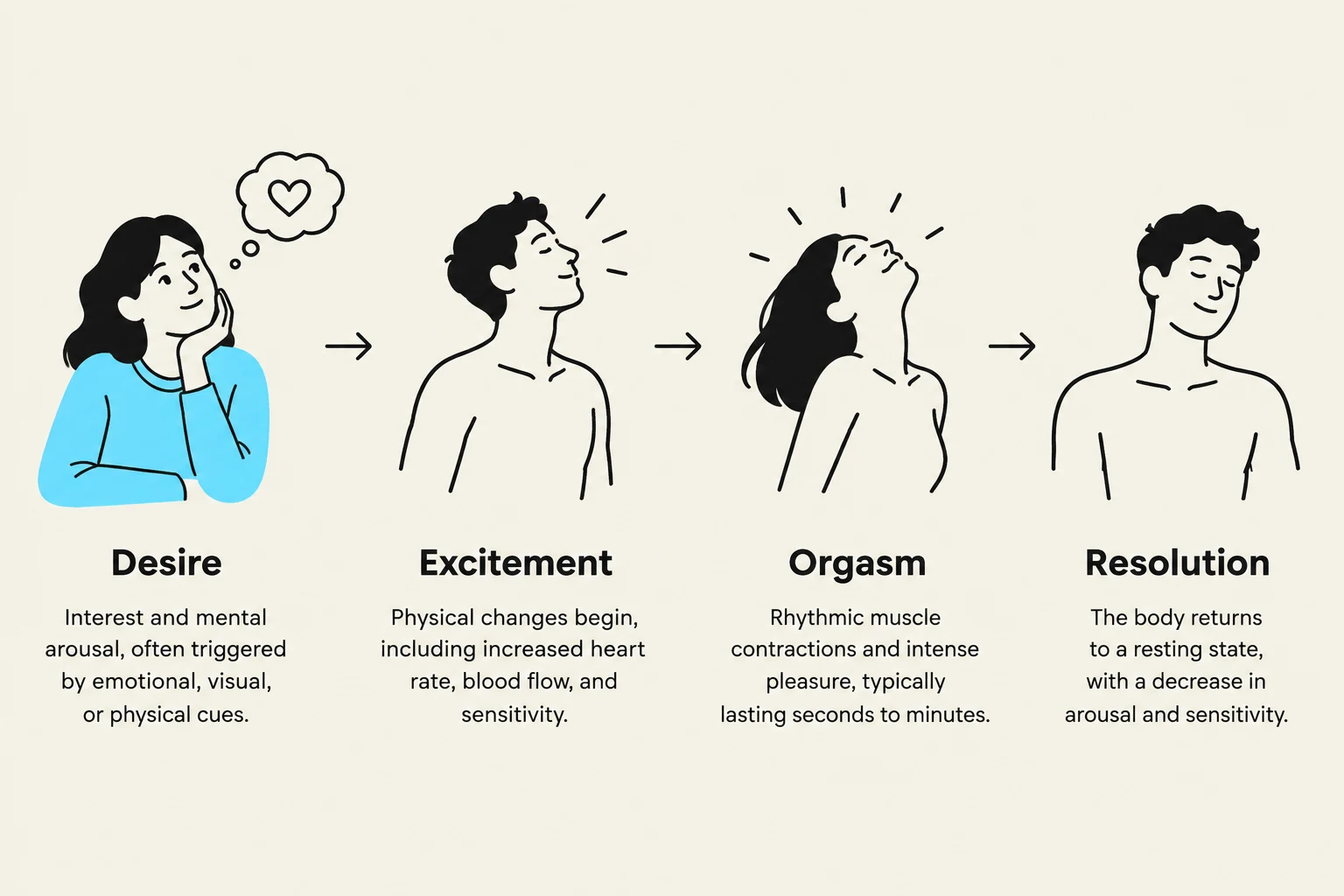
The sexual response cycle describes the physiological and emotional changes that occur during sexual activity. It is generally categorized into four distinct, sequential phases:
Desire: This is the initial psychological phase involving the motivation or urge to engage in sexual activity.
Excitement: This phase involves the physical manifestations of arousal, such as increased heart rate and genital vasocongestion.
Orgasm: The peak of the cycle, characterized by involuntary muscle contractions and intense physical pleasure.
Resolution: The final phase where the body returns to its non-aroused state.
Diagram illustrating the four stages of sexual response: Desire, Excitement, Orgasm, and Resolution, with brief descriptions of each stage.
Clinical Note: For most sexual dysfunctions to be clinically diagnosed, symptoms must be persistent and present for at least 6 months.
Classes of Sexual Dysfunction
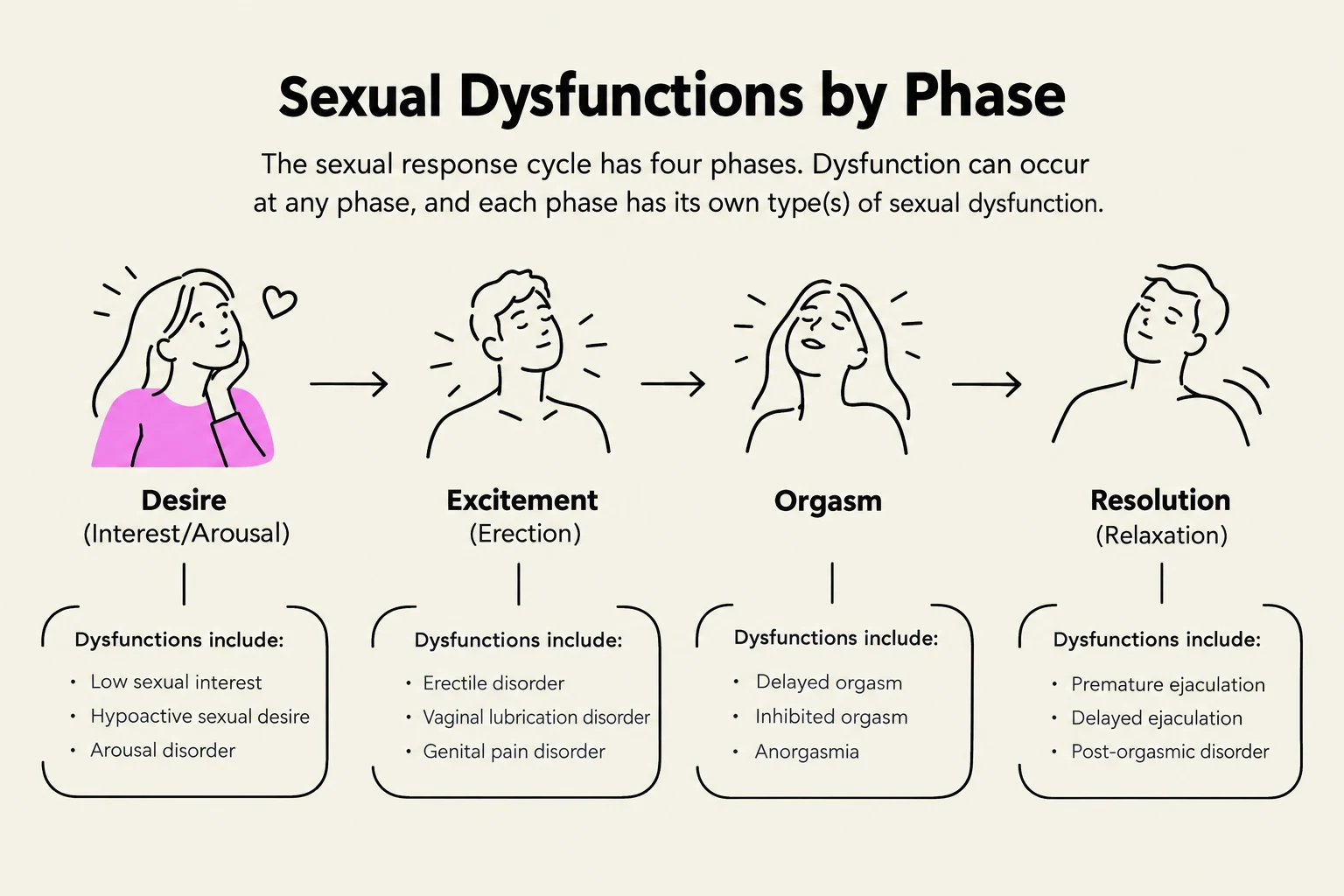
Sexual dysfunction is defined as a disturbance occurring within the desire, excitement, or orgasm phases, or the presence of pain during sexual penetration. These dysfunctions are categorized based on which part of the cycle is affected.
Desire Disorders
These disorders occur during the first phase of the cycle and involve a lack of motivation or interest in sexual activity.
Female Sexual Interest/Arousal Disorder: Characterized by a reduced interest in sexual fantasies, activity, or pleasure, which causes emotional distress.
Male Hypoactive Sexual Desire Disorder: Defined by a deficiency or a total absence of sexual fantasies or the desire for sexual activity.
Excitement Disorders
Disorders in this phase involve the inability to achieve the physical arousal necessary for sexual activity.
Erectile Disorder (Impotence): This involves difficulty obtaining or maintaining an erection sufficient for sexual activity. To meet clinical criteria, this must occur on at least 75% of sexual occasions.
This diagram illustrates the four phases of the sexual response cycle: Desire, Excitement, Orgasm, and Resolution, along with common dysfunctions associated with each phase.
Orgasm Disorders
These dysfunctions occur at the peak of the sexual response cycle.
Female Orgasmic Disorder (Anorgasmia): The persistent inhibition of orgasm following a normal excitement phase.
Delayed Ejaculation: A condition where the male achieves ejaculation only with great difficulty despite stimulation.
Premature Ejaculation: Achieving orgasm and ejaculation before the individual wishes to do so.
Pain Disorders
Genito-pelvic Pain/Penetration Disorder: This involves discomfort or pain during penetration. This can be exacerbated by a "fear of recurrence," which increases anxiety and muscle tension, creating a difficult cycle for the patient.
Etiology and Risk Factors
Understanding why these dysfunctions occur is critical for clinical assessment. Dysfunctions can be categorized by their underlying cause:
Sexual Dysfunction Due to a General Medical Condition: Systemic issues such as cardiovascular, neurological, or endocrine diseases can impair sexual function.
Substance-induced Sexual Dysfunction: The use of substances such as alcohol, opioids, sedatives, amphetamines, or cocaine can significantly disrupt the sexual response.
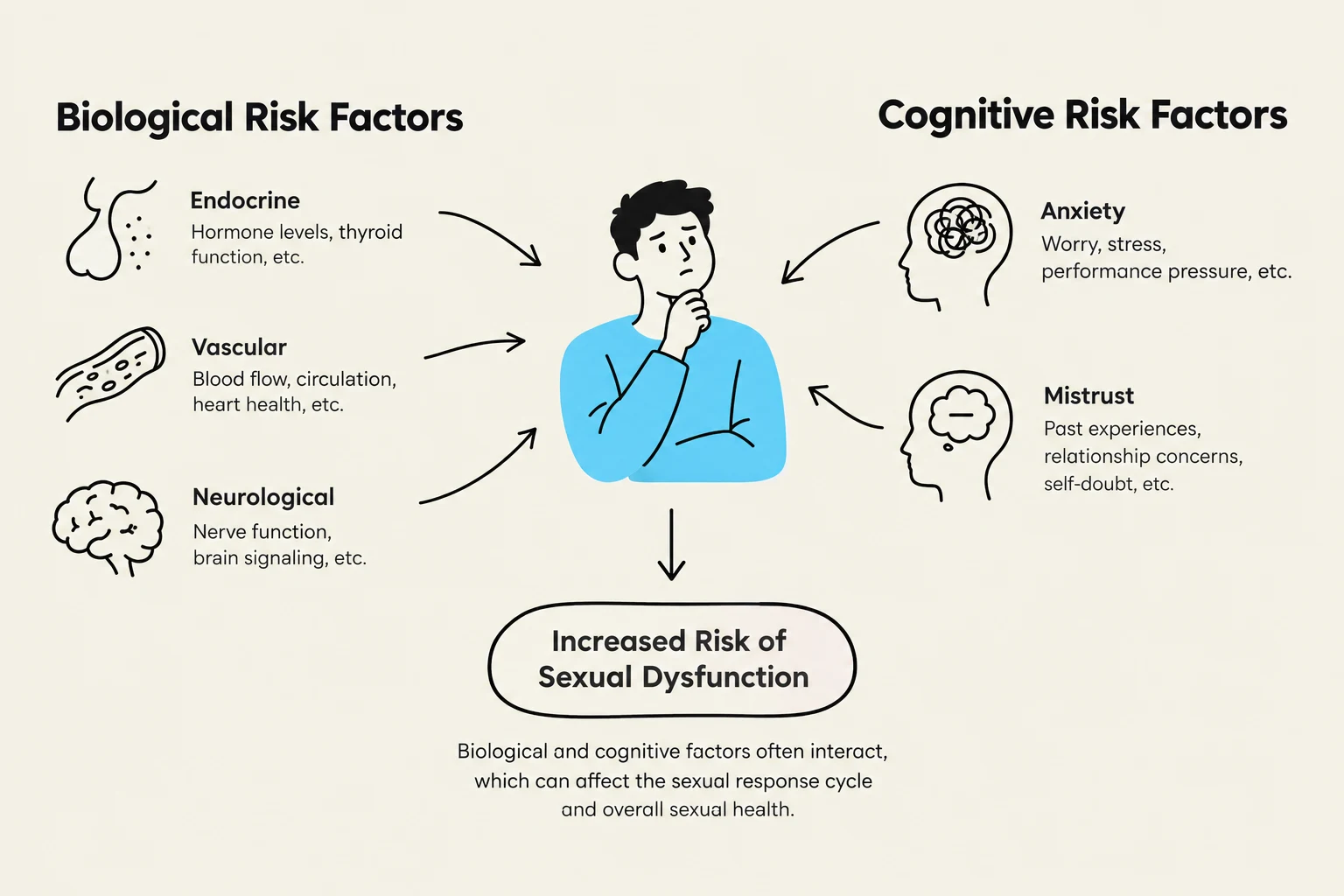
Beyond direct medical causes, risk factors are broadly divided into two domains:
Biological Factors: These include endocrine imbalances, vascular issues, neurological conditions, and genital-specific problems.
Cognitive Factors: These include psychological barriers such as anxiety, misinformation, poor communication between partners, and unacknowledged or unidentified sexual orientation.
Important Distinction: Asexuality vs. Dysfunction
It is vital for clinicians to distinguish between sexual dysfunction and asexuality. Asexuality is potentially a sexual orientation rather than a clinical disorder.
This diagram illustrates biological and cognitive risk factors that can contribute to an increased risk of sexual dysfunction. Biological factors include endocrine, vascular, and neurological aspects, while cognitive factors encompass anxiety and mistrust.
Clinical Considerations for Nursing Care
When assessing patients for sexual concerns, nurses should look for both verbal and nonverbal cues. Nonverbal signs may include blushing, discomfort, or signs of anxiety, while verbal cues might include expressed concerns over sexual performance or the impact of medications.
Effective assessment requires a professional approach:
Setting: Ensure privacy and minimize distractions.
Attitude: Maintain a non-judgmental, open, and receptive attitude.
Holistic View: Recognize that assessing sexuality is a fundamental part of holistic nursing care.
Treatment often involves a combination of biological and psychological modalities. Biological treatments may include pharmacotherapy, while psychological therapies can include sensate focus, behavioral therapy, systematic desensitization, or masturbation training.
Keep reading for free.
Create an account to finish this reading and make it part of your study routine.