


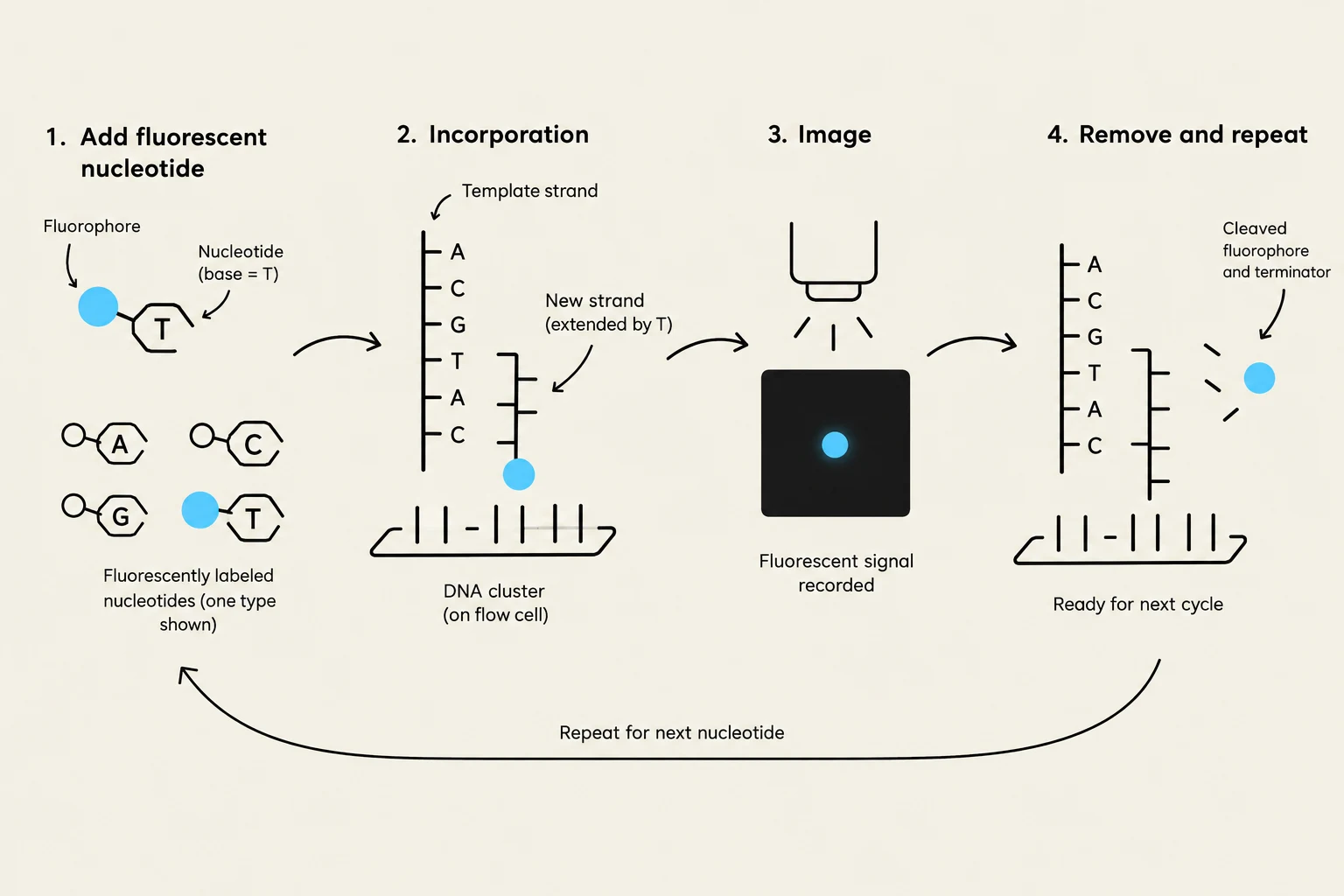
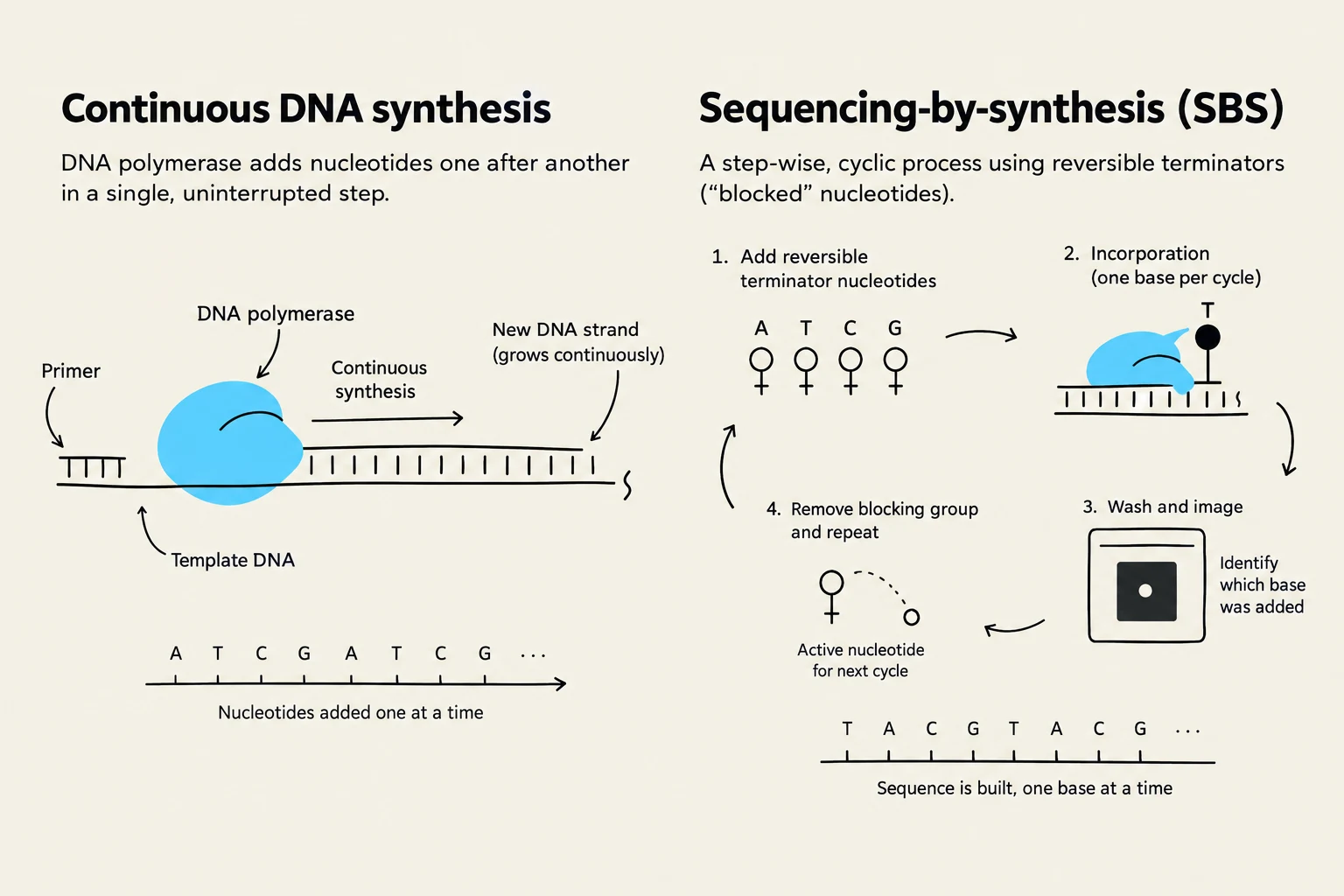
In the era of modern genomics, the ability to read DNA sequences rapidly and accurately has revolutionized medicine, forensics, and evolutionary biology. At the heart of this revolution lies the Sequencing-by-Synthesis (SBS) technology, most famously implemented by Illumina. Unlike older methods that relied on breaking DNA into fragments and reading them piece by piece, SBS allows for the simultaneous reading of millions of DNA fragments by watching them grow, one base at a time, through a highly controlled chemical process.
To understand how this works, we must look at two distinct phases: how we prepare the DNA to be "seen" by the machine (Cluster Generation) and how we actually "read" the code (the SBS cycle).
Step 1: Cluster Generation via Bridge Amplification
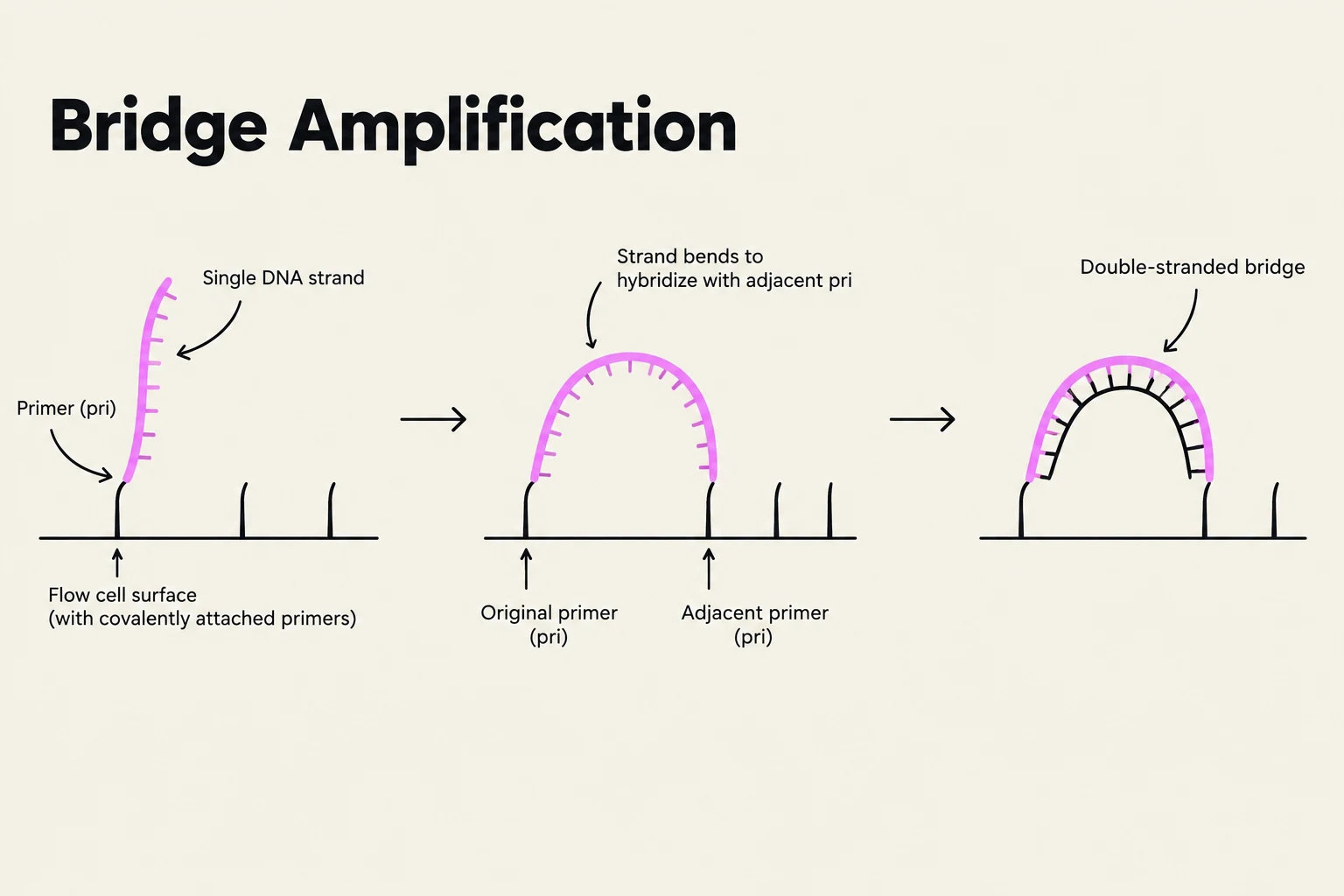
A single molecule of DNA is far too dim for a standard sequencing camera to detect. If we tried to sequence one molecule at a time, the signal-to-noise ratio would be too low to distinguish a true base call from background electronic noise. To solve this, Illumina uses a process called bridge amplification to create "clusters".
The process begins with a flow cell, a glass slide coated with a lawn of short oligonucleotides (single-stranded DNA primers) that are complementary to the adapters attached to our DNA fragments.
- Attachment: The single-stranded DNA fragments (library) are flowed into the cell, where they hybridize to the surface-bound primers.
- Bridge Formation: The DNA strand bends over, allowing its free end to hybridize with a second, adjacent primer on the flow cell surface. This creates a "bridge" structure.
- Amplification: A polymerase enzyme extends the strand, creating a double-stranded bridge. The original template is then chemically denatured (separated), leaving two single strands anchored to the surface.
- Repetition: This cycle repeats many times. Each time a bridge is formed and extended, the number of identical DNA strands in that specific location doubles.
Keep reading for free.
Create an account to finish this reading and make it part of your study routine.
Continue reading freeAlready have an account? Log in
Updated