


Motivation is much more than just "wanting" to do something. In the context of behavior change, it is a complex process that involves the initiation and the continuation of activity directed toward a goal. To understand how people stay active or why they quit, researchers look at three key dimensions: direction (the goals a person seeks out), intensity (the amount of effort exerted), and persistence (how long that effort is maintained).
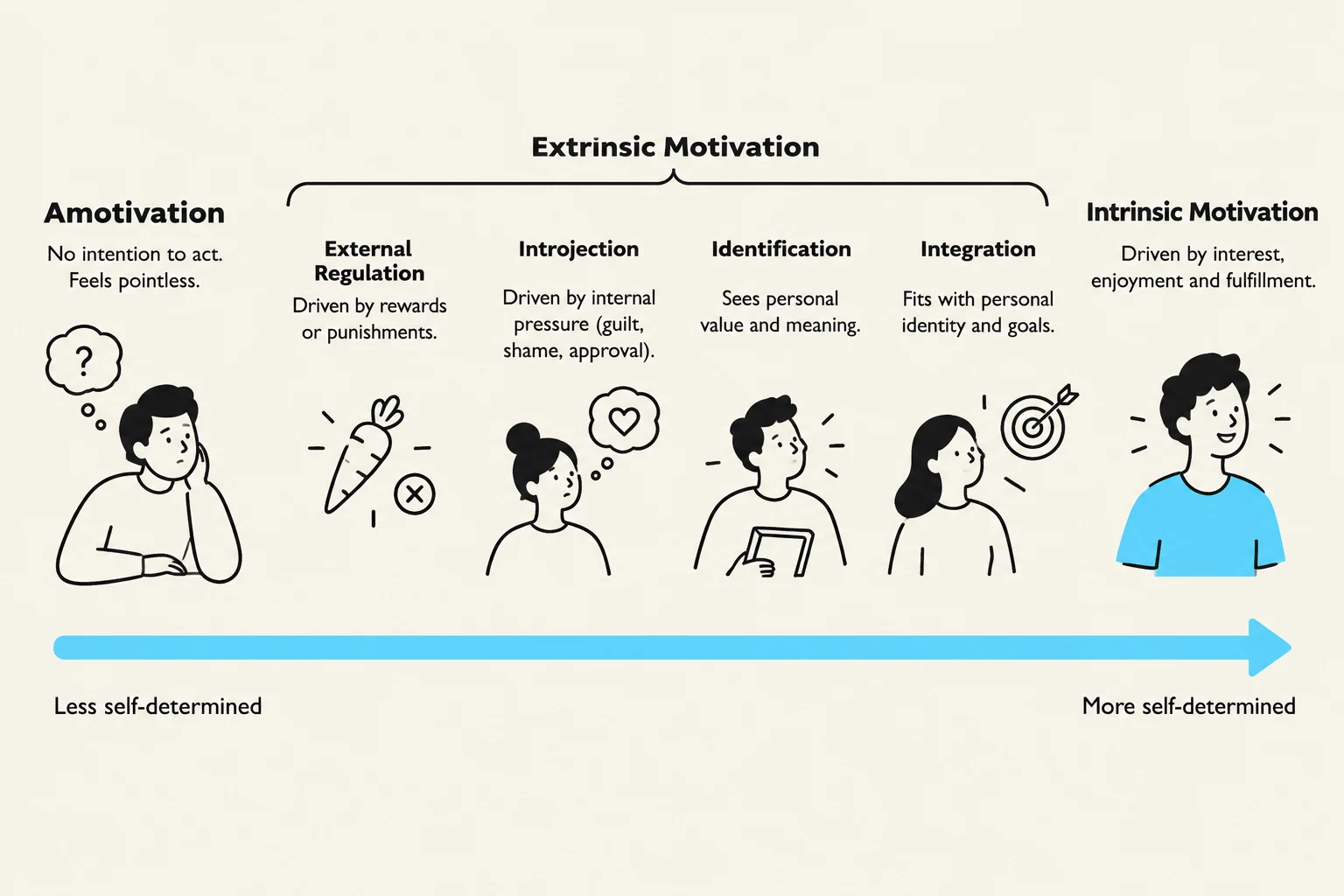
While many theories attempt to explain these dimensions, Self-Determination Theory (SDT) stands out as a global theory of human motivation and development. Rather than viewing motivation as a simple "on/off" switch, SDT suggests that motivation exists on a spectrum of quality and autonomy.
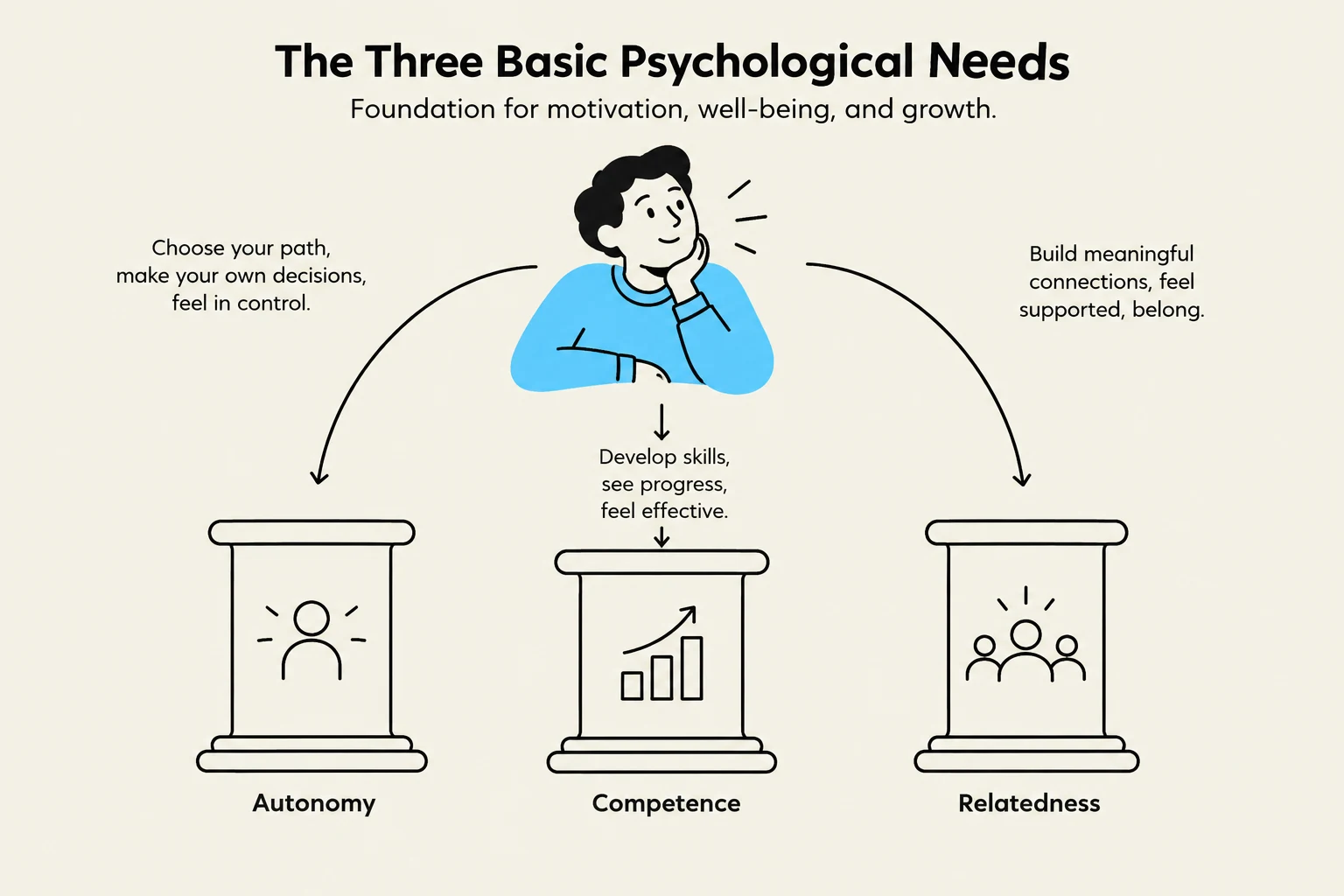
The Three Basic Psychological Needs
At the heart of Self-Determination Theory is the idea that humans have innate tendencies toward growth and integration. For these natural tendencies to flourish, three fundamental psychological needs must be satisfied:
- Autonomy: The feeling that one has choice and control over their own behavior and is the initiator of their actions.
- Competence: The need to feel capable, effective, and to have a sense of mastery over one's environment and tasks.
- Relatedness: The need to feel a sense of belonging, connection, and social support from others.
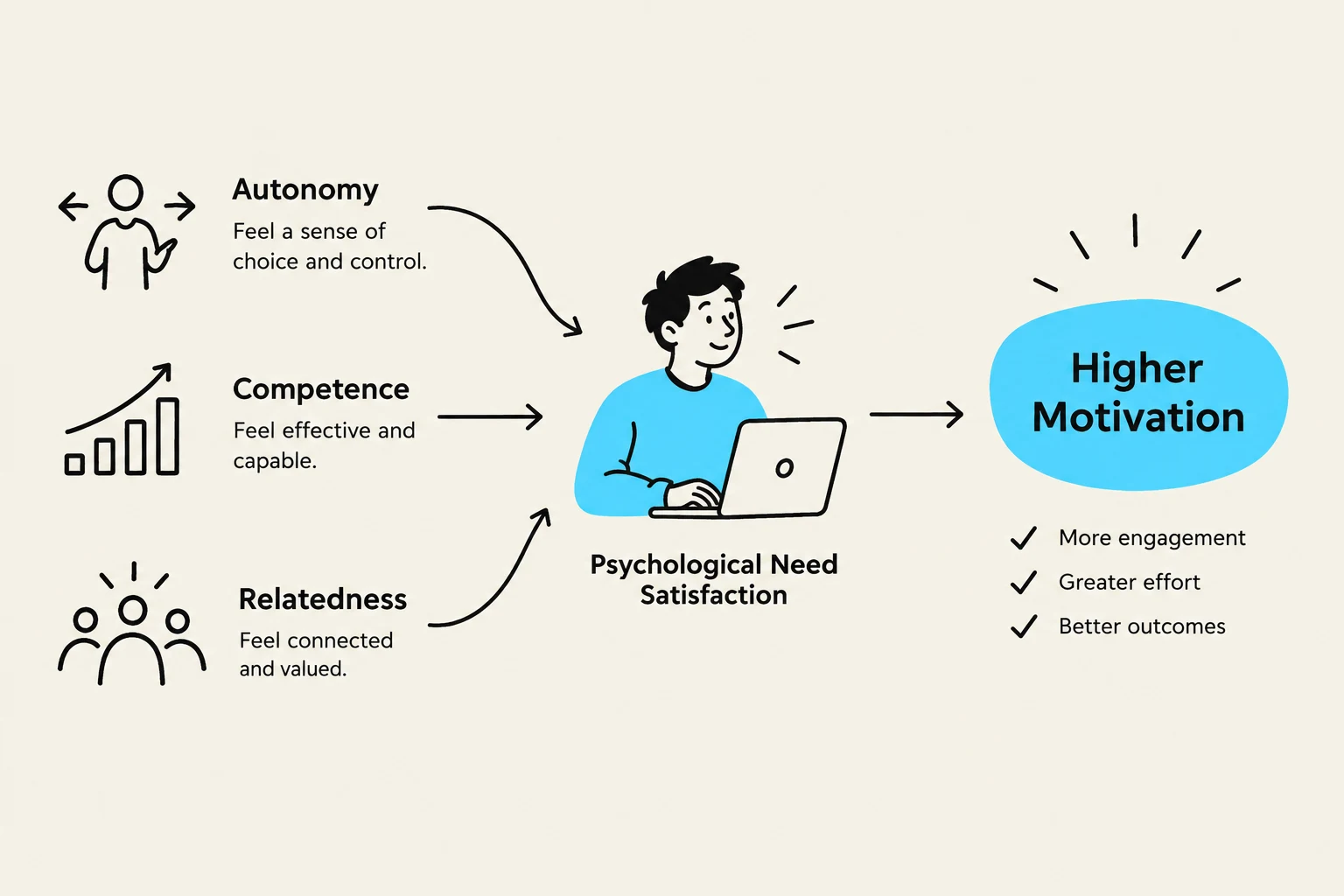
When these needs are met, people experience high-quality motivation, leading to better engagement, performance, and overall well-being. Conversely, when these needs are "thwarted" or blocked, it can lead to frustration and negative psychological outcomes.
Exam Tip: If a question asks how to improve long-term participation in a sport, look for answers that focus on satisfying these three needs (e.g., offering choices to support autonomy or providing constructive feedback to support competence).
Keep reading for free.
Create an account to finish this reading and make it part of your study routine.
Continue reading freeAlready have an account? Log in
Updated