This article defines seizures as uncoordinated electrical discharges of neurons in the brain that interrupt normal function. It distinguishes between a single seizure event and epilepsy, a chronic condition characterized by recurring seizures. The text also outlines the neurological, cognitive, psychological, and socia
To understand the complexities of the human brain, one must first understand how it communicates. The brain operates through a delicate balance of electrical signals that allow us to move, think, and feel. However, when this electrical balance is disrupted, the result can be a sudden and profound interruption of normal function. This article explores the fundamental definitions of seizures and the broader implications of seizure disorders.
What is a Seizure?
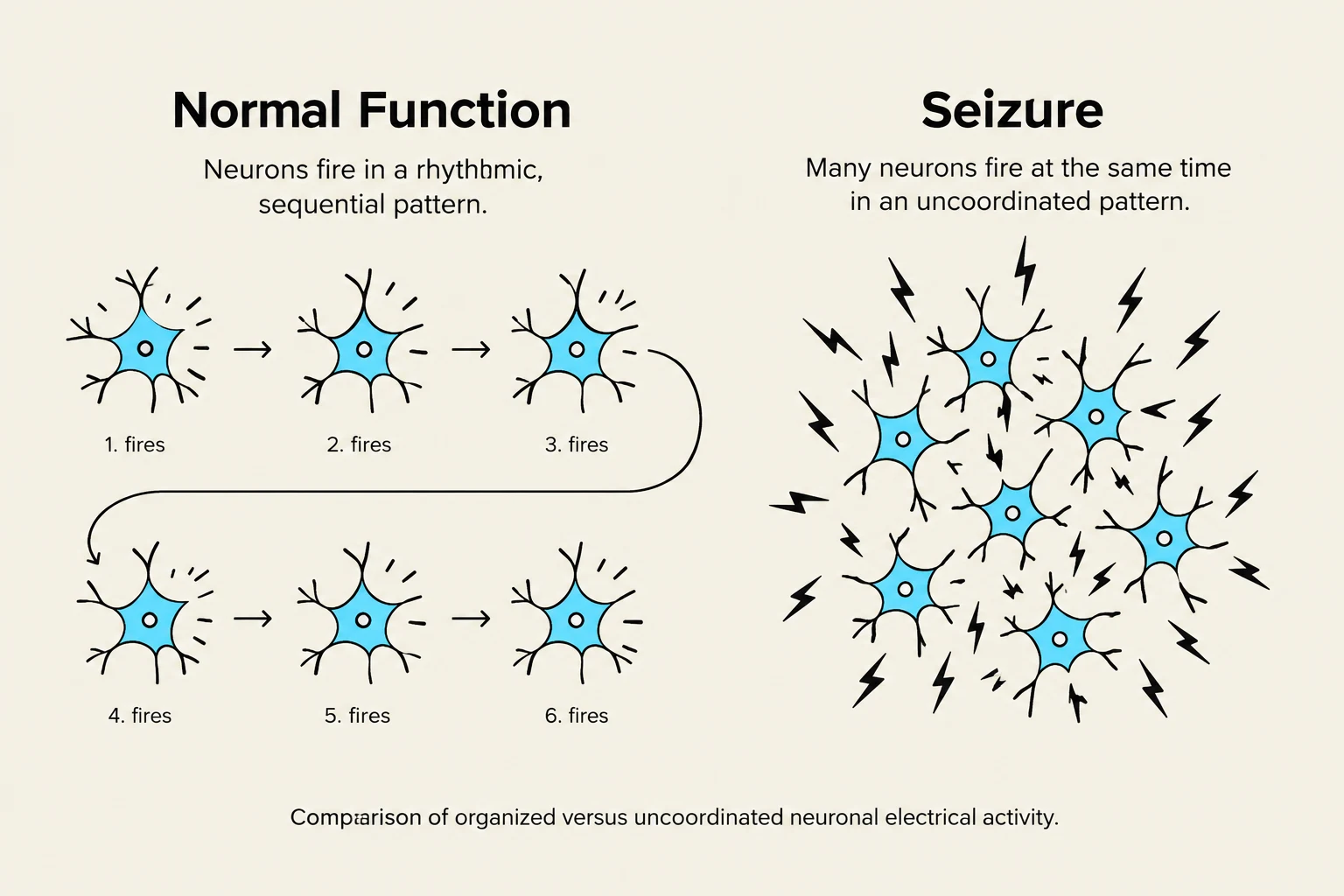
Comparison of organized versus uncoordinated neuronal electrical activity.
At its most basic level, a seizure is defined as an uncoordinated electrical discharge of neurons in the brain that interrupts normal function.
To visualize this, imagine a city's power grid. Normally, electricity flows through wires in a controlled, rhythmic manner to power lights and appliances. A seizure is akin to a sudden power surge or a short circuit that causes lights to flicker uncontrollably or appliances to malfunction. In the brain, instead of neurons firing in a precise, organized sequence to execute a specific task (like moving a finger or recalling a word), they all fire at once in a chaotic, uncoordinated burst.
IMG_4735.jpeg
As shown in the educational presentation slide, this process involves the complex folds of the brain, known as the gyri and sulci, where these electrical events take place.
Student Tip: When studying for exams, distinguish between the event and the condition. A "seizure" is the single event (the electrical discharge), whereas "epilepsy" refers to the underlying chronic condition.
Seizure Disorders and Epilepsy
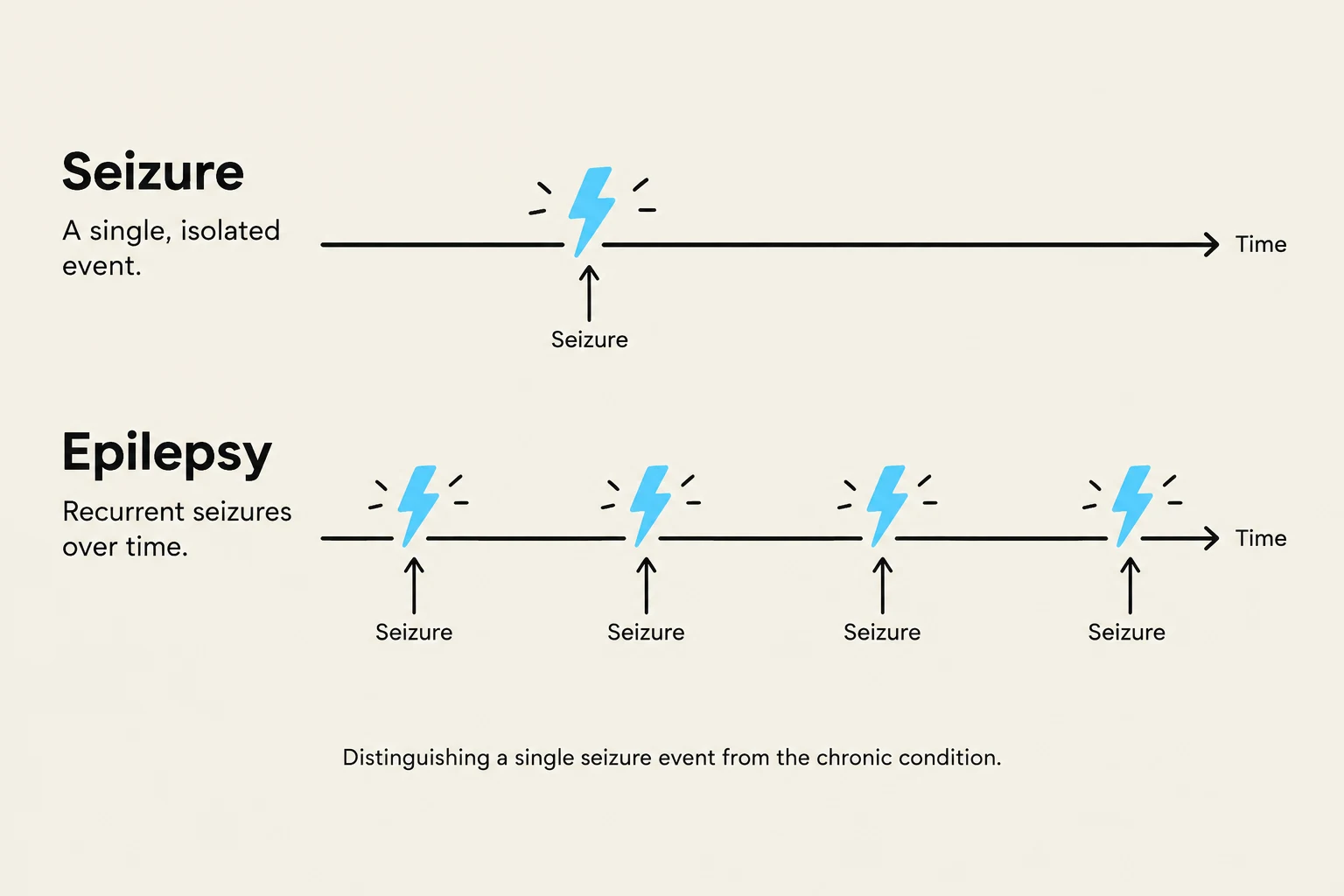
This diagram illustrates the difference between a single seizure event and epilepsy, which is characterized by recurrent seizures over time.
While a single seizure can be caused by many temporary factors—such as high fever, extreme sleep deprivation, or low blood sugar—a seizure disorder refers to a more persistent issue.
A seizure disorder, which is often referred to as epilepsy, is classified as a group of neurological disorders. The defining characteristic of epilepsy is the occurrence of recurring seizures. It is not merely a one-time occurrence but a pattern of neurological instability.
Because these disorders are rooted in the brain's electrical activity, they fall under the broader umbrella of neurological disorders.
The Impact of Epilepsy
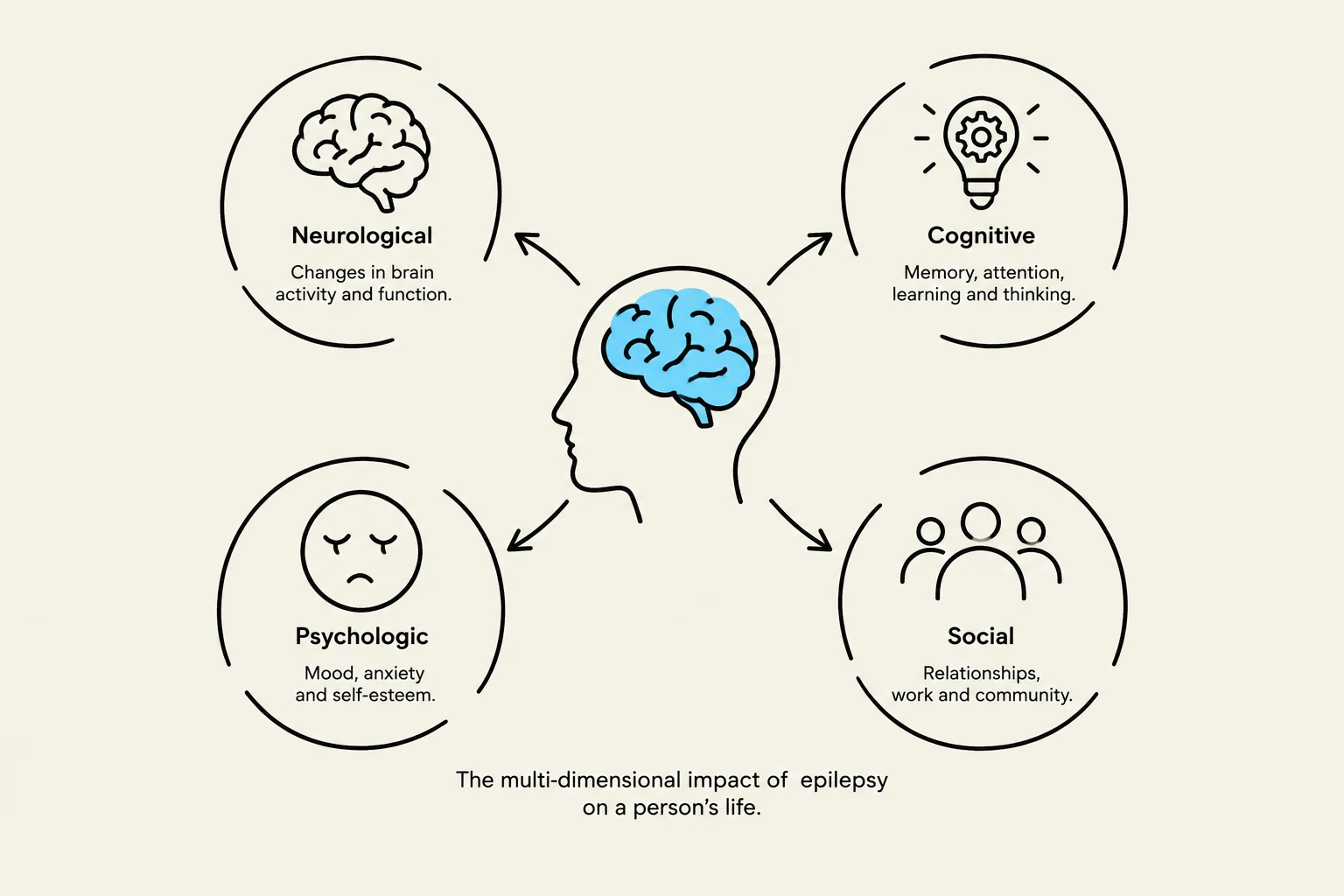
This diagram illustrates the multi-dimensional impact of epilepsy on a person's life, categorizing its effects into neurological, cognitive, psychological, and social aspects.
Epilepsy is much more than a physical phenomenon; it is a condition that affects the whole person. Because the brain is the command center for almost every aspect of human existence, the consequences of recurring seizures extend far beyond the moments of the electrical discharge itself.
The impact of epilepsy can be categorized into several domains:
Neurological Consequences: Direct effects on brain function, motor control, and sensory perception.
Cognitive Consequences: Potential impacts on memory, attention, processing speed, and learning abilities.
Psychologic Consequences: The mental health toll, which may include anxiety, depression, or the stress of living with an unpredictable condition.
Social Consequences: Challenges in daily life, such as navigating school, work, driving, or social interactions, which can be affected by the stigma or physical limitations of the disorder.
Summary Table: Key Distinctions
To help consolidate your learning, use the following table to differentiate between the core concepts discussed in this module.
Term
Definition
Key Characteristic
Seizure
An uncoordinated electrical discharge of neurons.
A single, acute event that interrupts function.
Seizure Disorder (Epilepsy)
A group of neurological disorders.
Characterized by recurring seizures.
Neurological Disorders
A broad category of medical conditions affecting the nervous system.
Includes epilepsy and many other brain-related conditions.
By understanding that a seizure is a specific electrical event and epilepsy is the broader clinical diagnosis, healthcare students can better approach patient care and education.
Keep reading for free.
Create an account to finish this reading and make it part of your study routine.