


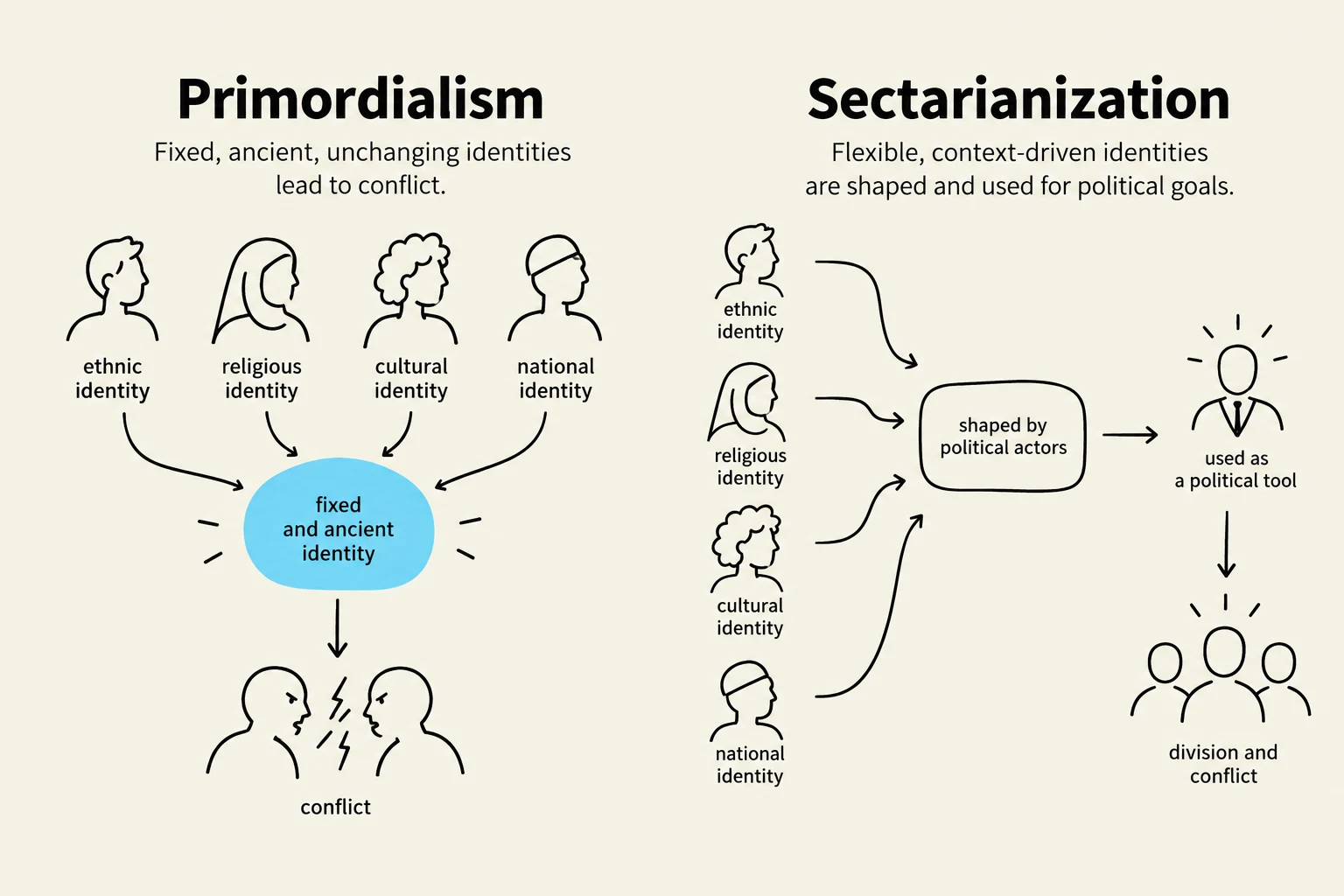
When we look at modern conflicts in the Middle East, it is tempting to view them through the lens of "ancient hatreds." We often assume that Sunnis and Shiites have been locked in an irreconcilable struggle for centuries, and that these religious identities are fixed, unchangeable constants that inevitably lead to violence. However, political science suggests a much more nuanced reality. Instead of seeing sectarianism as a primordial constant—something that simply is—we should view it as a process of sectarianization.
In this view, sectarianism is a variable of political mobilization. It is something that political actors do to achieve specific strategic goals, such as consolidating power, securing resources, or creating "strategic depth" in a competitive regional environment.
Primordialism vs. Constructivism
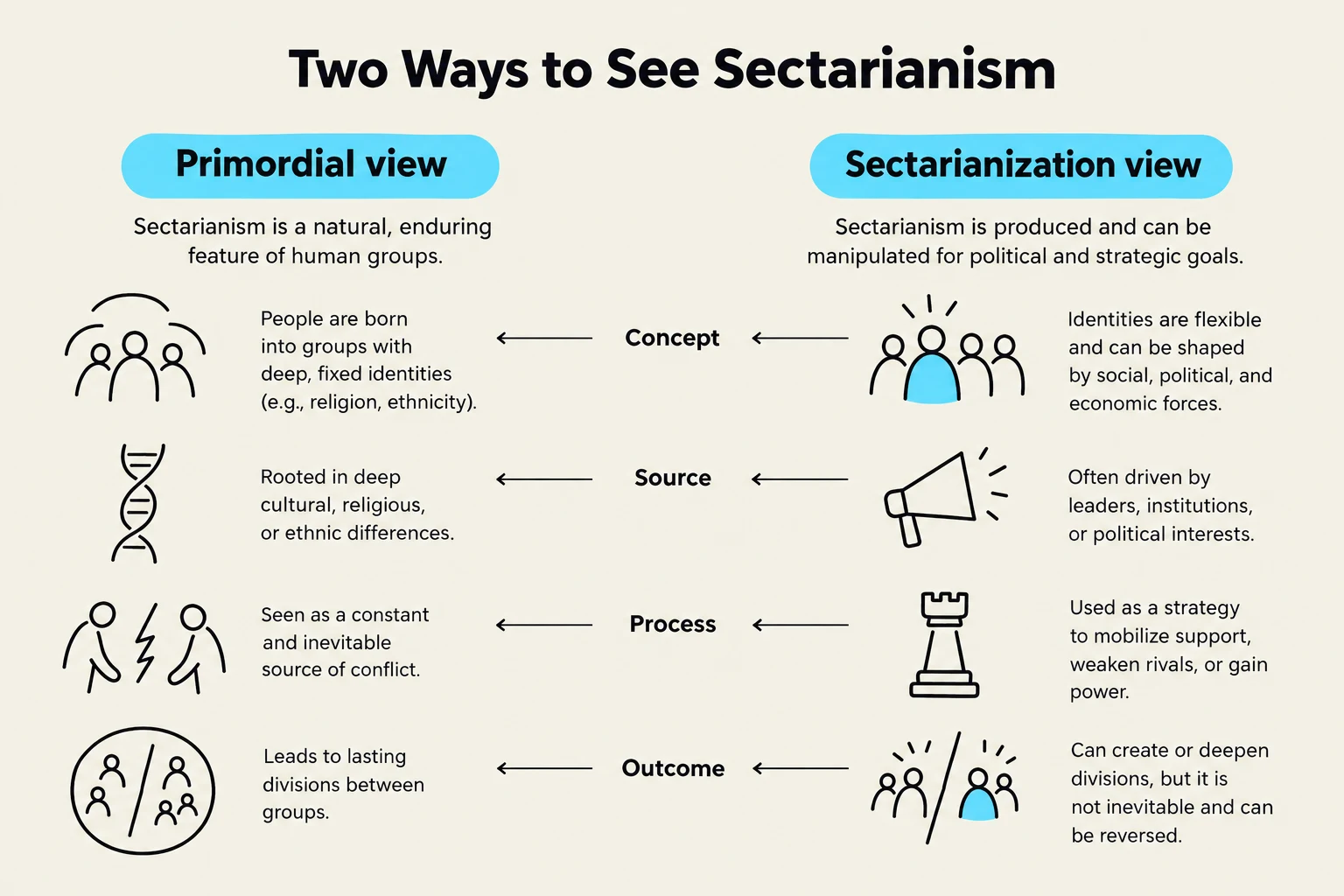
To understand the logic of sectarianization, we must first distinguish between two competing ways of looking at identity.
Primordialism argues that religious and ethnic identities are deeply rooted, unchanging, and "natural." From this perspective, conflict is inevitable because the identities themselves are inherently antagonistic. If you follow this logic, the conflict is the cause of the political instability.
Constructivism (or the Sectarianization approach) argues the opposite. It suggests that identities are fluid and can be "activated" or "weaponized" by elites. In this framework, sectarianism is not the cause of the conflict, but rather a tool used within the conflict. Political leaders may emphasize religious differences to mobilize a base, distract from domestic failures, or forge alliances with external powers.
Exam Tip: If a question asks whether sectarianism is "inherent" or "instrumental," look for the distinction between primordialism (inherent) and sectarianization (instrumental/political).

Keep reading for free.
Create an account to finish this reading and make it part of your study routine.
Continue reading freeAlready have an account? Log in
Updated