


Respiratory Distress Syndrome (RDS), historically known as hyaline membrane disease, is one of the most common causes of respiratory failure in neonates, particularly those born prematurely. At its core, the condition is a mechanical failure of the lungs caused by a lack of a critical substance known as pulmonary surfactant. Understanding the cellular mechanisms and the clinical interventions available to prevent this condition is essential for anyone studying neonatal medicine.
The Role of Surfactant and Type II Pneumocytes
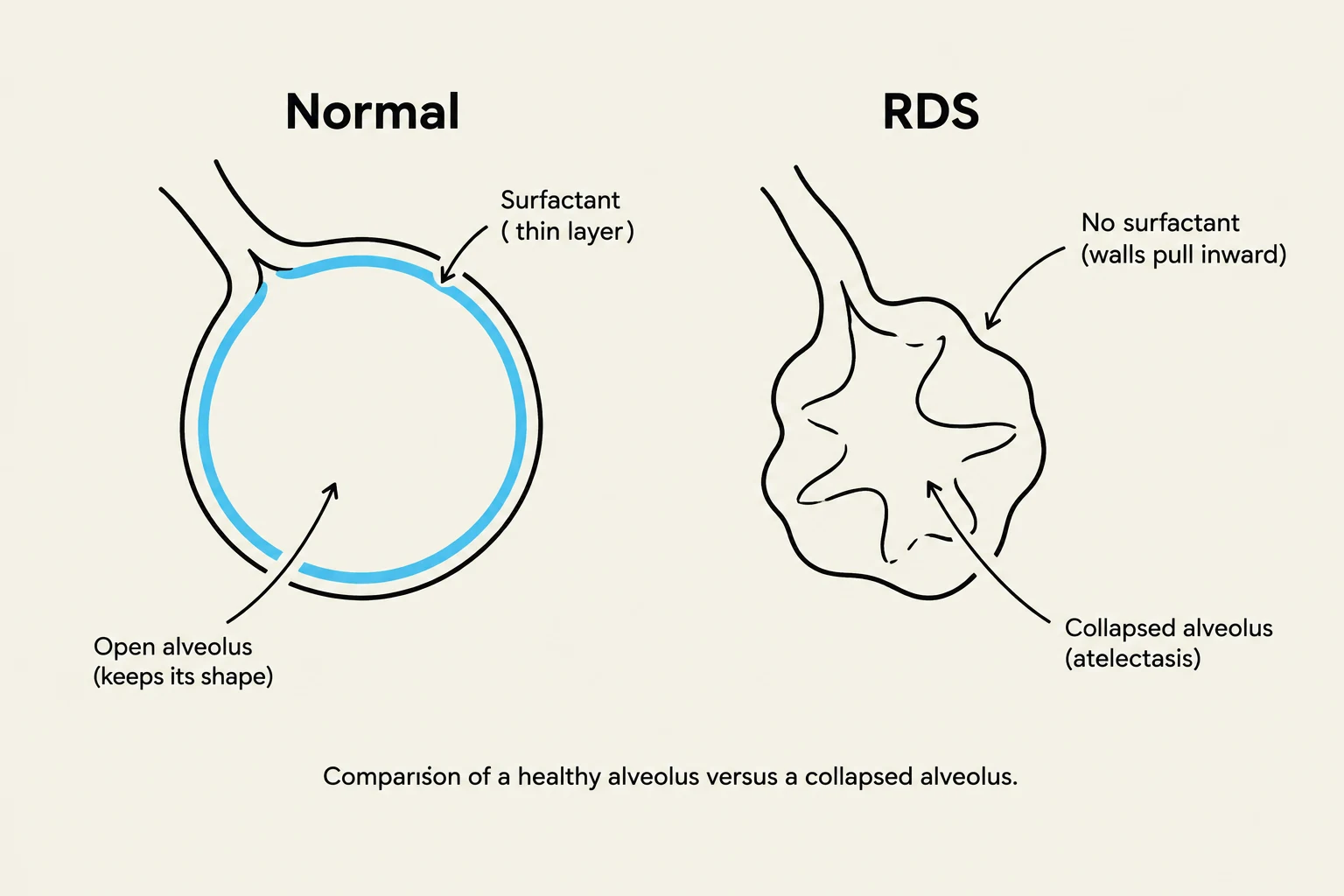
To understand RDS, one must first understand the normal physiology of the alveoli—the tiny air sacs in the lungs where gas exchange occurs. In a healthy lung, the surface of these alveoli is coated with a thin layer of pulmonary surfactant.
Surfactant is a complex mixture of lipids and proteins that serves a vital mechanical purpose: it reduces surface tension at the air-liquid interface within the alveoli. According to the Law of Laplace, the pressure () required to keep an alveolus open is related to the surface tension () and the radius () of the alveolus:
Without surfactant, the surface tension () remains high. As the radius () of the alveolus decreases during expiration, the pressure required to keep the sac open increases significantly. This leads to widespread alveolar collapse, a phenomenon known as atelectasis.
The production of this life-saving substance is the responsibility of specialized cells within the alveolar epithelium called Type II pneumocytes. These cells are responsible for the synthesis, secretion, and recycling of surfactant. In the developing fetus, the maturation of Type II pneumocytes and the subsequent accumulation of surfactant in the lungs occur late in gestation, typically becoming sufficient for independent breathing only as the pregnancy approaches full term.

Keep reading for free.
Create an account to finish this reading and make it part of your study routine.
Continue reading freeAlready have an account? Log in
Updated