


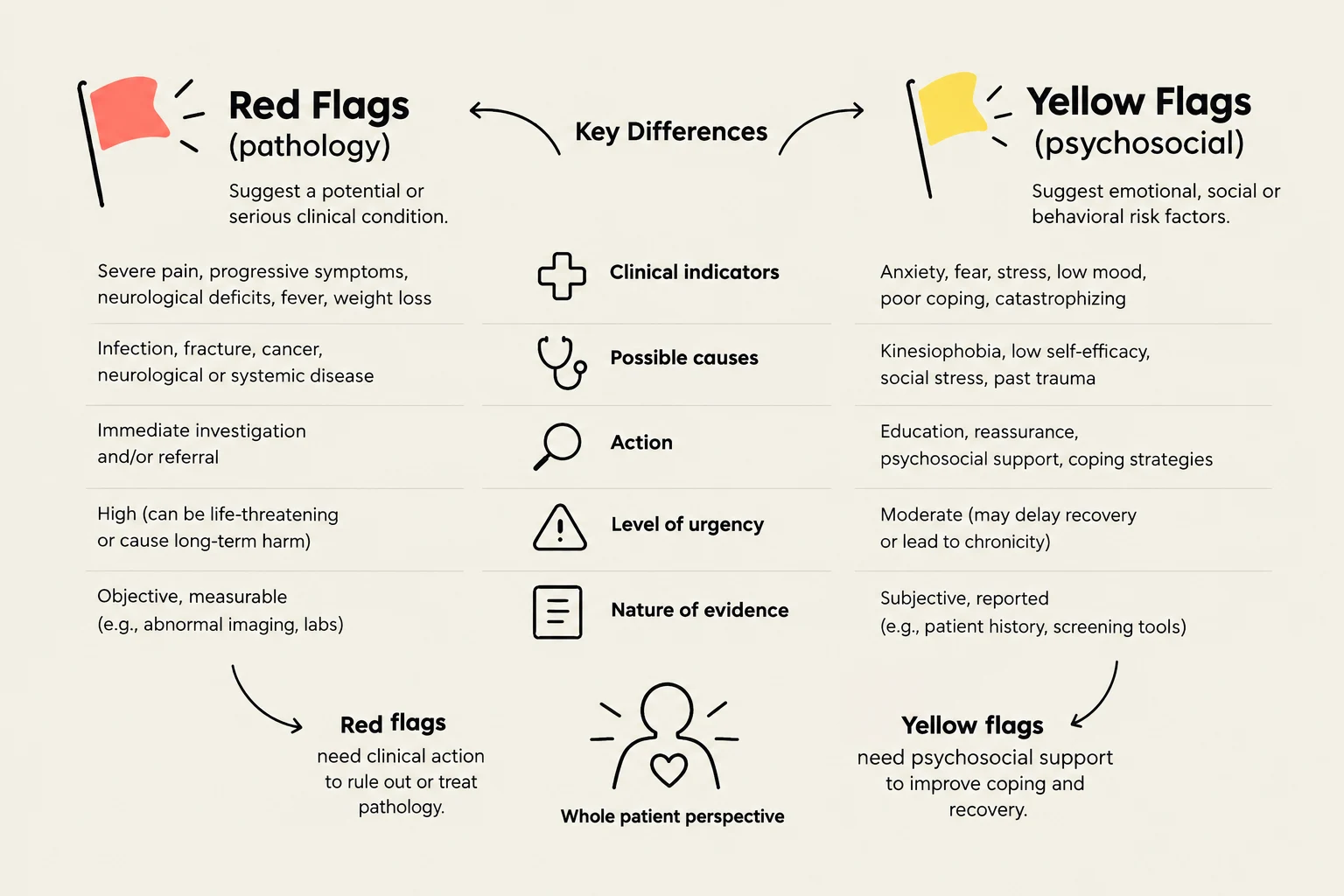
In clinical practice, particularly within musculoskeletal and primary care settings, the ability to differentiate between routine presentations and high-risk cases is a fundamental skill. Clinicians often use the metaphorical language of "flags" to categorize clinical findings. While many patients present with expected, non-threatening symptoms, others harbor underlying pathologies or psychological barriers that can significantly impede recovery or even threaten life. Understanding the distinction between Red Flags and Yellow Flags is essential for determining whether a patient requires immediate medical referral, a modified treatment approach, or standard conservative management.
Red Flags: Identifying Serious Pathology
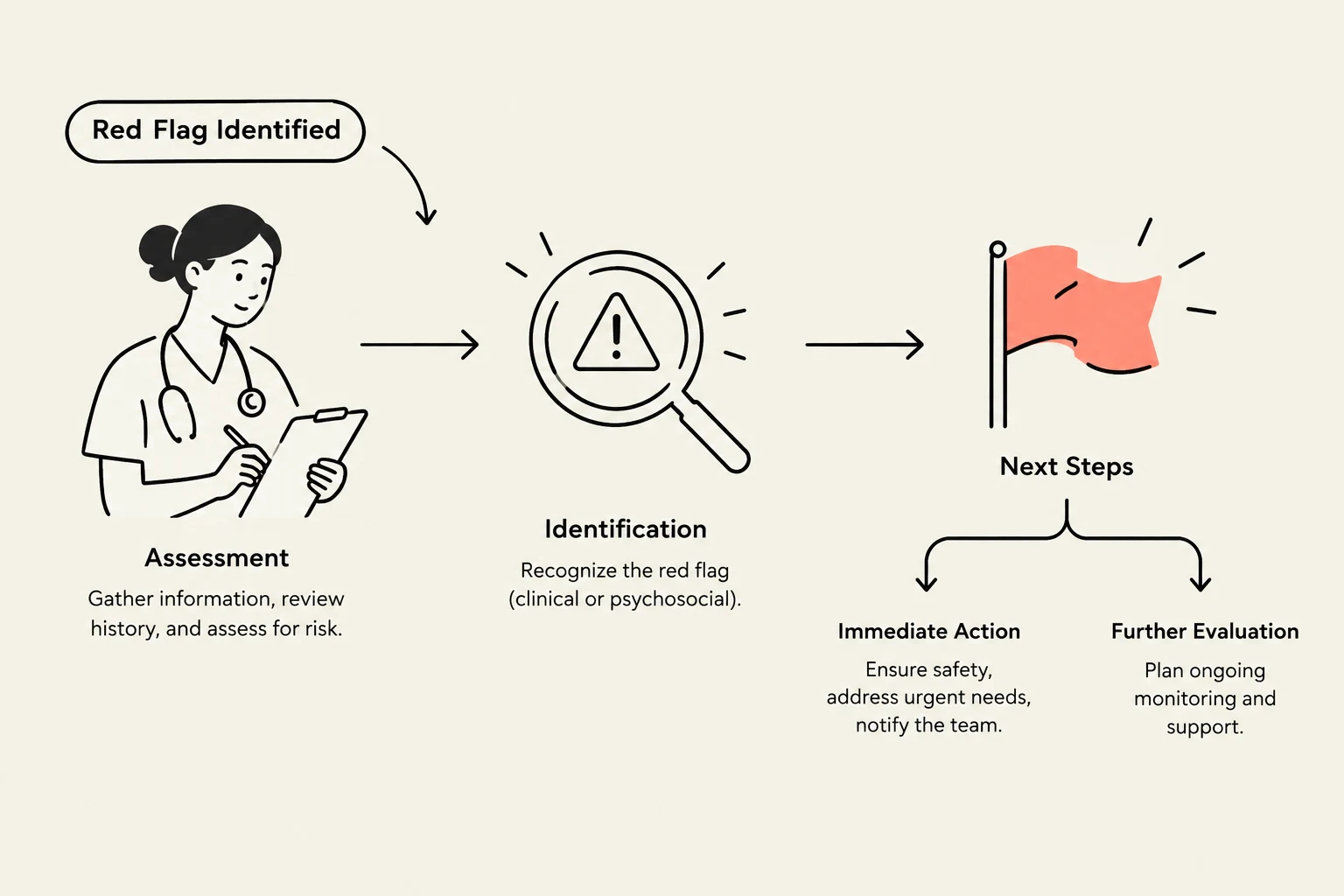
Red Flags are clinical indicators that suggest the presence of serious underlying pathology, such as malignancy, infection, fracture, or neurological compromise. These are "must-not-miss" signs. When a Red Flag is identified, the clinician's priority shifts from symptom management to diagnostic investigation and, often, urgent medical referral.
Common categories of Red Flags include:
- Malignancy: Unexplained weight loss, night pain that prevents sleep, or a history of cancer.
- Infection: Fever, chills, or localized warmth and redness, especially in the context of spinal pain (which may suggest discitis or osteomyelitis).
- Neurological Compromise: Sudden onset of saddle anesthesia, bladder/bowel dysfunction, or progressive motor weakness (indicative of Cauda Equina Syndrome).
- Fracture: Significant trauma or osteoporosis in older populations presenting with localized, acute bone pain.
Exam Tip: If a patient presents with "night pain" that is not relieved by changing position, always investigate for malignancy or infection. This is a classic Red Flag in clinical examinations.
Keep reading for free.
Create an account to finish this reading and make it part of your study routine.
Continue reading freeAlready have an account? Log in
Updated