


When individuals or entities acquire real estate, they do not always hold title in the same way. The legal method by which property is owned determines how rights are shared among co-owners, how property is transferred upon death, and how common amenities are managed. Understanding these distinctions—ranging from joint tenancies to complex common interest communities—is essential for anyone navigating real estate law or investment.
Joint Tenancy and the Four Unities
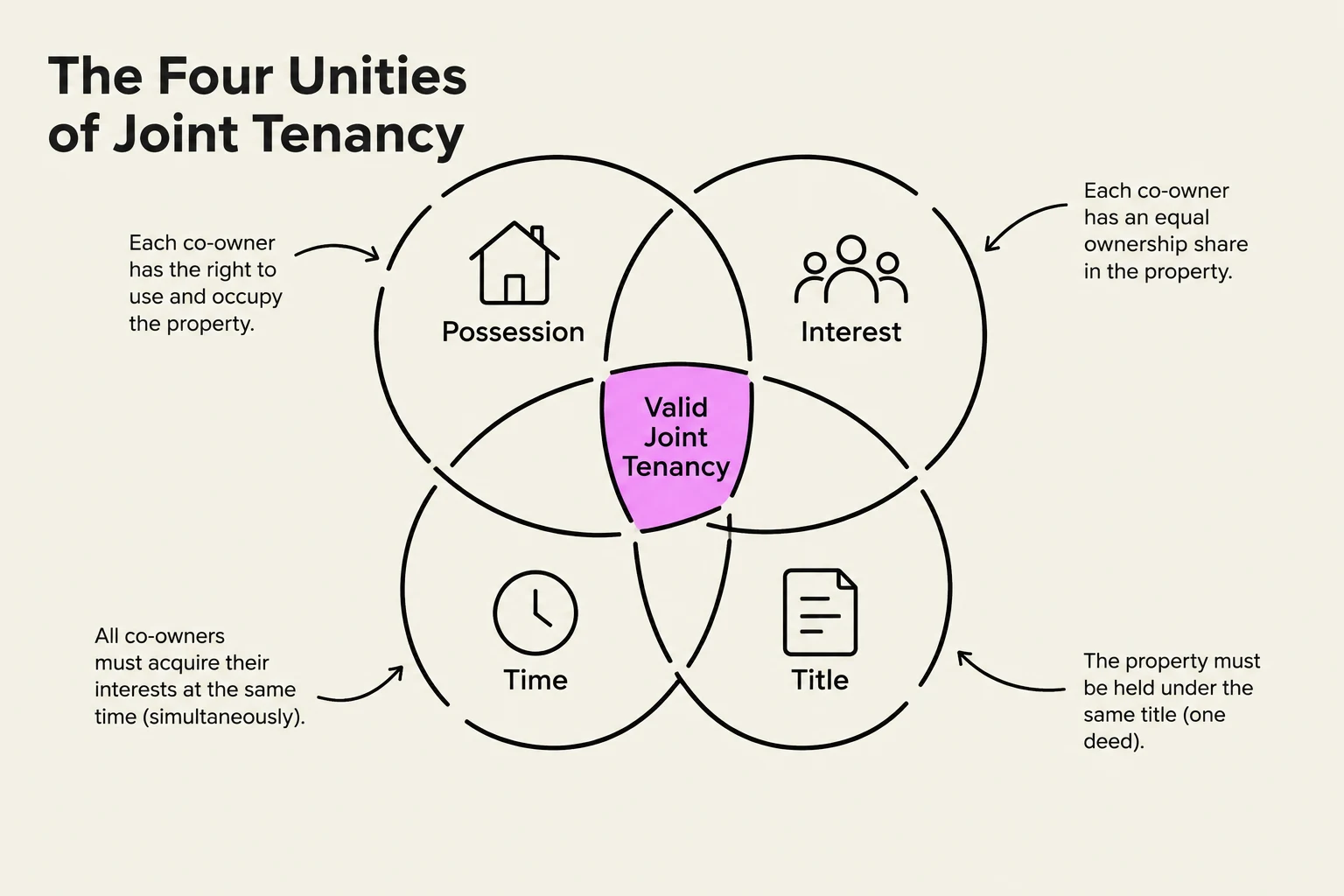
- Unity of Possession: All joint tenants have an undivided right to possess the entire property. No single tenant can claim a specific "half" of the house; everyone has a right to use the whole.
- Unity of Interest: Tenants typically hold equal ownership interests.
- Unity of Time: All joint tenants must acquire their interests at the exact same time.
- Unity of Title: The title must be conveyed to all parties through a single, identical document.
Exam Tip: The Right of Survivorship A defining feature of joint tenancy is the right of survivorship. This means that when one joint tenant dies, their interest does not pass to their heirs through a will; instead, it passes automatically to the surviving joint tenants.
North Carolina Nuances and Termination
It is important to note that North Carolina law provides some flexibility. In North Carolina, joint tenancy may allow for unequal interests, and the right of survivorship is not automatic unless the deed specifically includes wording to grant those rights.
Keep reading for free.
Create an account to finish this reading and make it part of your study routine.
Continue reading freeAlready have an account? Log in
Updated