


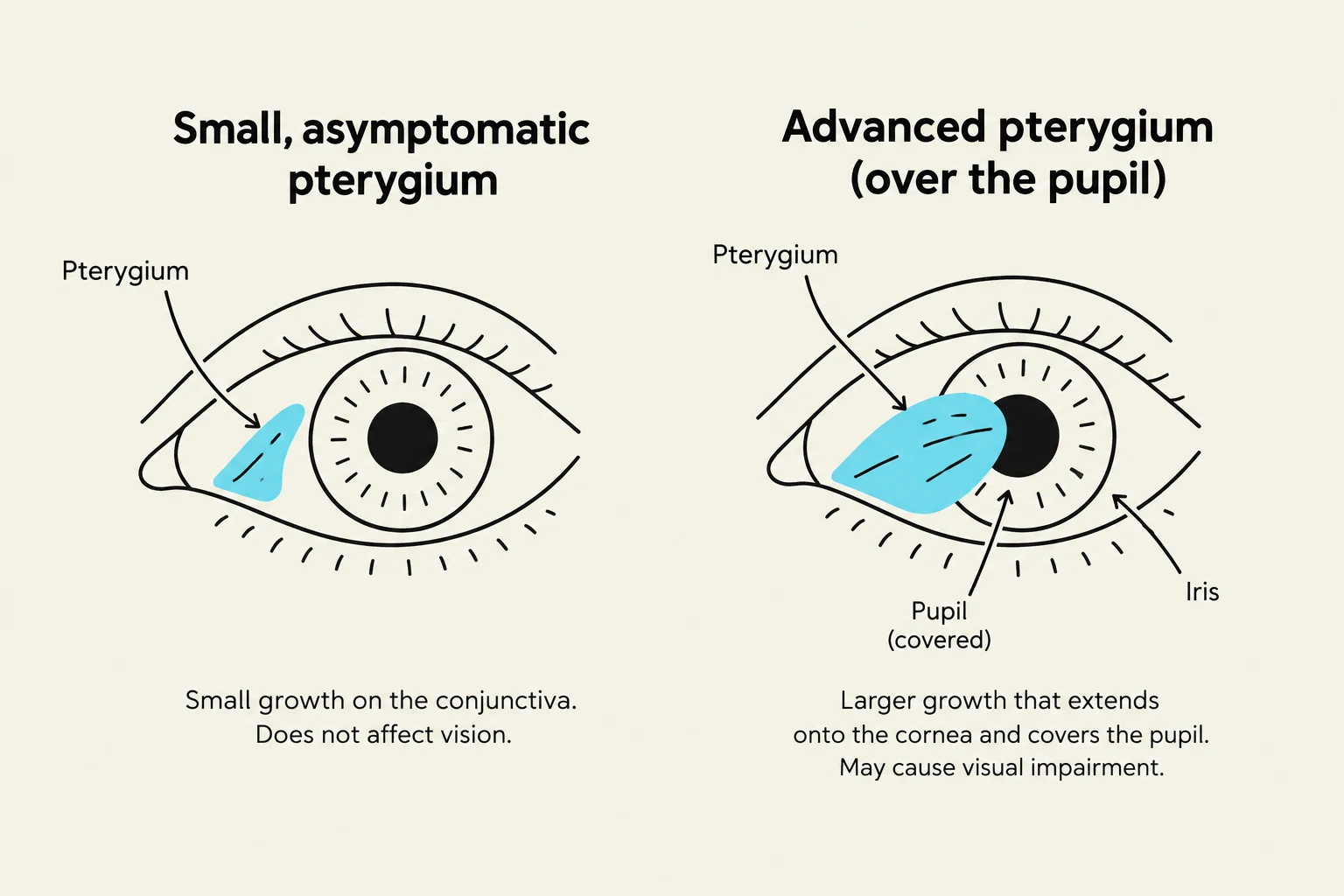
In the field of ophthalmology, understanding the distinction between normal ocular anatomy and pathological growths is essential for accurate diagnosis. One such growth that clinicians frequently encounter is the pterygium. While many ocular surface conditions involve inflammation or hemorrhage, a pterygium represents a specific type of abnormal tissue proliferation that can significantly impact a patient's quality of life and visual acuity.
Defining the Pterygium
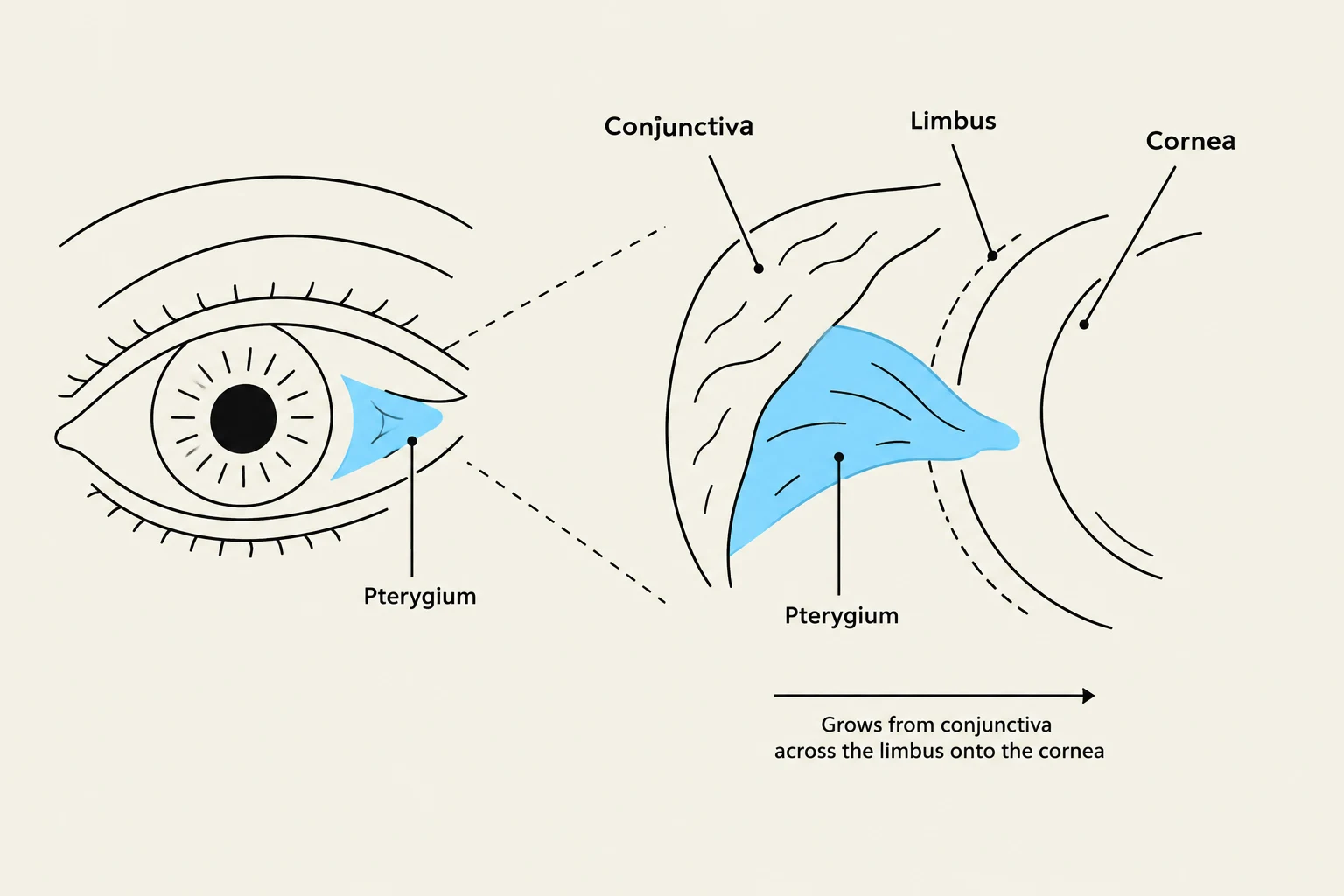
A pterygium is defined as an abnormal growth of the conjunctiva that originates at the limbus and extends onto the surface of the cornea. To understand this pathology, one must first understand the anatomical landmarks involved.
The conjunctiva is the thin, translucent membrane that covers the white part of the eye (the sclera). The limbus is the transitional zone or border where the cornea meets the sclera. In a healthy eye, the cornea is avascular, meaning it should be clear and free of blood vessels. However, a pterygium breaks this boundary, pulling conjunctival tissue across the limbus and onto the corneal surface.
While these growths can technically arise on either side of the eye, they occur most frequently on the nasal side (the side closest to the nose).
Etiology and Environmental Risk Factors
The development and progression of a pterygium are not random; they are closely linked to environmental exposure. Clinical observations indicate that a pterygium is more common in individuals who have experienced heavy exposure to ultraviolet (UV) light.
Keep reading for free.
Create an account to finish this reading and make it part of your study routine.
Continue reading freeAlready have an account? Log in
Updated