


Have you ever walked into a room and suddenly forgotten why you were there, only to remember the moment you sat back down in your original chair? Or perhaps you’ve noticed that after watching a suspenseful thriller, a simple shadow on the wall suddenly looks like a lurking figure. These experiences are not mere coincidences; they are manifestations of a powerful cognitive phenomenon known as priming.
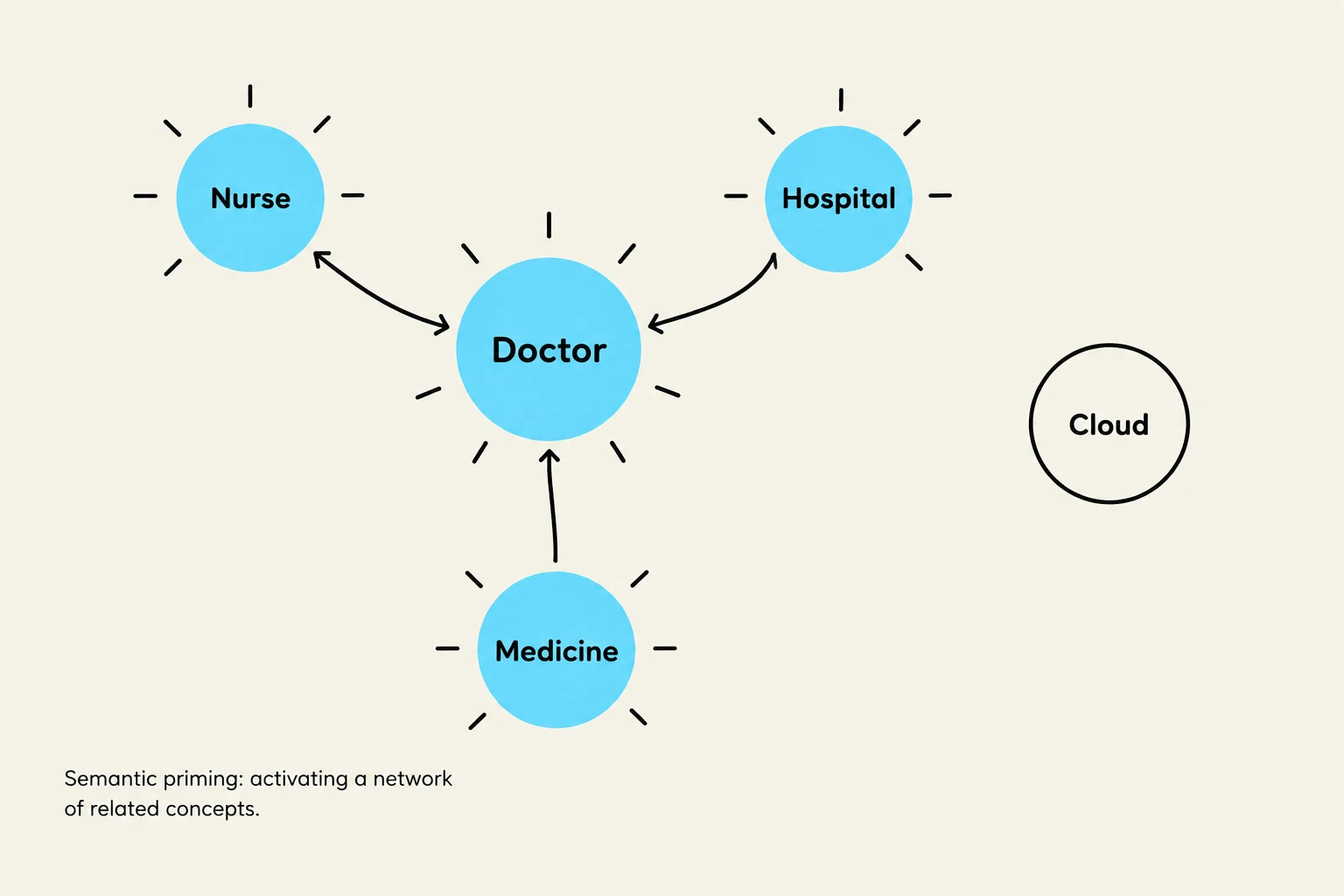
Priming occurs when exposure to one stimulus influences the response to a subsequent stimulus, without conscious guidance or intention. In essence, your brain is constantly making connections, and once a certain concept, word, or image is "activated" in your mind, it becomes easier to access related information later.
The Mechanics of Priming
At its core, priming is a byproduct of how our memory systems and attention mechanisms function. Our brains do not store information in isolated, dusty files; instead, they function like a vast, interconnected web of associations. When you encounter a stimulus, you aren't just processing that single piece of data—you are inadvertently "lighting up" a neighborhood of related concepts in your neural network.
Semantic vs. Perceptual Priming
To understand how this works in practice, psychologists often distinguish between different types of priming:
- Semantic Priming: This involves the activation of related meanings. If you see the word "Doctor," your brain pre-activates related concepts like "Nurse," "Hospital," or "Medicine." If you are then asked to identify the word "Nurse" in a rapid-fire test, you will likely do so much faster than if you had been primed with an unrelated word like "Cloud."
- Perceptual Priming: This is driven by the physical characteristics of a stimulus. If you have recently seen a specific font or a particular shape, your brain becomes more efficient at recognizing that same shape or font again, even if the meaning of the object is entirely different.
Keep reading for free.
Create an account to finish this reading and make it part of your study routine.
Continue reading freeAlready have an account? Log in
Updated