


In the study of chemistry, we often encounter substances that do not exist as single, isolated atoms. While we are familiar with monatomic ions like or , many chemical compounds are built from larger, stable clusters of atoms that act as a single unit. These are known as polyatomic ions. Understanding how to identify, name, and manipulate these groups is a fundamental skill for mastering chemical reactions and nomenclature.
What is a Polyatomic Ion?
A polyatomic ion is a group of two or more covalently bonded atoms that carries an overall net electrical charge. Unlike monatomic ions, which consist of a single atom that has gained or lost electrons, a polyatomic ion functions as a single "package" in chemical equations.
For example, the carbonate ion, , consists of one carbon atom and three oxygen atoms. Even though the individual atoms have different electronegativities, the entire group shares a collective charge of . When this ion reacts with another substance, it typically stays together as a single unit rather than breaking apart into individual atoms.
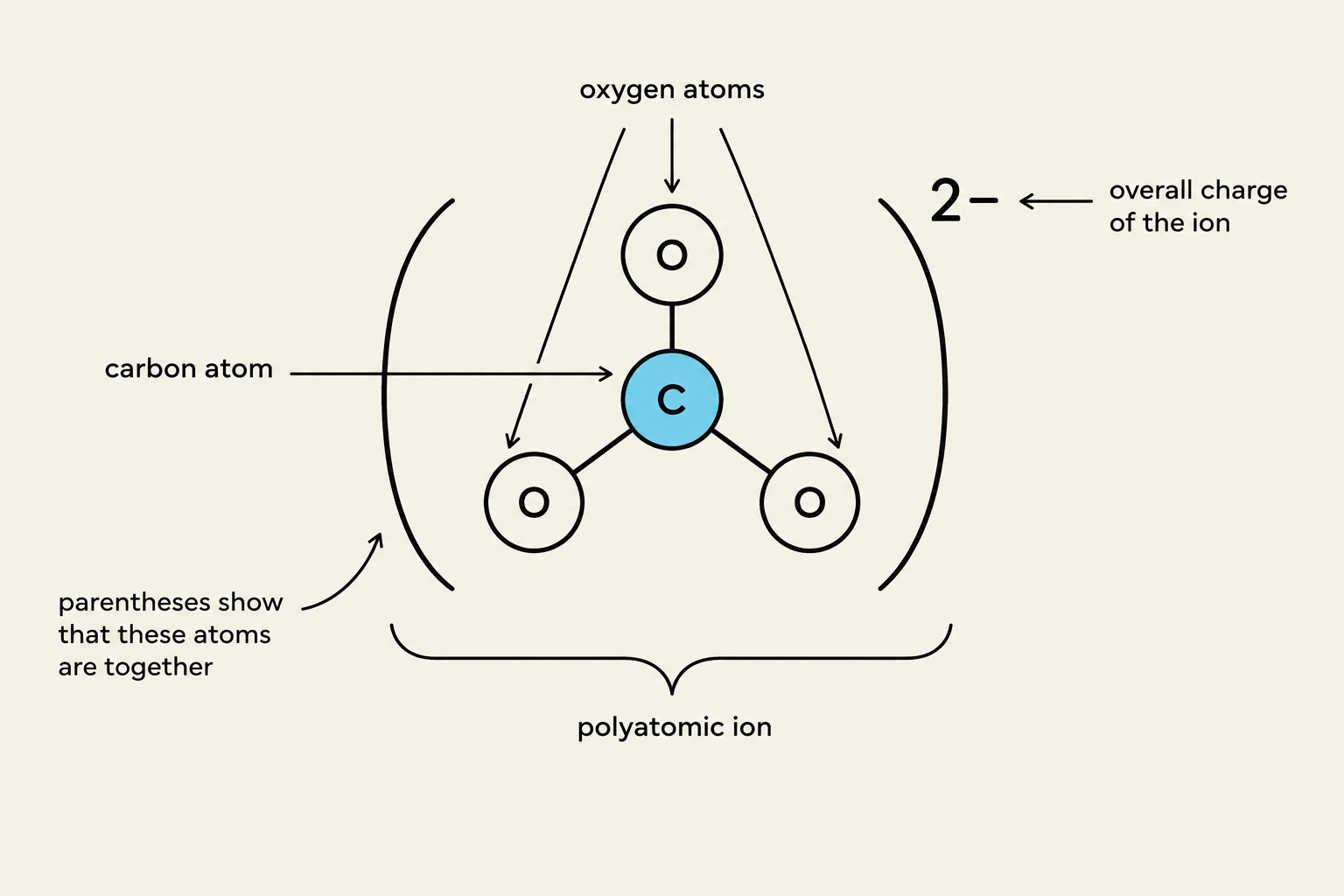
Key Concept: When writing formulas for compounds containing polyatomic ions, if you need more than one of that ion to balance a charge, you must use parentheses. For example, Magnesium Nitrate is written as , not .
Identifying Common Polyatomic Ions
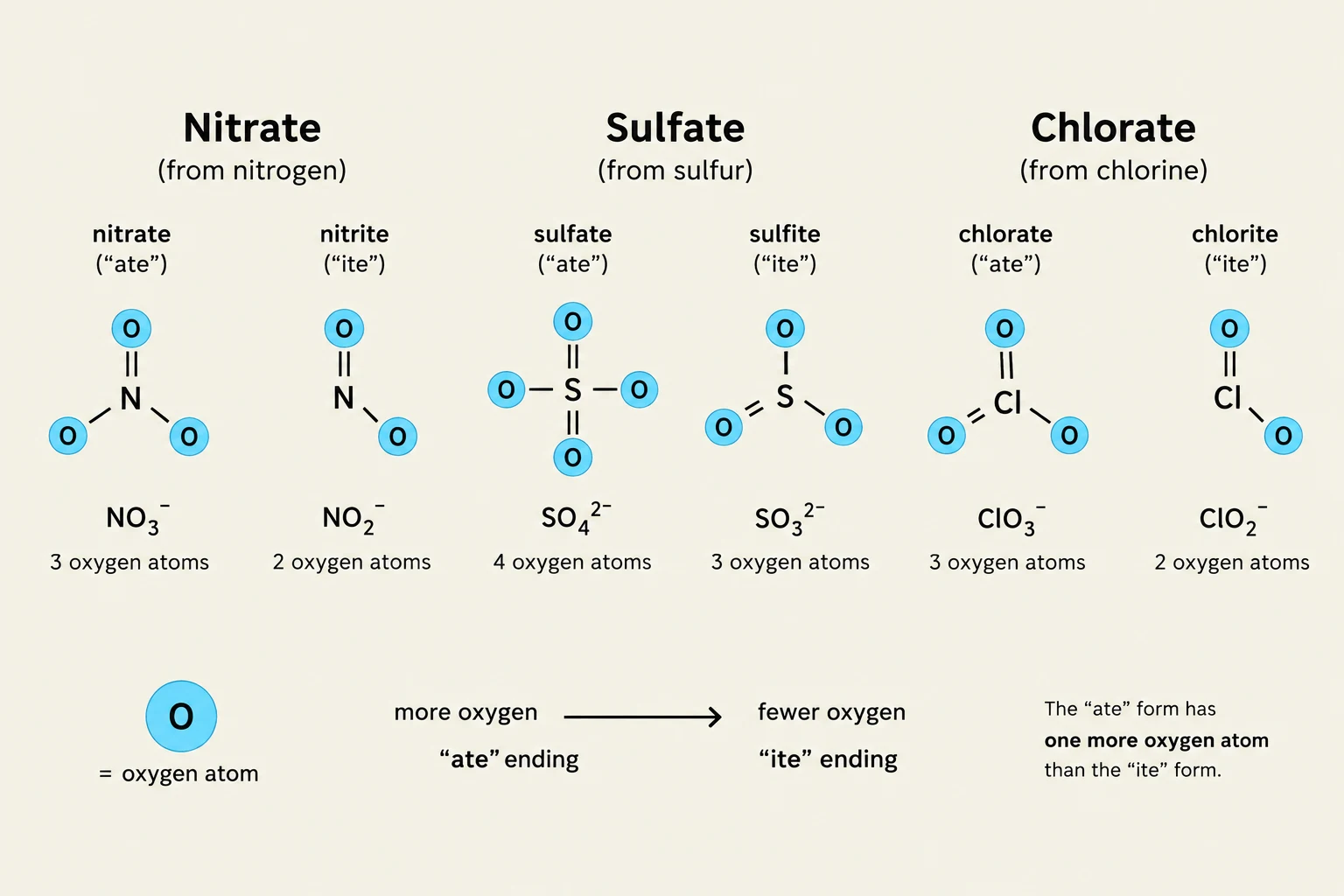
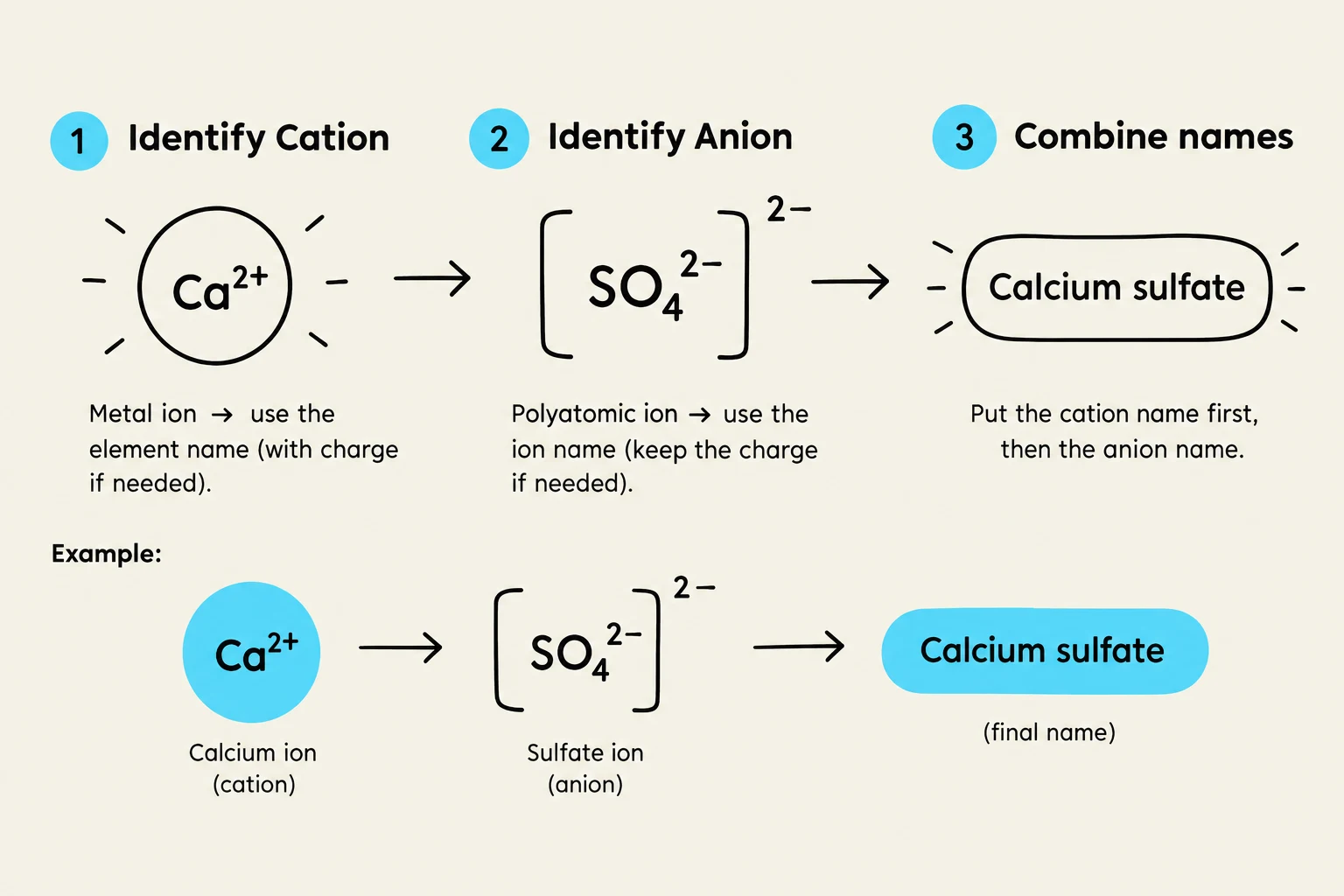
Because there are many possible combinations of atoms, students are encouraged to memorize the most common polyatomic ions. These can generally be categorized by their charge and their elemental composition.
Keep reading for free.
Create an account to finish this reading and make it part of your study routine.
Continue reading freeAlready have an account? Log in
Updated