


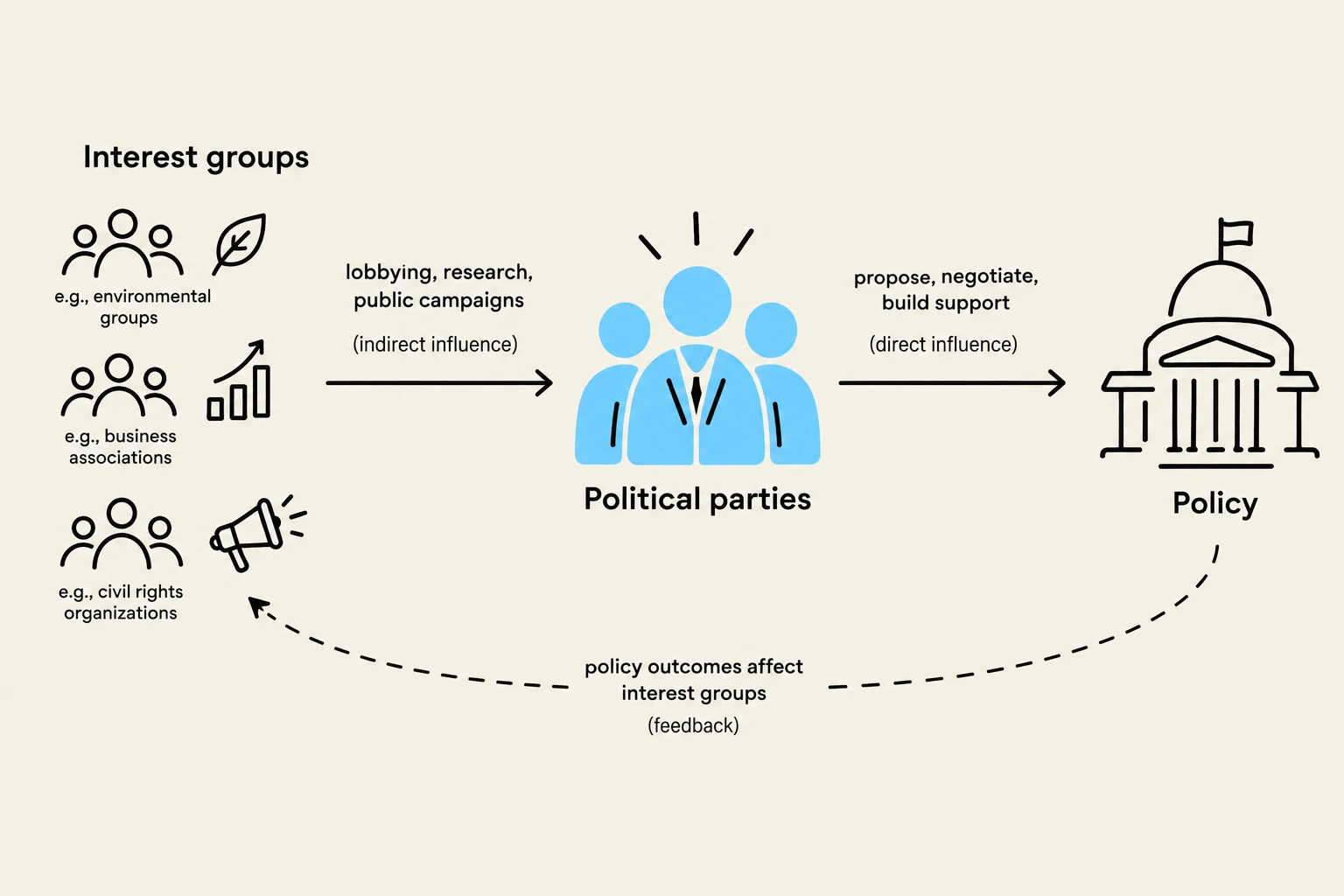
In any functioning democracy, citizens must find ways to translate their diverse opinions into actionable government policy. This process is often complicated by what sociologists and political scientists call a collective action problem—the difficulty of getting a large group of people with different interests to work together toward a common goal. In the United States, this challenge is primarily addressed by two types of organizations: interest groups and political parties. While both are essential to the political landscape, they play very different roles in how power is exercised and how policy is made.
What are Political Parties?
At their core, political parties are groups of people with similar interests who work together to gain control of the government by winning elections. Unlike interest groups, which typically work indirectly to influence leaders, political parties seek to directly influence public policy by running their own members for office.
Once a party wins an election, it can implement its vision through several key functions:
- Nominating Candidates: Parties select individuals to run for local, state, and national offices.
- Creating Party Platforms: A party platform is a formal document, usually adopted at a nominating convention every four years, that outlines the party's official positions on critical issues.
- Governing and Legislating: Parties guide members of Congress in drafting laws and inform them how to vote on important issues.
- Mobilizing Voters: Parties coordinate campaigns to ensure their supporters turn out on Election Day.
Exam Tip: To distinguish between the two on a test, remember: Interest groups influence policy from the outside, while political parties make policy by winning office.

Keep reading for free.
Create an account to finish this reading and make it part of your study routine.
Continue reading freeAlready have an account? Log in
Updated