Understanding Personality Disorders: Development, Clusters, and Etiology
An overview of personality development across the life cycle, the classification of personality disorders into three clusters (A, B, and C), and the etiological factors including biological and behavioral theories. It also covers epidemiology, risk factors, comorbidities, and treatment approaches.
Personality is the unique pattern of thoughts, attitudes, values, and behaviors that an individual develops to adapt to their specific environment and its societal standards. It serves as a psychological "makeup" that identifies a person as a distinct individual. While personality is generally stable, it is not static; it evolves through various stages of the life cycle, shaped by both biological predispositions and environmental experiences.
Personality Development and the Life Cycle
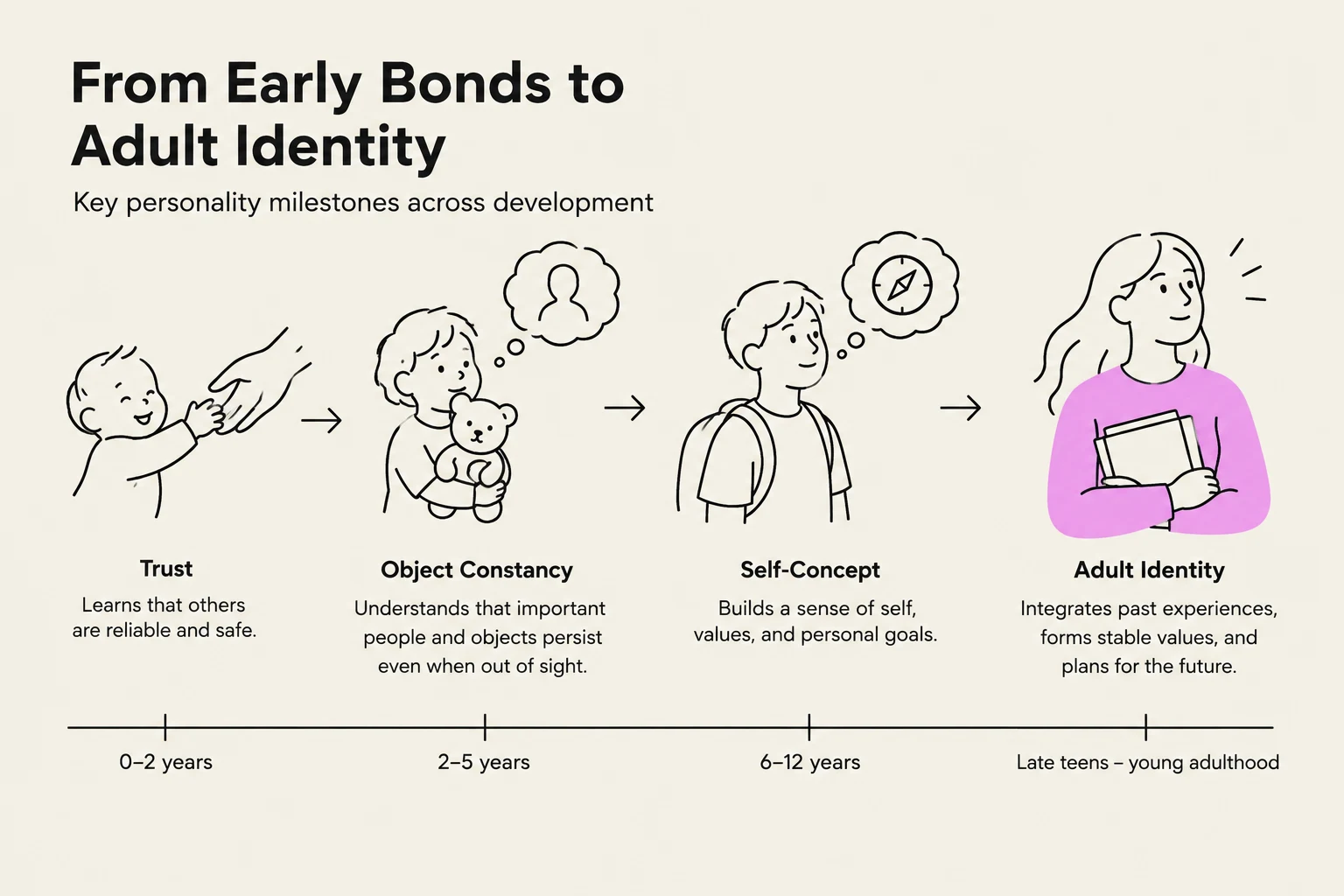
The development of personality begins in infancy and continues through older adulthood. This progression is marked by specific psychological milestones:
Childhood: When needs for food, comfort, safety, and socialization are consistently met, a sense of trust and self-worth develops. A critical milestone here is object constancy, where a toddler learns that a loved person or object continues to exist even when they are out of sight.
Adolescence: Peer groups become central to identity. During this stage, personality becomes well-established as individuals support one another through struggles and begin to broaden their views of the world beyond their immediate surroundings.
Adulthood: Young adults focus on self-sufficiency, occupational choices, and growing self-awareness. Middle adulthood often involves a shift toward encouraging independence in others and managing changing time demands.
Older Adulthood: The focus shifts to coping with loss and change.
Clinical Note: While personality evolves, a sudden change in personality is not considered a normal part of the aging process.
This illustration depicts key personality milestones in human development, from early childhood trust to adult identity, showing the progression of psychological development across different age ranges.
During these developmental years, individuals also develop defense mechanisms. These are psychological strategies created to protect the individual from the emotional pain associated with certain feelings or experiences.
Understanding Personality Disorders (PDs)
Personality Disorders are long-term patterns of behavior and inner experiences that deviate significantly from societal expectations. Unlike temporary mood swings, PDs are pervasive and impact several core areas of functioning:
Self-identity: How one perceives themselves.
Self-direction: The ability to set and pursue goals.
Interpersonal Functioning: Challenges with empathy and maintaining intimacy in relationships.
Diagnosis can be particularly difficult because patients often have limited insight into their own maladaptive patterns.
The Three Clusters of Personality Disorders
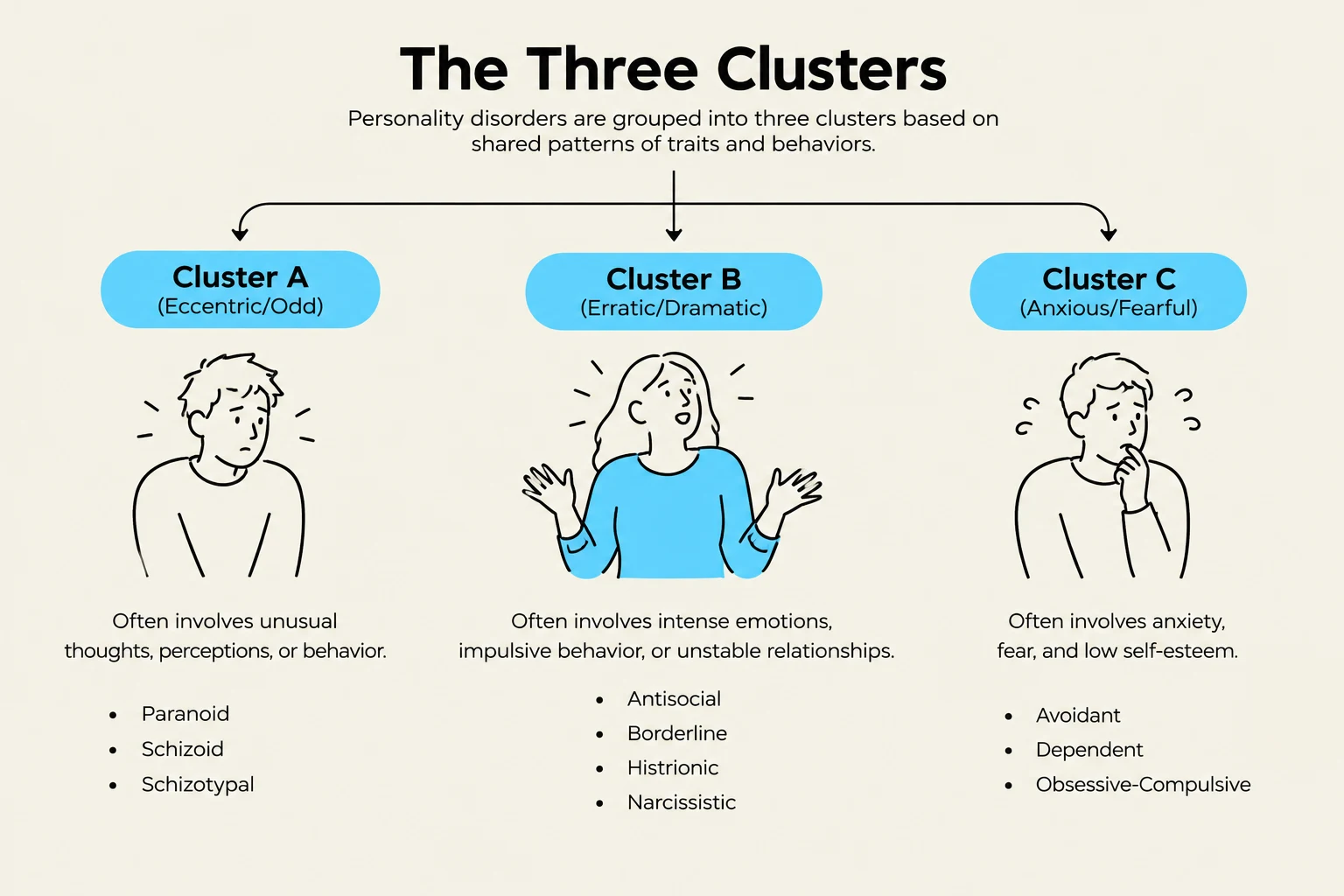
To facilitate diagnosis, personality disorders are grouped into three distinct clusters based on shared behavioral patterns:
Cluster A: The Eccentric Cluster
This cluster is characterized by odd or strange behaviors and social detachment. Individuals in this group often find it difficult to relate to others or socialize comfortably.
Paranoid Personality Disorder
Schizoid Personality Disorder
Schizotypal Personality Disorder
Cluster B: The Erratic Cluster
The defining characteristic of this cluster is dramatic, unpredictable, or erratic behavior. This group includes:
Antisocial Personality Disorder
Borderline Personality Disorder (BPD): Often involves affective instability, impulsivity, and intense fears of abandonment (e.g., the "push-pull" dynamic of "I love you, I hate you").
Histrionic Personality Disorder
Narcissistic Personality Disorder
Note: Individuals categorized as psychopaths or sociopaths may meet criteria for several disorders within this cluster.
Cluster C: The Fearful Cluster
This cluster is defined by high levels of anxiety and fearfulness.
Avoidant Personality Disorder
Dependent Personality Disorder
Obsessive-Compulsive Personality Disorder (OCPD)
This diagram illustrates the three clusters of personality disorders: Cluster A (Eccentric/Odd), Cluster B (Erratic/Dramatic), and Cluster C (Anxious/Fearful), along with common traits and examples within each cluster.
Etiology: Why do Personality Disorders Develop?
Researchers suggest that PDs arise from a complex interplay of biological and behavioral factors.
Biological Theories
Biological perspectives focus on the innate qualities a person is born with and the physical workings of the brain:
Temperament: This refers to the biological basis of moods, energy levels, and attitudes. Scientists estimate that approximately 20% to 60% of temperament is genetically determined.
Neurotransmitters: Abnormalities in chemical messengers are linked to maladaptive behaviors. Specifically, dopamine is associated with reward and motivation, while serotonin is linked to happiness, focus, and calmness.
Brain Mechanism: There may be inefficiencies in the brain's ability to connect emotions with intellect.
Behavioral Theories
Behavioral theories suggest that personality patterns are learned or conditioned:
Conditioned Responses: PDs may result from conditioned responses to traumatic previous events, such as Post-Traumatic Stress Disorder (PTSD).
Unmet Needs: Maladaptive patterns may stem from unmet needs during critical developmental periods.
Epidemiology and Clinical Presentation
Personality disorders affect approximately 10% of the population. They are frequently encountered in both medical and psychiatric settings.
Risk Factors and Comorbidities
Childhood trauma is identified as a significant risk factor for the development of these disorders. Furthermore, PDs rarely exist in isolation; they frequently present with comorbidities, meaning they coexist with other psychiatric conditions. Common comorbidities include:
Mood disorders
Eating disorders
Substance misuse
A hallmark of many personality disorders is emotional dysregulation, which is the inability to manage painful emotions in healthy, effective ways. During times of crisis or physical illness, these underlying personality traits may become even more amplified.
Treatment and Nursing Considerations
While personality patterns are relatively fixed, treatment can help individuals change their behaviors over time.
Therapeutic Interventions
Cognitive Therapy: Focuses on changing cognitive distortions (unhealthy ways of thinking) and improving emotional regulation.
Behavioral Therapy: Aims to change destructive or maladaptive responses to specific situations.
Dialectical Behavior Therapy (DBT): A specialized form of CBT that emphasizes mindfulness, accepting pain, and regulating emotions to prevent destructive behaviors.
Group and Family Therapy: Group therapy helps individuals with similar problems, while family therapy focuses on improving communication and resolving conflicts.
Nursing Care and Safety
Nurses play a critical role in the management of patients with PDs. The primary goals are to help patients take responsibility for their own behaviors and to assist them in developing satisfactory interpersonal relationships.
Safety Alert: When administering medications to patients with personality disorders, nurses must exercise extreme caution. For outpatient care, prescribed amounts should never be large enough to facilitate a successful suicide attempt. Always assess medicated patients for suicidal ideation or plans.
Exam Tip: Remember that nurses may experience intense emotional reactions when working with patients with PDs. Utilizing clinical supervision is essential to maintain professional objectivity.
Keep reading for free.
Create an account to finish this reading and make it part of your study routine.