


In the world of business and supply chain management, the movement of goods is almost always accompanied by the movement of money. When a manufacturer sells products to a wholesaler, or a wholesaler sells to a retailer, they do not always exchange cash immediately. Instead, they use credit, which is governed by specific rules known as payment terms. Understanding these terms is essential for businesses to manage their cash flow, take advantage of savings, and ensure they meet their legal obligations to suppliers.
The Fundamentals of Payment Terms
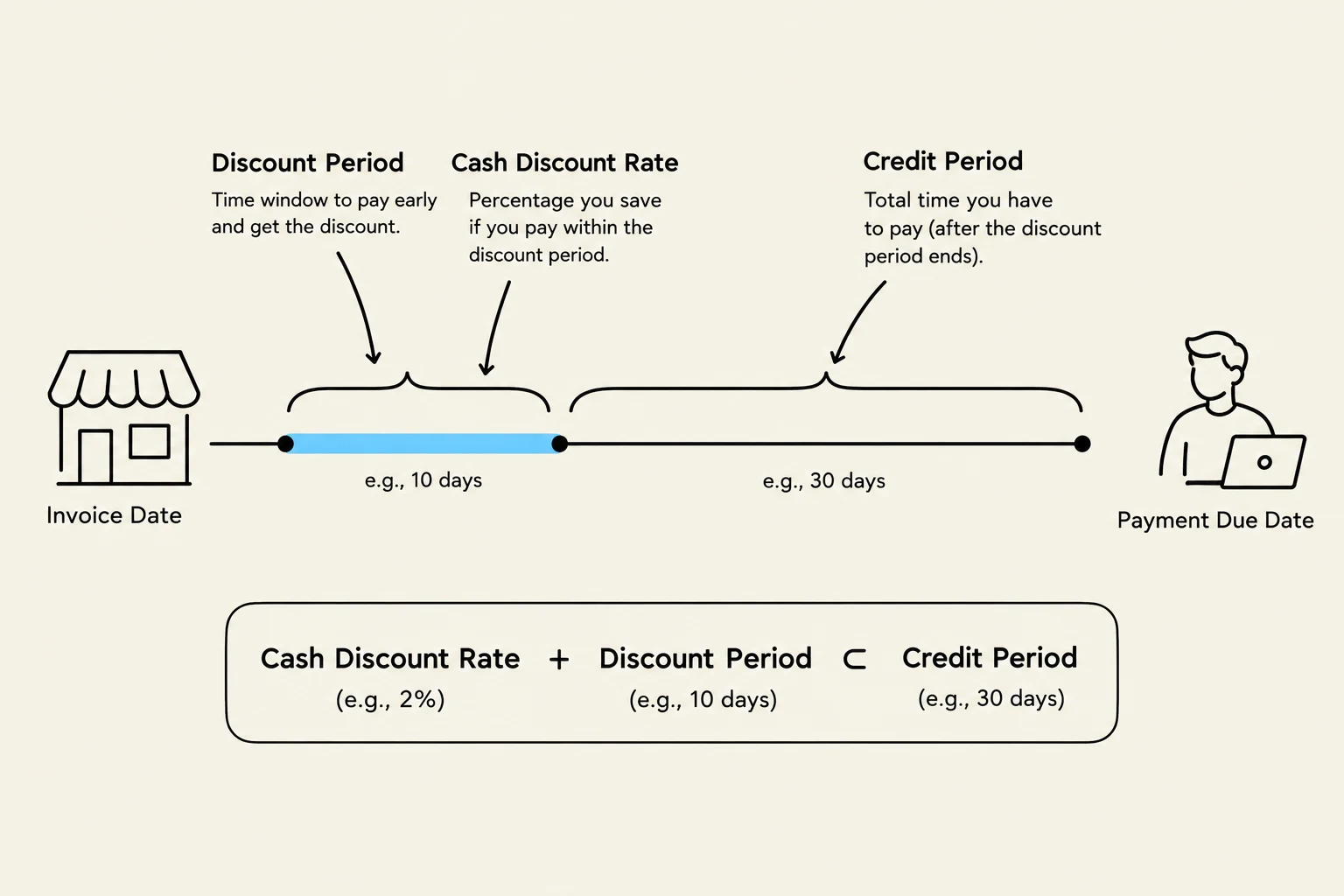
When a seller sends an invoice for goods, they specify the "payment terms". These terms act as a contract between the buyer and the seller, outlining exactly how and when the money must be transferred. All standard payment terms consist of three core components:
- The Cash Discount Rate: This is a percentage of the net amount of the invoice (the amount remaining after any trade discounts have been applied).
- The Discount Period: This is the specific window of time during which the buyer is allowed to pay the reduced amount.
- The Credit Period: This is the total amount of time the buyer has to pay the full invoice amount before the payment is considered overdue.
Note on Terminology: It is important to distinguish between a trade discount (a reduction from the list price given to members of a supply chain) and a cash discount (an incentive offered to encourage the buyer to pay their bill quickly).
Keep reading for free.
Create an account to finish this reading and make it part of your study routine.
Continue reading freeAlready have an account? Log in
Updated