


Parkinson's disease (PD) is a progressive neurodegenerative disorder that primarily affects the motor system. It is characterized by the gradual loss of dopaminergic neurons in a specific region of the brain, leading to significant impairments in movement, coordination, and balance. While the exact cause of the disease remains a subject of intense research, it is widely understood to involve a complex interplay of genetic predispositions and environmental factors.
The Neurobiology of Parkinson's Disease
At the core of Parkinson's disease is the degeneration of neurons within the substantia nigra pars compacta, a critical component of the basal ganglia. These neurons are responsible for producing dopamine, a neurotransmitter that plays a vital role in transmitting signals that allow for smooth, coordinated muscle movement.
When dopamine levels decrease, the communication between the substantia nigra and the rest of the basal ganglia is disrupted. This disruption results in the characteristic motor symptoms associated with the disease. A hallmark histological feature of PD is the presence of Lewy bodies, which are abnormal aggregates of protein (primarily alpha-synuclein) that develop inside nerve cells.
Exam Tip: When studying the pathophysiology, remember that the motor symptoms typically do not manifest until a significant percentage (often estimated at 60-80%) of dopaminergic neurons in the substantia nigra have already been lost.
Clinical Manifestations: Motor and Non-Motor Symptoms
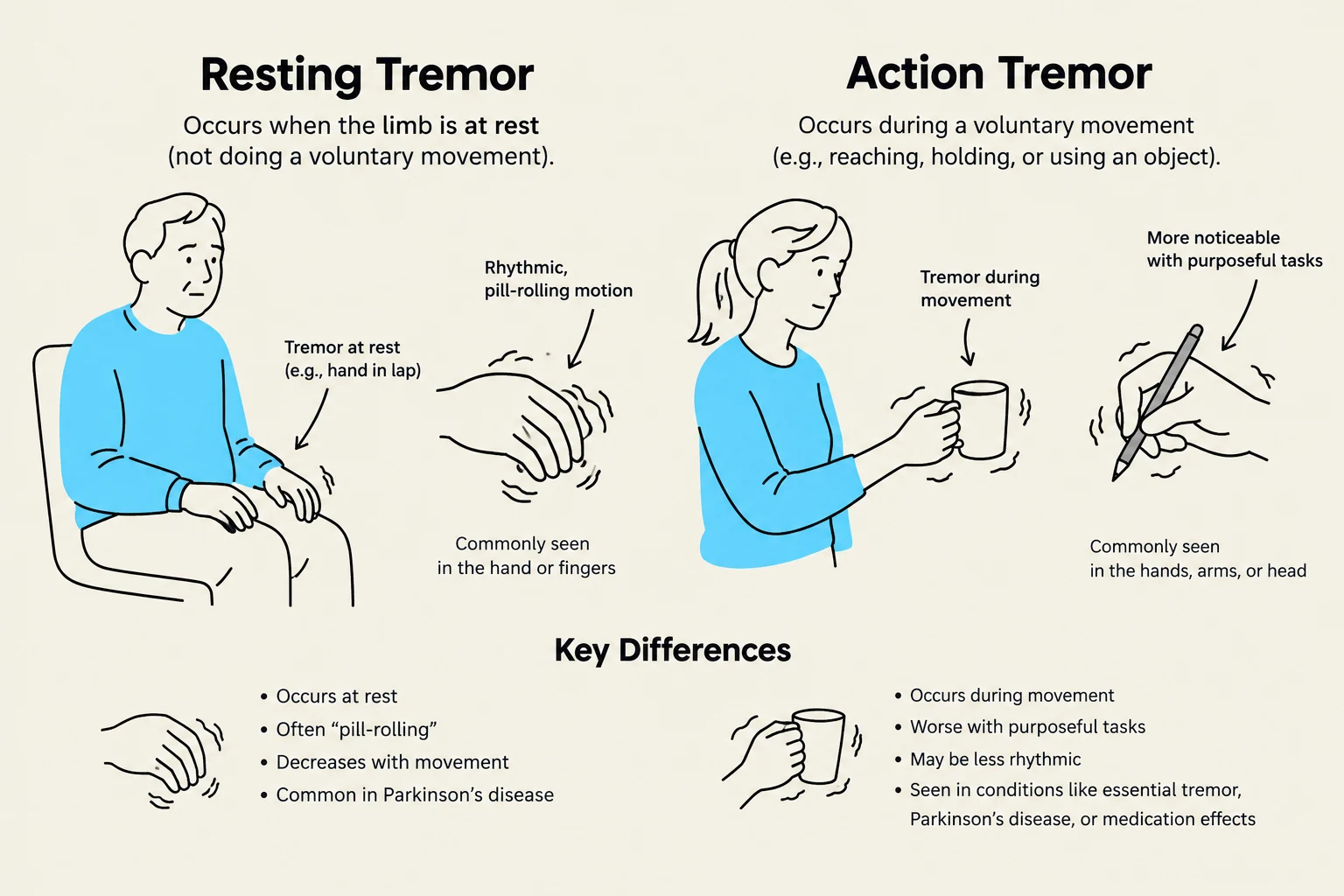
The clinical presentation of Parkinson's disease is often categorized into motor symptoms (physical movements) and non-motor symptoms (cognitive, autonomic, or sensory changes).

Keep reading for free.
Create an account to finish this reading and make it part of your study routine.
Continue reading freeAlready have an account? Log in
Updated