


Navigating the complexities of end-of-life care requires a deep understanding of various medical, emotional, and spiritual frameworks. Whether you are a healthcare student, a nursing professional, or a caregiver, understanding the distinctions between palliative care, hospice care, and medical assistance in dying is essential for providing compassionate and effective support. This article serves as a guide to the resources and concepts that define modern end-of-life care.
Understanding Palliative and Hospice Care
While often used interchangeably, palliative care and hospice care serve different roles in a patient's journey. Palliative care is a specialized medical approach focused on providing relief from the symptoms and stress of a serious illness. The goal is to improve quality of life for both the patient and the family. Unlike hospice, palliative care can be provided at any stage of a serious illness and can be administered alongside curative treatments.
Hospice care, on the other hand, is a specific type of palliative care reserved for patients approaching the end of life, where the focus shifts entirely from curative treatment to comfort and quality of life. Hospice care can take place in various settings, including the patient's home, a hospital, or dedicated facilities like a "Hospice House".

Pain Relief and Symptom Management
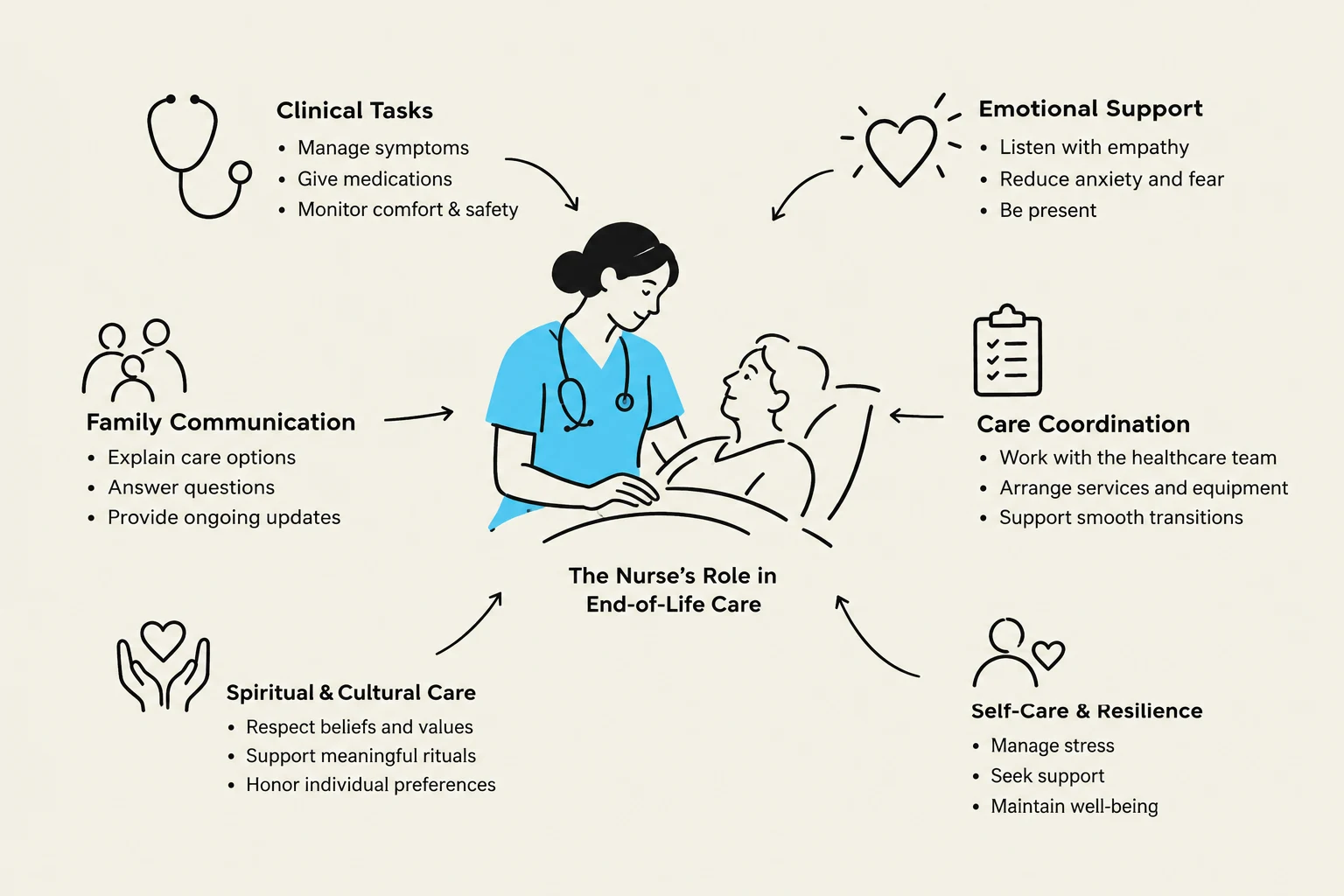
A cornerstone of all end-of-life care is the management of physical distress. Pain relief is considered an integral part of palliative care. Effective management involves more than just administering medication; it requires a holistic assessment of the patient's physical, emotional, and social needs to ensure comfort.

Keep reading for free.
Create an account to finish this reading and make it part of your study routine.
Continue reading freeAlready have an account? Log in
Updated