


In the field of clinical neurology and medical visualization, few postures are as visually striking or diagnostically significant as opisthotonus. This condition represents a profound state of muscle rigidity that forces the human body into an involuntary, extreme arch. For medical students and clinicians, recognizing the specific anatomical landmarks of this posture is essential for identifying underlying neurological distress or physiological hypertonia.
To communicate this complex physical state effectively, modern medical illustrators utilize high-resolution 3D digital modeling. These tools allow for a precise demonstration of the biomechanical strain and the dramatic curvature of the spine that defines the condition.
Understanding Opisthotonus
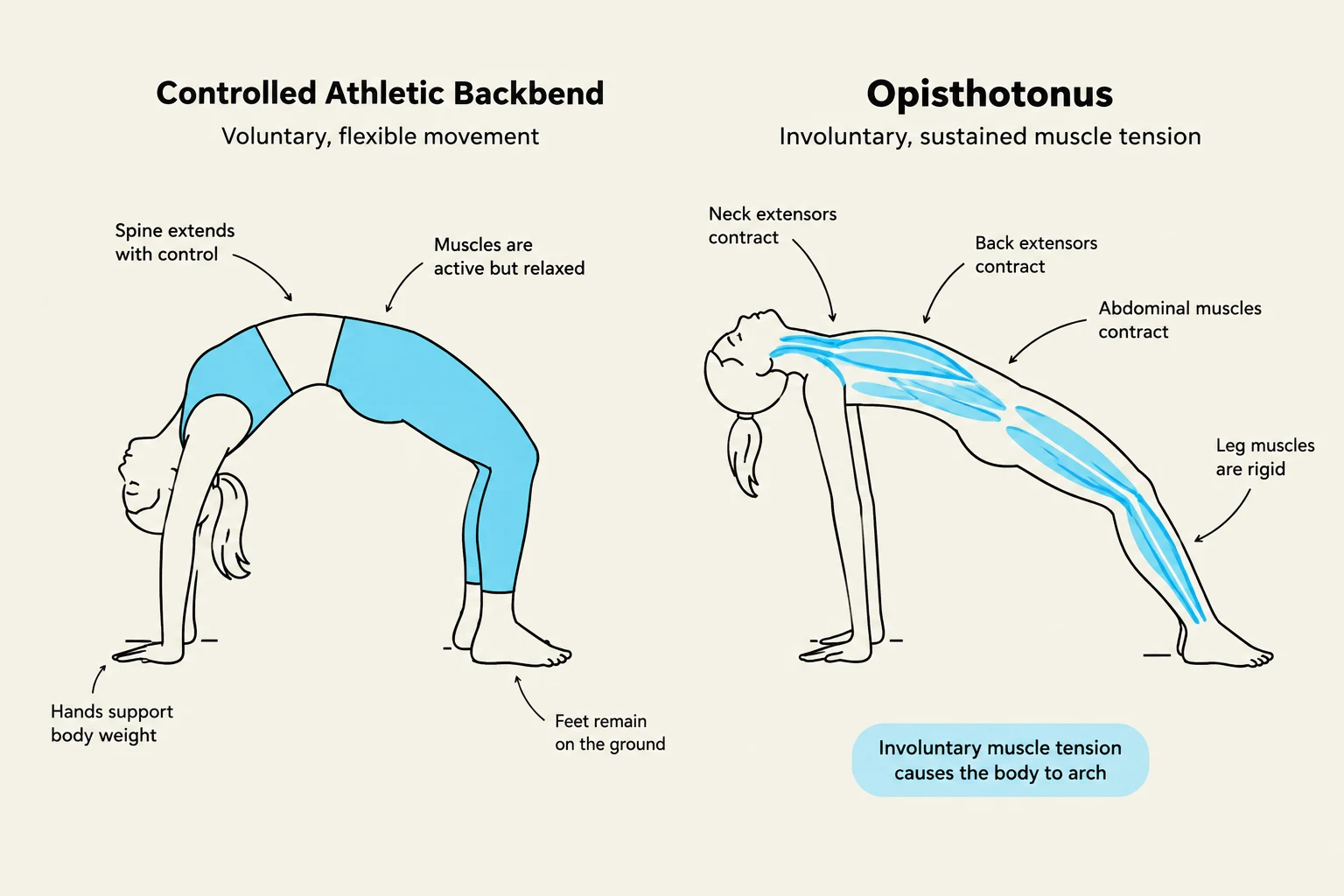
Opisthotonus is characterized by a severe, involuntary arching of the body caused by intense muscle spasticity. While it may superficially resemble a deep backbend stretch performed in a controlled athletic context, the clinical reality is one of extreme tension and neurological dysfunction.
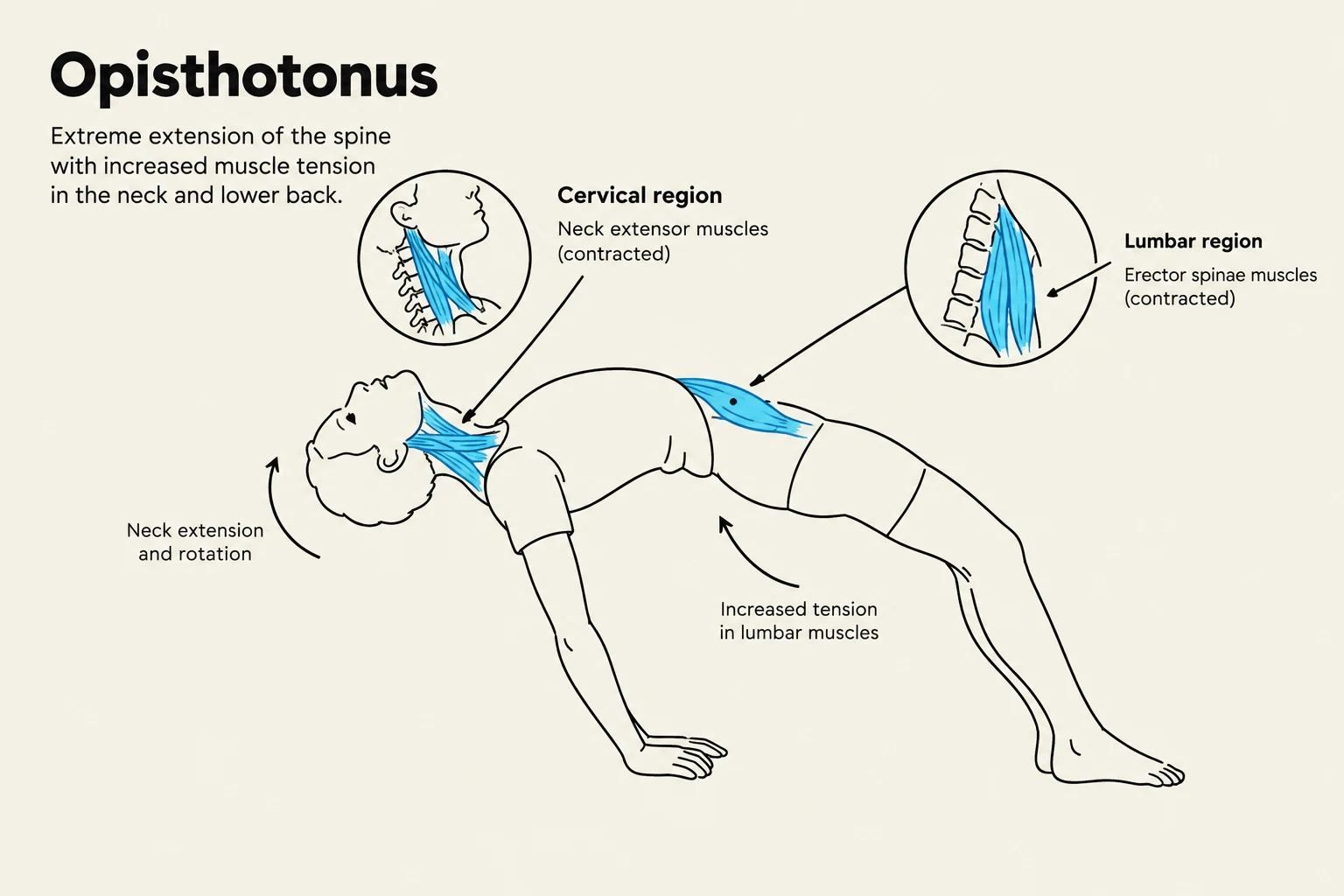
The posture is driven by the overactivity of the extensor muscles, particularly those located in the back and the neck. This results in a specific anatomical arrangement where the body is forced into a continuous arc, often leaving only the chest and abdomen in contact with a supporting surface.
Clinical Note: When observing a patient, look for the "three-point" contact pattern: the head (occiput), the spine (thoracic/lumbar region), and the heels. This extreme extension is a hallmark of severe neurological irritation.

Anatomical Components of the Posture
To accurately depict or identify opisthotonus, one must break down the body into its constituent mechanical movements. The condition involves several key anatomical relationships:
Keep reading for free.
Create an account to finish this reading and make it part of your study routine.
Continue reading freeAlready have an account? Log in
Updated