Understanding Nutrition: MyPlate and Nutrition Facts Labels
Learn how to use the MyPlate guide and Nutrition Facts labels to make informed dietary choices for long-term health and disease prevention. Covers food groups, serving sizes, calories, and essential nutrients.
Understanding nutrition is more than just counting calories; it is the study of how nutrients are handled by the body and how our behaviors and environments impact the process of nourishment. For students and health-conscious individuals alike, two of the most powerful tools for managing dietary intake are the MyPlate Guide and the Nutrition Facts Label. By mastering these tools, you can make informed decisions that support long-term health and disease prevention.
The MyPlate Guide: Visualizing a Balanced Plate
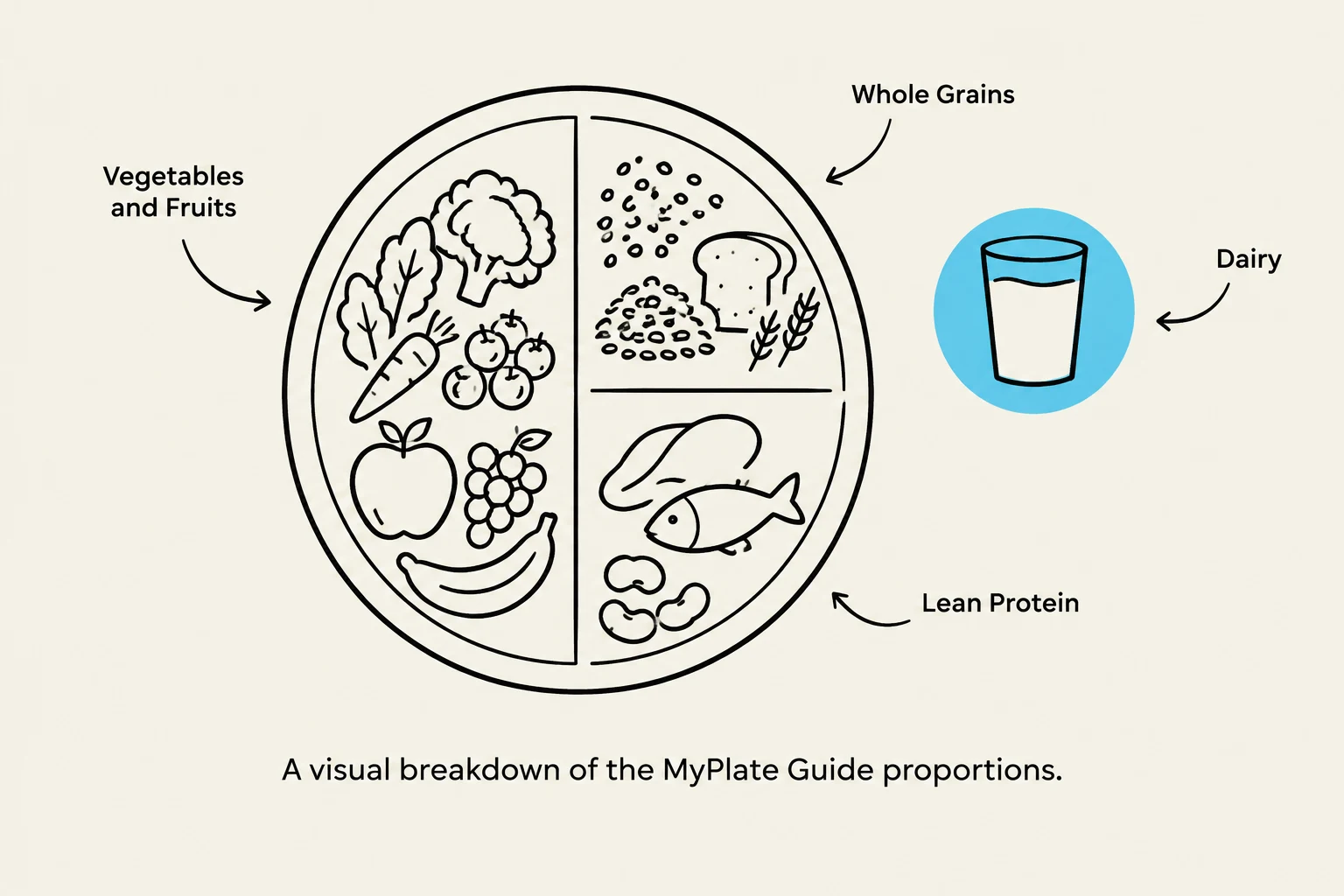
A visual breakdown of the MyPlate Guide proportions, illustrating servings of vegetables and fruits, whole grains, lean protein, and dairy.
The MyPlate Guide provides a visual framework designed to help consumers create balanced meals by emphasizing specific food groups. Instead of focusing on restriction, MyPlate encourages variety and proportion.
Fruits and Vegetables
A fundamental rule of MyPlate is to make half of your plate fruits and vegetables.
Fruits: Aim for a variety of colors. It is highly recommended to choose whole fruits over fruit juices, as whole fruits provide more fiber and fewer calories.
Vegetables: To maximize nutritional density, aim for a wide variety of types and colors, with a specific focus on non-starchy varieties.
Grains and Protein
The remaining portions of the plate are dedicated to grains and protein, but the quality of these foods is just as important as the quantity.
Grains: You should prioritize whole grains over refined grains (such as white bread or white rice). Whole grains are nutritionally superior because they contain higher levels of fiber, iron, and B vitamins.
Protein: For a healthy plate, choose lean protein sources. Excellent options include fish, chicken, nuts, beans, and legumes.
Dairy
To meet daily calcium requirements, the guide suggests aiming for approximately three servings of dairy per day. To manage caloric intake effectively, choosing low-fat dairy options is preferred.
Decoding the Nutrition Facts Label
While MyPlate helps you plan a meal, the Nutrition Facts label helps you analyze the specific components of the food you are eating.
The Importance of Serving Size
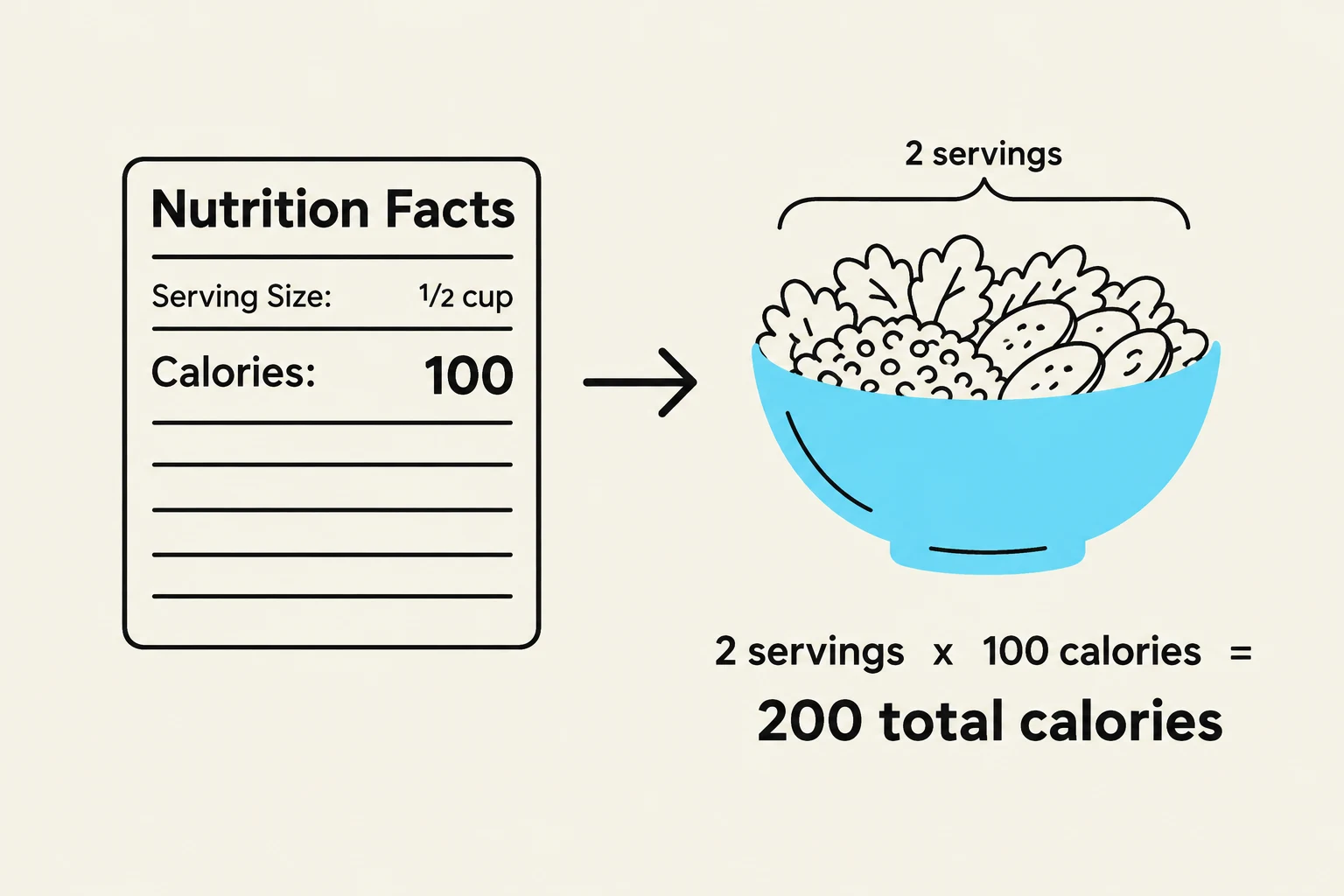
This illustration demonstrates how to calculate total calories based on serving size and calories per serving.
The serving size is the most critical piece of information on the label. It serves as the fundamental unit used to calculate the amount of calories, nutrients, and Percent Daily Values (%DV).
Exam Tip: Always compare the listed serving size to the actual amount you intend to consume. If a package contains two servings and you eat the whole container, you must double all the values listed on the label.
Managing Energy: Calories and Fat
The label provides a breakdown of energy content. The "Calories" section indicates the total energy provided by one serving. Crucially, the label also identifies calories from fat. Monitoring this specific metric is essential for weight management, as the goal is to balance the calories consumed with the calories the body uses.
Navigating Nutrients: Limits and Adequacy
A key skill in nutritional literacy is distinguishing between nutrients you should limit and those you should actively seek out.
Nutrients to Limit
To reduce the risk of chronic diseases—such as heart disease, hypertension (high blood pressure), and certain cancers—individuals should limit their intake of the following:
Total Fat: Including both saturated fat and trans fats.
Cholesterol: High intake is linked to increased disease risk.
Sodium: Excessive sodium is a primary contributor to high blood pressure.
Nutrients to Get Enough Of
Conversely, many Americans do not consume enough of certain essential nutrients. To improve health outcomes, you should aim to increase your intake of:
Dietary Fiber
Vitamin A
Vitamin C
Calcium
Iron
Understanding Percent Daily Value (%DV)
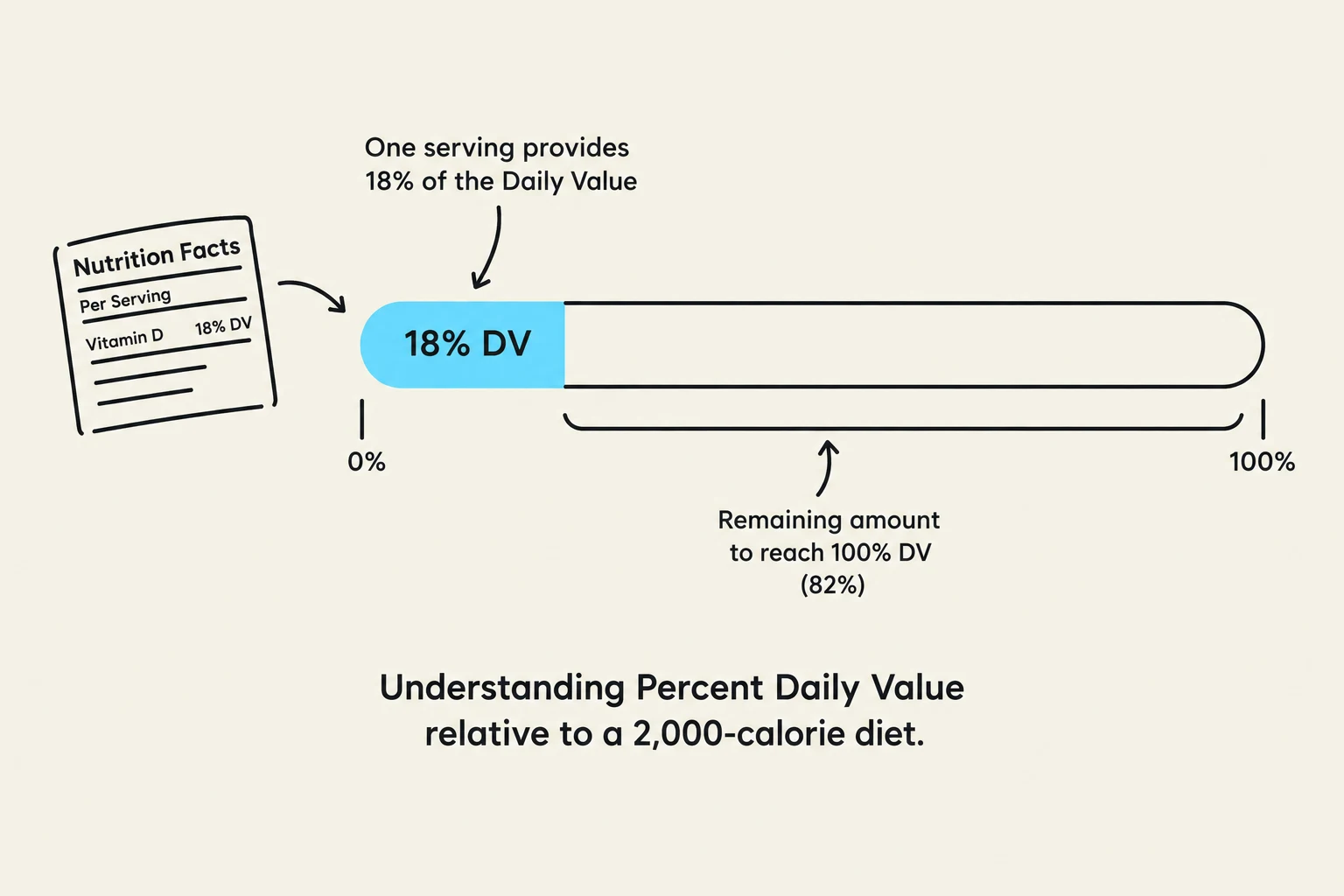
This illustration explains the concept of Percent Daily Value (DV) in nutrition, showing how one serving of a food item contributes 18% DV of Vitamin D towards a 2,000-calorie diet.
The Percent Daily Value (%DV) is a standardized metric that tells you how much a single serving of food contributes to your total daily diet.
The %DV is calculated based on a 2,000-calorie standard. A higher %DV indicates that the nutrient is a significant part of your daily recommended amount. For example, if a food provides 18% of your total daily fat, it means one serving fulfills 18% of the total fat you should consume in a day to stay within public health recommendations.
Note on Individual Needs: While the %DV is based on 2,000 calories, your personal needs may vary. If your daily requirement is 2,500 calories, your %DV for certain nutrients may be higher or lower than what is listed on the label.
Nutrient
2,000 Calorie Diet
2,500 Calorie Diet
Total Fat
Less than 65g
Less than 80g
Saturated Fat
Less than 20g
Less than 25g
Sodium
Less than 2,400mg
Less than 2,400mg
Dietary Fiber
25g
30g
(Data adapted from)
Keep reading for free.
Create an account to finish this reading and make it part of your study routine.