


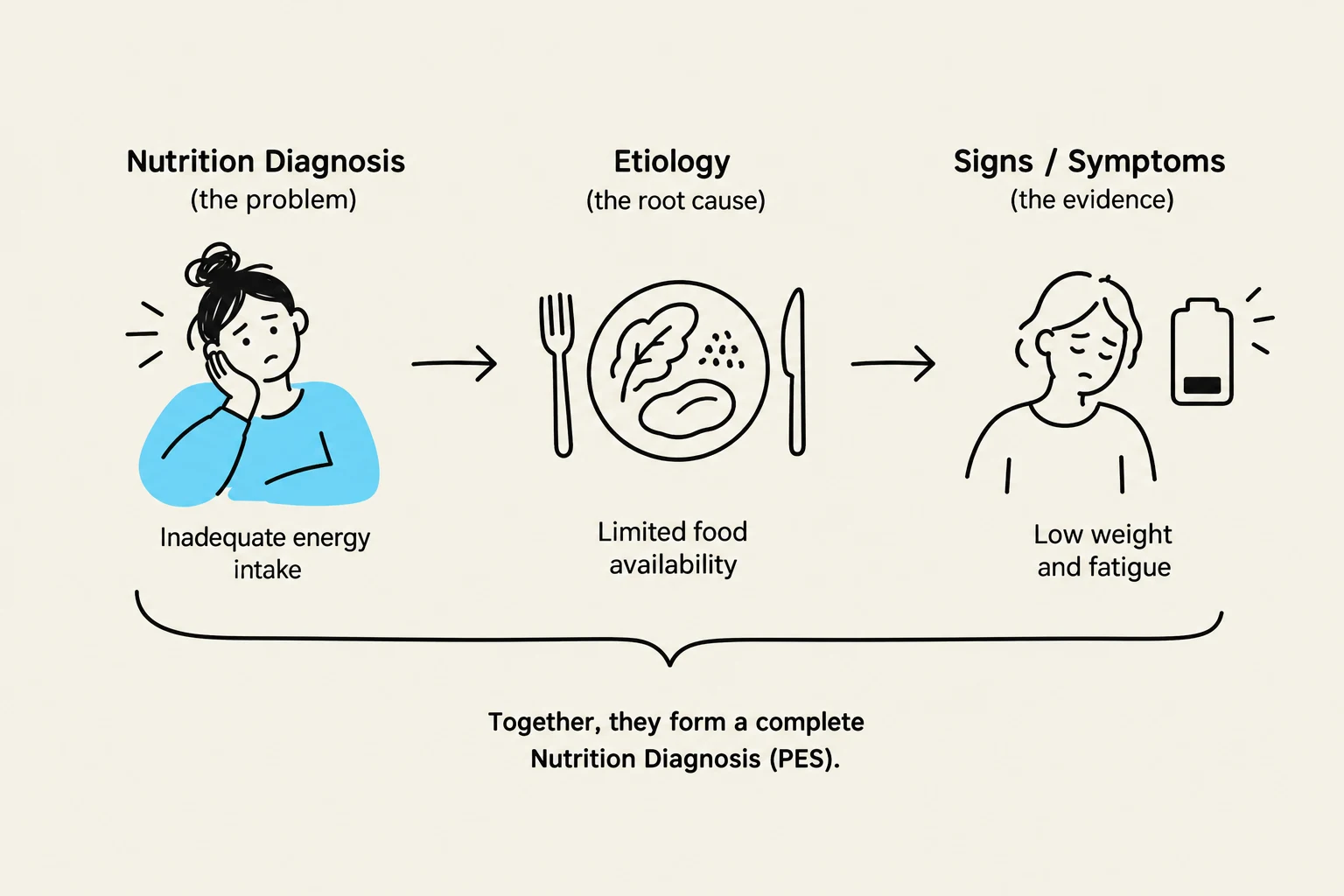
Mastering the Nutrition Care Process (NCP) requires more than just identifying a problem; it requires the ability to articulate that problem through a structured Nutrition Diagnostic Statement. A standard PES statement consists of three parts: the Problem (the nutrition diagnosis), the Etiology (the cause or contributing factors), and the Signs and Symptoms (the defining characteristics or evidence).
This guide serves as a "cheat sheet" to help students and practitioners navigate common nutrition diagnoses, helping you bridge the gap between assessment data and actionable interventions.
Understanding the PES Structure
Before diving into specific diagnoses, remember the logical flow of a PES statement: [Nutrition Diagnosis] related to [Etiology] as evidenced by [Signs and Symptoms].
Exam Tip: Always ensure your "Signs and Symptoms" are measurable or observable. If you cannot prove the problem exists with data (like lab values, anthropometrics, or patient reports), your PES statement is incomplete.
Intake-Related Diagnoses: Energy and Weight
Many nutrition diagnoses fall under the "Intake" category (NI), focusing on the consumption of nutrients.
Inadequate Energy and Protein Intake
When a patient is not consuming enough calories or protein to meet their physiological needs, you may use diagnoses like Inadequate Energy Intake (NI-1.4) or Inadequate Protein-Energy Intake (NI-5.3).
- Etiologies: These often include increased needs due to catabolic illness (e.g., sepsis, burns), decreased ability to consume food (e.g., poor dentition, nausea), or lack of access to food.
- Signs and Symptoms: Look for weight loss, failure to gain weight, or estimated intake that is lower than the measured Resting Metabolic Rate (RMR).


Keep reading for free.
Create an account to finish this reading and make it part of your study routine.
Continue reading freeAlready have an account? Log in
Updated