


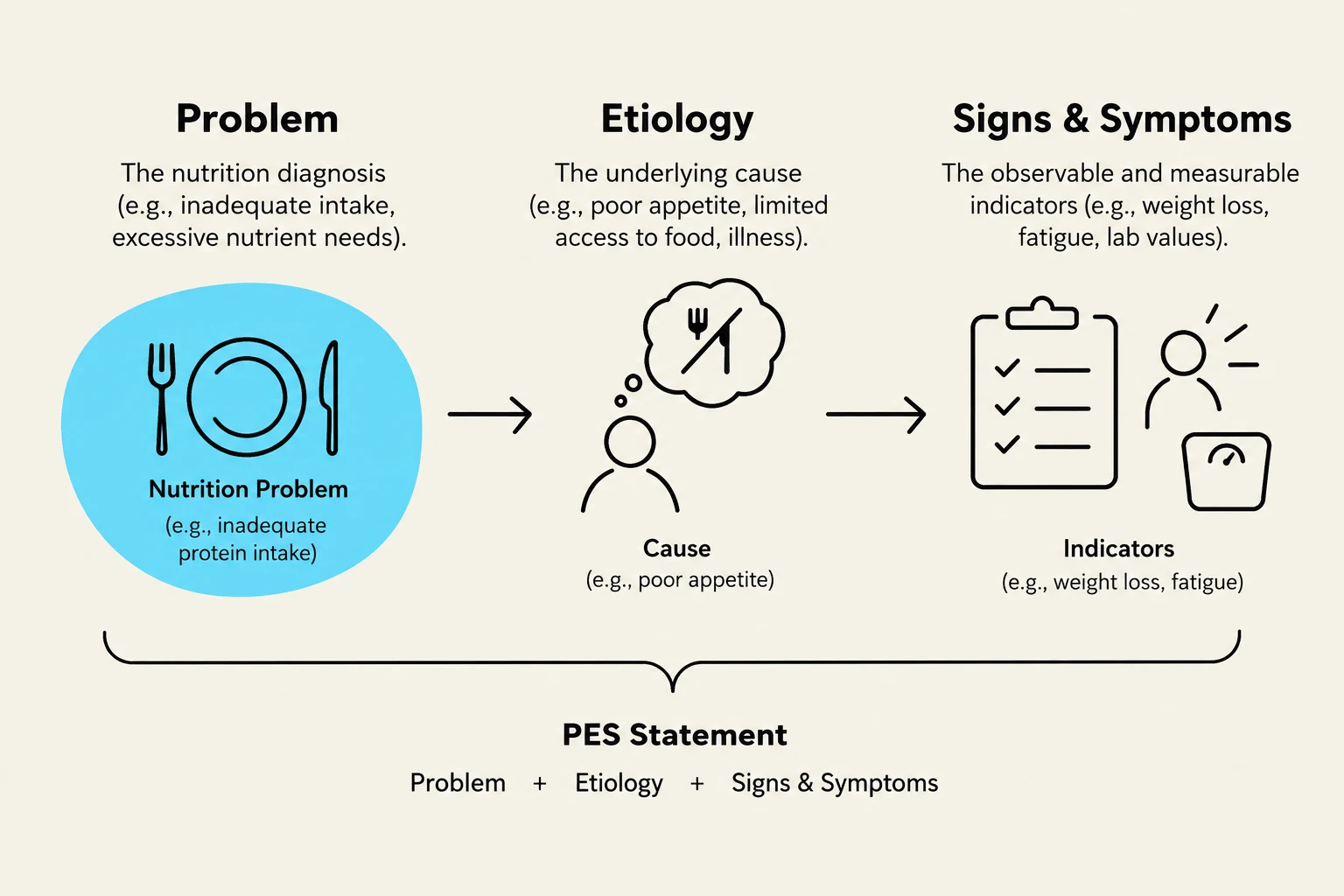
In the Nutrition Care Process (NCP), the nutrition diagnosis is a critical step that bridges the gap between assessment and intervention. Unlike a medical diagnosis, which identifies a disease, a nutrition diagnosis identifies a specific nutrition problem that a Registered Dietitian (RD) can treat. To write a professional and accurate diagnosis, you must master the PES Statement structure: Problem (the diagnosis), Etiology (the cause), and Signs and Symptoms (the evidence).
The Anatomy of a PES Statement
A complete nutrition diagnostic statement follows a specific logical flow: [Problem] related to [Etiology] as evidenced by [Signs and Symptoms].
- Problem (P): This is the specific nutrition diagnosis (e.g., Inadequate Energy Intake). It should be selected from standardized terminology.
- Etiology (E): This is the root cause or contributing factor. It explains why the problem is occurring. If you can treat the etiology, you are likely to resolve the problem.
- Signs and Symptoms (S): These are the "defining characteristics." They are the objective data (lab values, anthropometrics) or subjective reports (patient statements) that prove the problem exists.
Exam Tip: When writing your etiology, always try to be as specific as possible. Instead of saying "physiological causes," use the specific condition if known, such as "diabetes" or "renal dysfunction".
Swallowing and Masticatory Difficulties
Patients often present with physical barriers to eating. These are categorized into swallowing (dysphagia) and biting/chewing (masticatory) difficulties.

Keep reading for free.
Create an account to finish this reading and make it part of your study routine.
Continue reading freeAlready have an account? Log in
Updated