


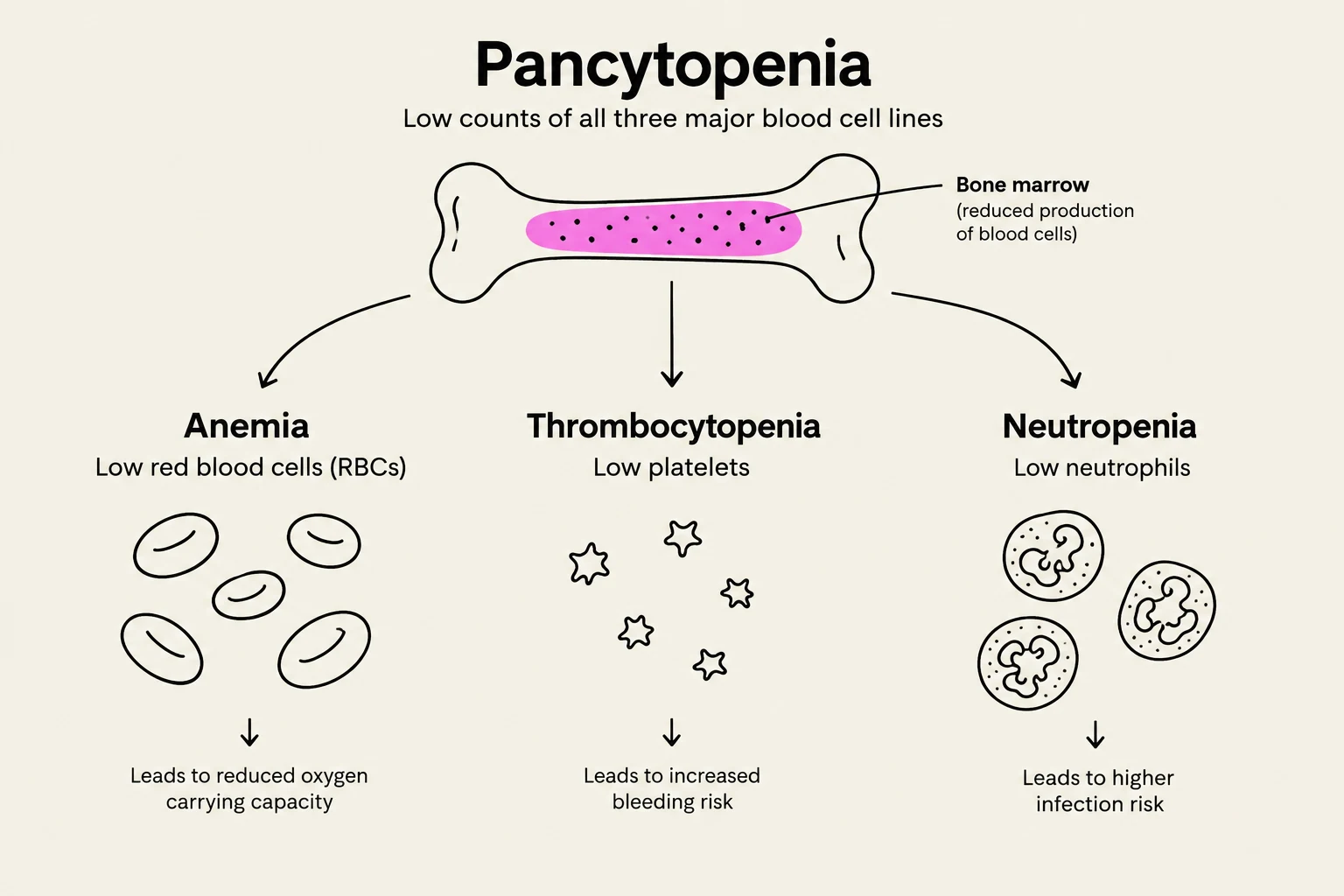
Hematologic disorders often stem from a failure in the body's complex production line of blood cells. When the balance of white blood cells, red blood cells, or platelets is disrupted, the physiological consequences can range from mild fatigue to life-threatening systemic infections. This article explores the mechanisms behind neutropenia—a critical deficiency in infection-fighting cells—and aplastic anemia, a profound failure of the bone marrow's stem cells.
Neutropenia: The First Line of Defense Compromised
To understand neutropenia, one must first understand leukopenia, which is a general decrease in the total white blood cell (WBC) count. Most commonly, leukopenia manifests as neutropenia, a specific deficiency in neutrophils.
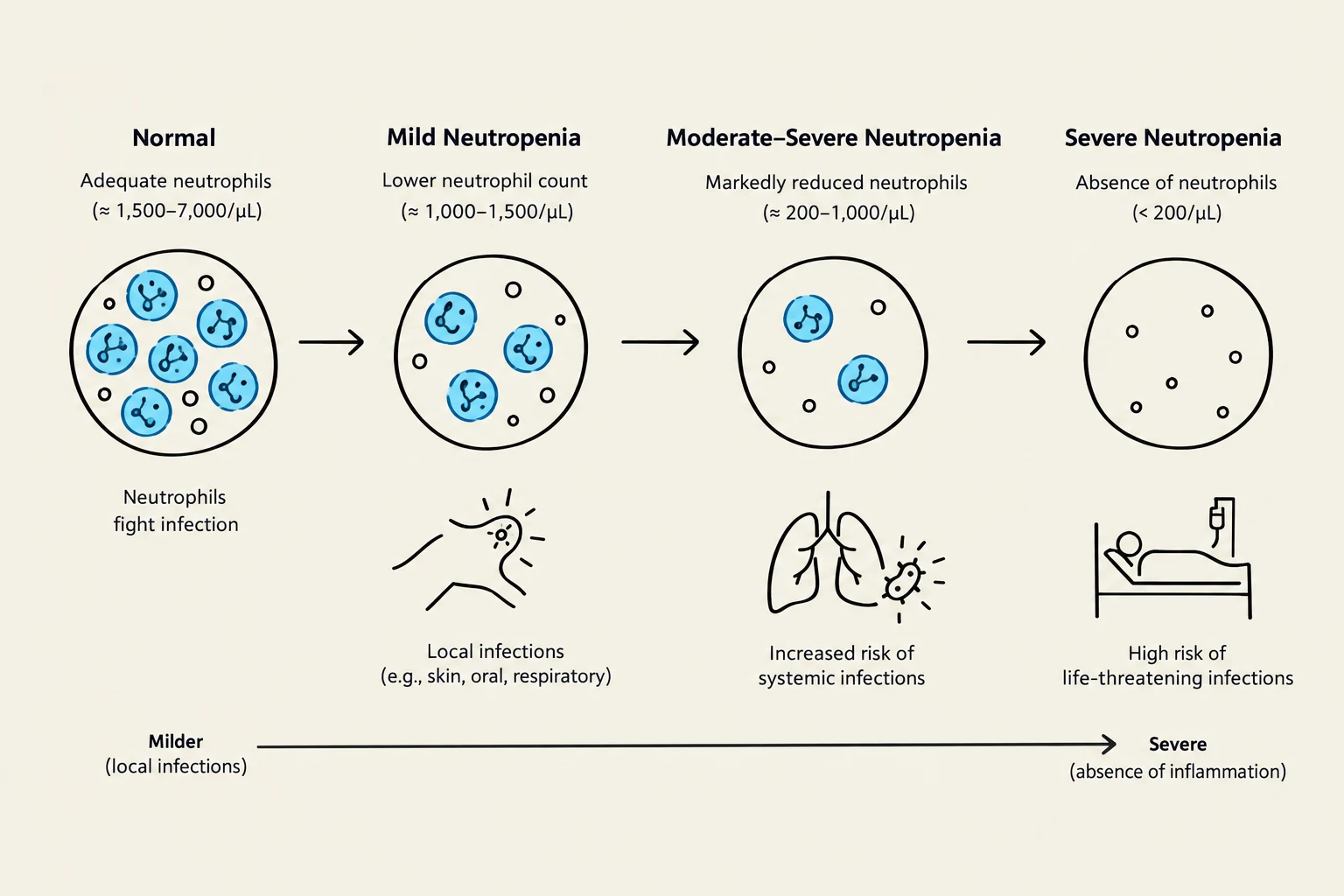
Neutrophils serve as the body's primary defense against invading microorganisms, acting through phagocytosis to engulf and destroy pathogens. The severity of neutropenia is clinically measured by the Absolute Neutrophil Count (ANC). When the ANC drops below , the risk of infection increases significantly. In extreme cases, where neutrophils are almost entirely absent, the condition is referred to as agranulocytosis.
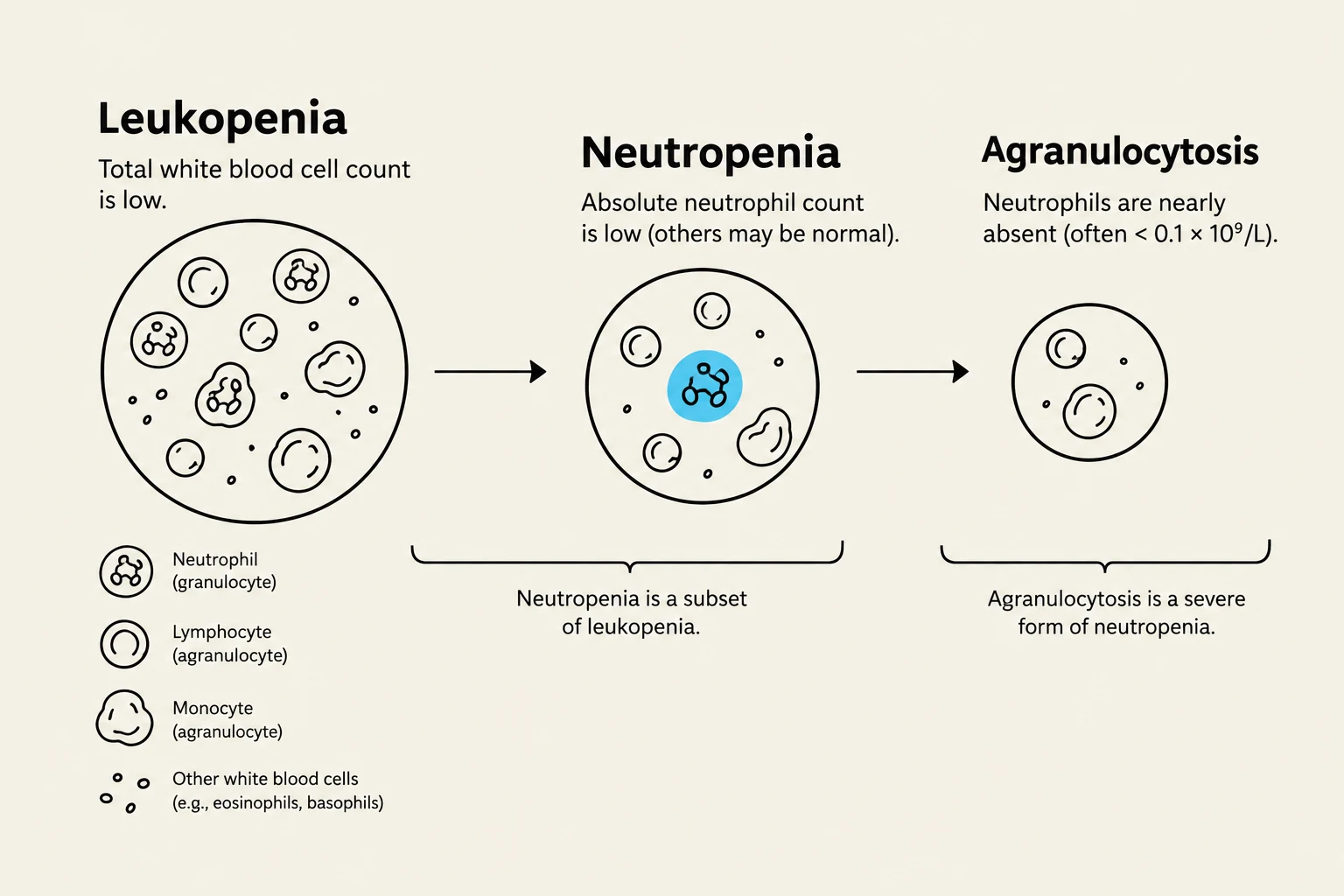
The pathophysiology of neutropenia typically involves one of three mechanisms: decreased production in the bone marrow, increased destruction of cells in the periphery, or the movement of neutrophils out of the bloodstream and into the tissues.
Causes and Classifications of Neutropenia
Neutropenia is categorized into congenital (present from birth) and acquired (developed later in life) causes.
Congenital Neutropenia
These are often linked to genetic mutations.
- Kostmann Syndrome: A severe form of congenital neutropenia that appears in infancy. It is characterized by a failure of neutrophil development and can lead to severe bacterial or fungal infections; notably, it may progress to leukemia.
- Cyclic Neutropenia: Characterized by periodic, predictable drops in the neutrophil count, frequently observed in pediatric patients.
Keep reading for free.
Create an account to finish this reading and make it part of your study routine.
Continue reading freeAlready have an account? Log in
Updated