


Evolution is often misunderstood as a conscious process where organisms "try" to change. In reality, evolution is driven by a mechanical, non-random process known as natural selection. By understanding how variation, selective pressures, and reproductive success interact, we can begin to see how entire populations shift their characteristics over many generations.
The Foundation: Variation and Genetics
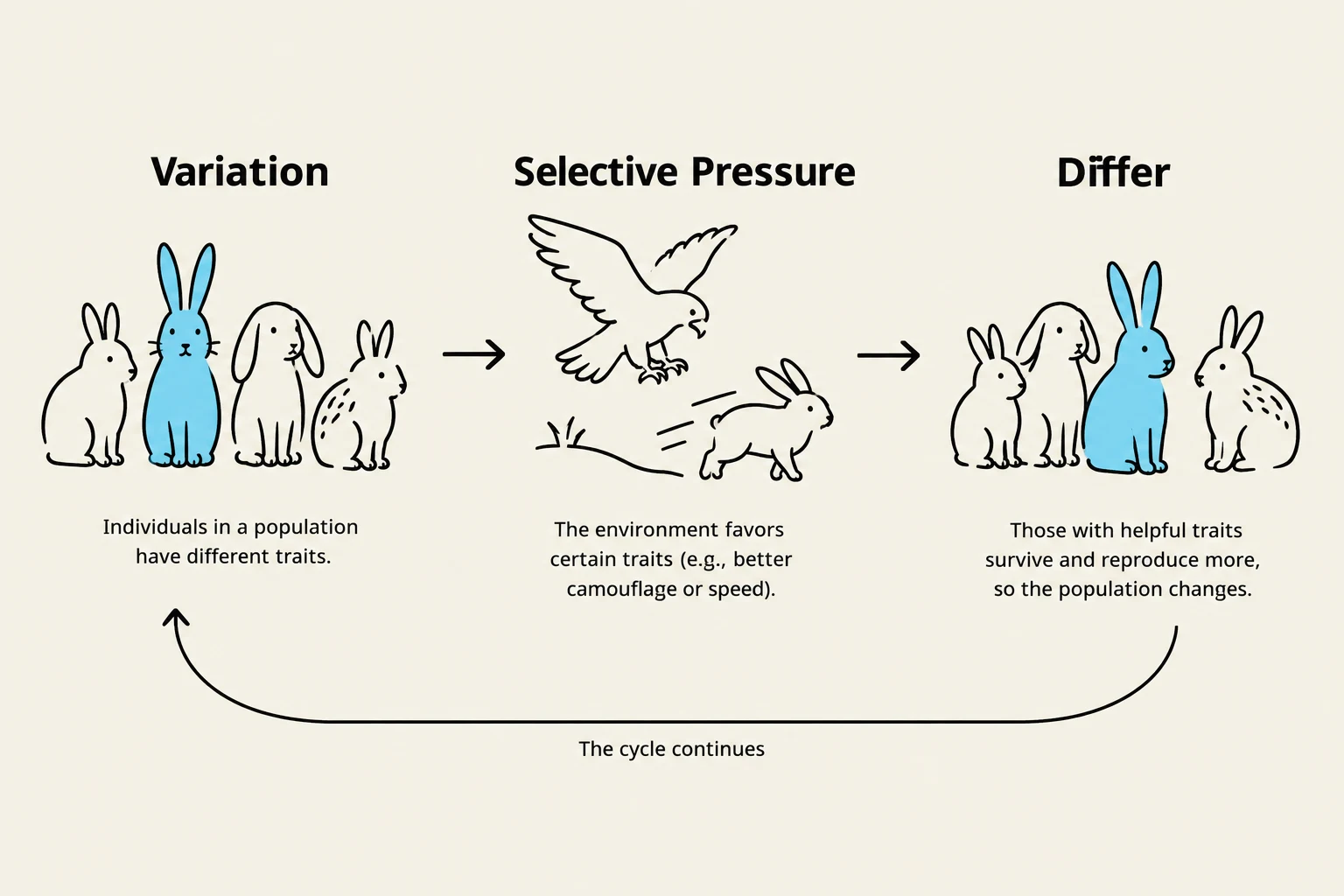
Before natural selection can occur, there must be differences between individuals within a population. This is known as variation. If every individual in a species were a perfect clone of the others, a change in the environment would affect everyone identically, leaving no room for selection to favor one over another.
Variation arises primarily through two mechanisms:
- Mutation: Random changes in the DNA sequence that create new alleles (versions of a gene).
- Sexual Reproduction: The shuffling of existing genes during reproduction, which creates unique combinations of traits in offspring.
To understand how these traits appear, we must distinguish between the genotype (the actual genetic code, such as dominant or recessive alleles) and the phenotype (the physical expression of those genes, such as color, height, or speed).
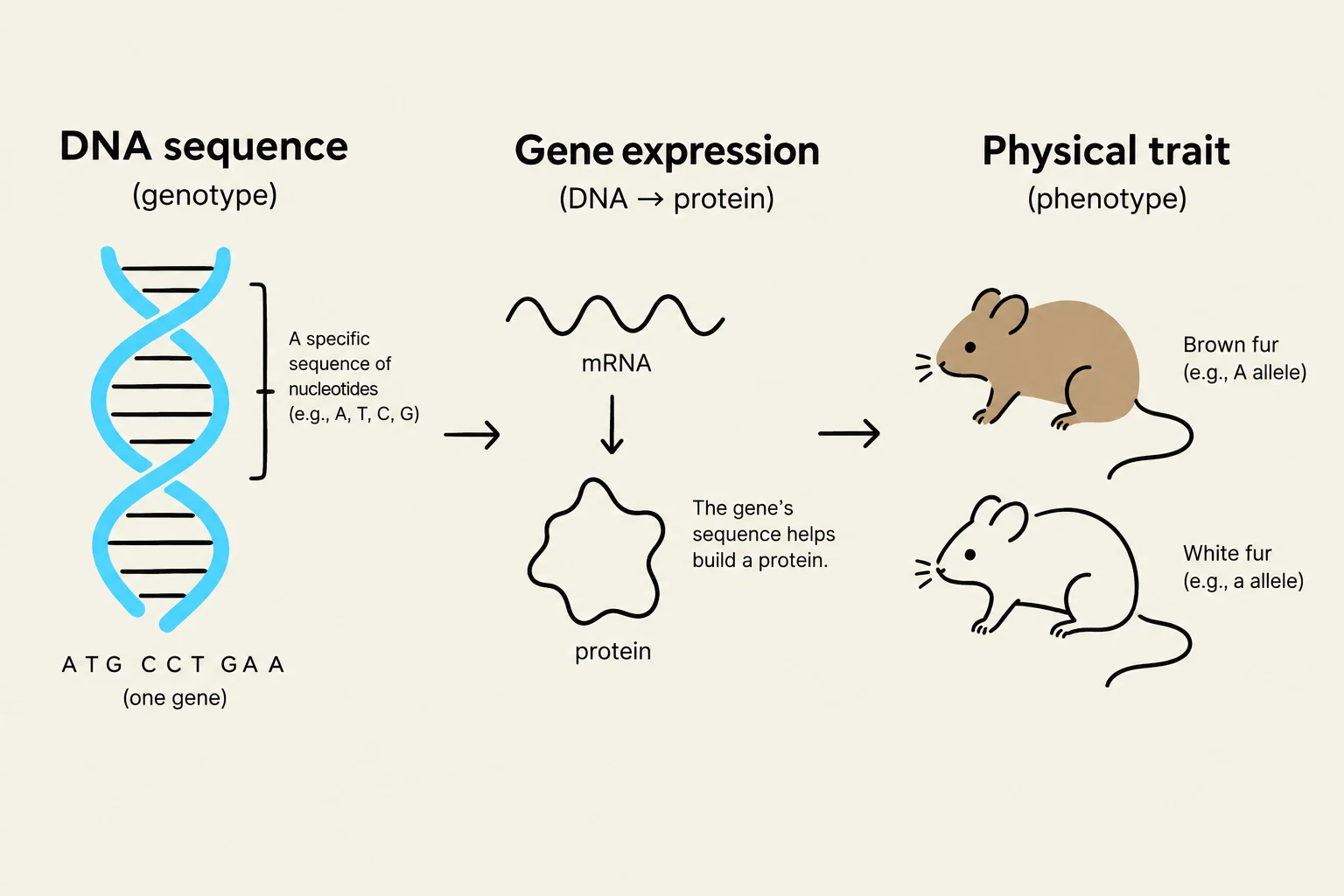
Exam Tip: When asked to explain why variation is necessary for evolution, always mention that without phenotypic differences, there is no basis for "selection" to occur.
Defining Natural Selection
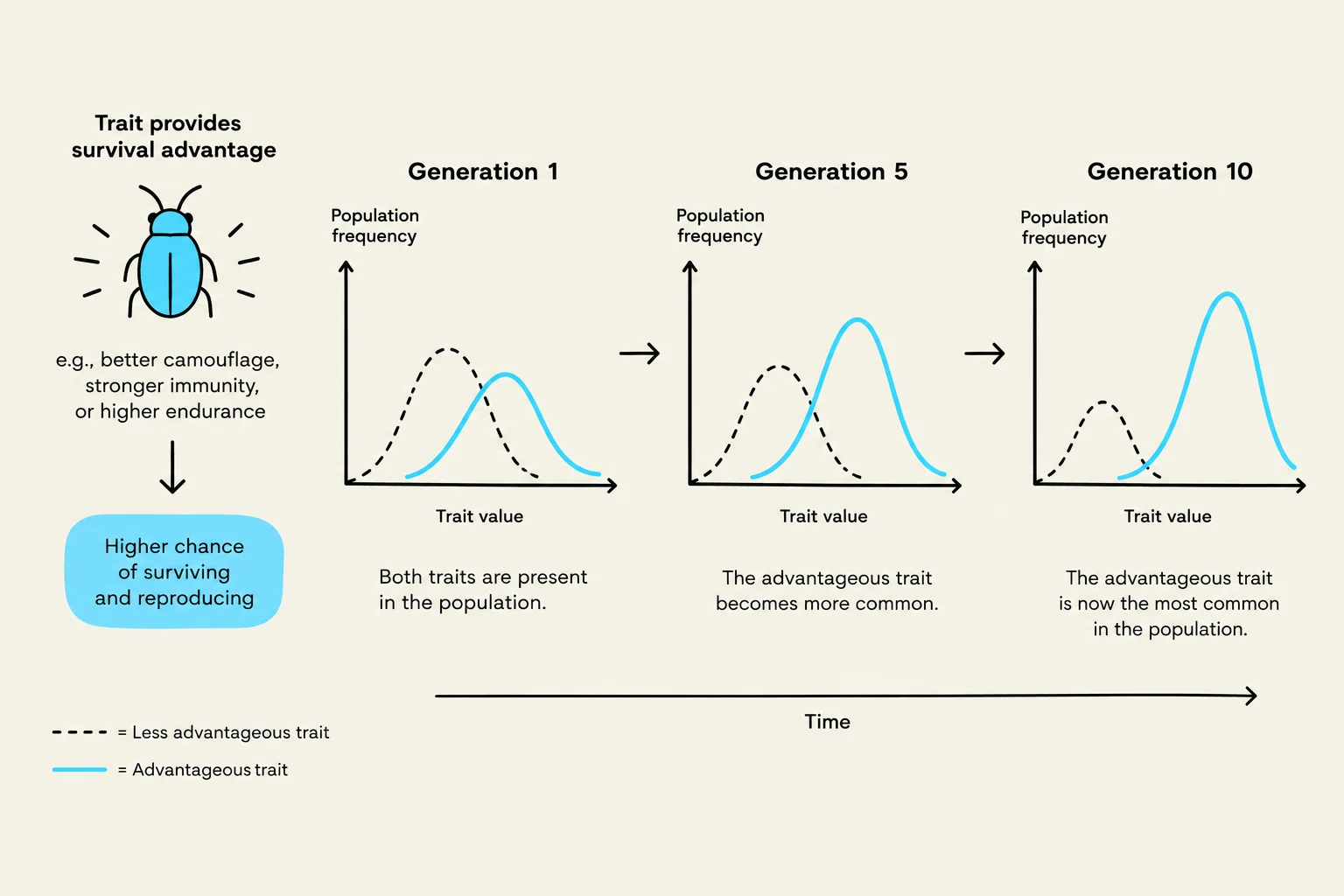
Natural selection is the process by which certain heritable traits become more or less common in a population due to the consistent effects of environmental factors. It is not a "choice" made by the animal; rather, it is a filter applied by the environment.
Keep reading for free.
Create an account to finish this reading and make it part of your study routine.
Continue reading freeAlready have an account? Log in
Updated