


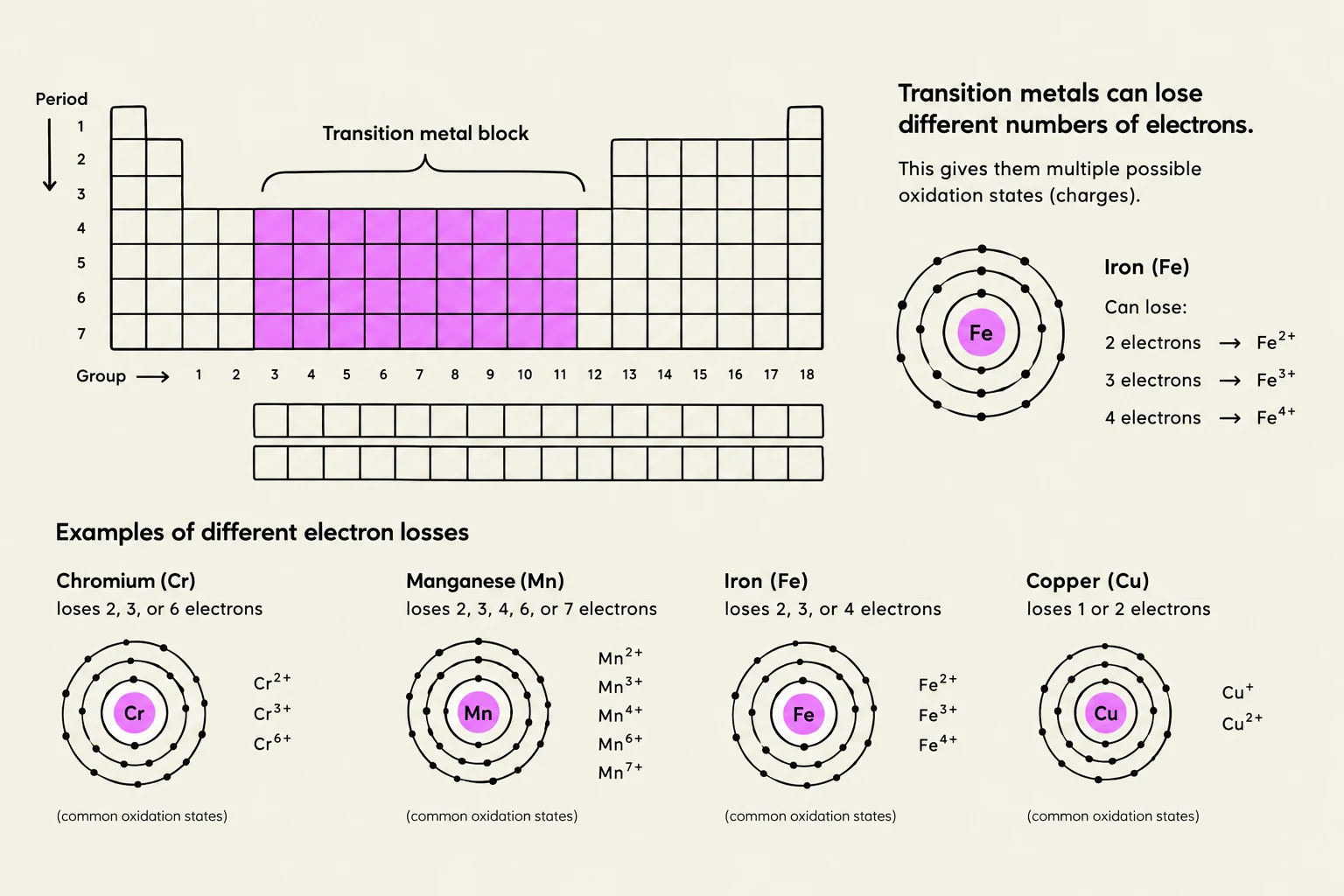
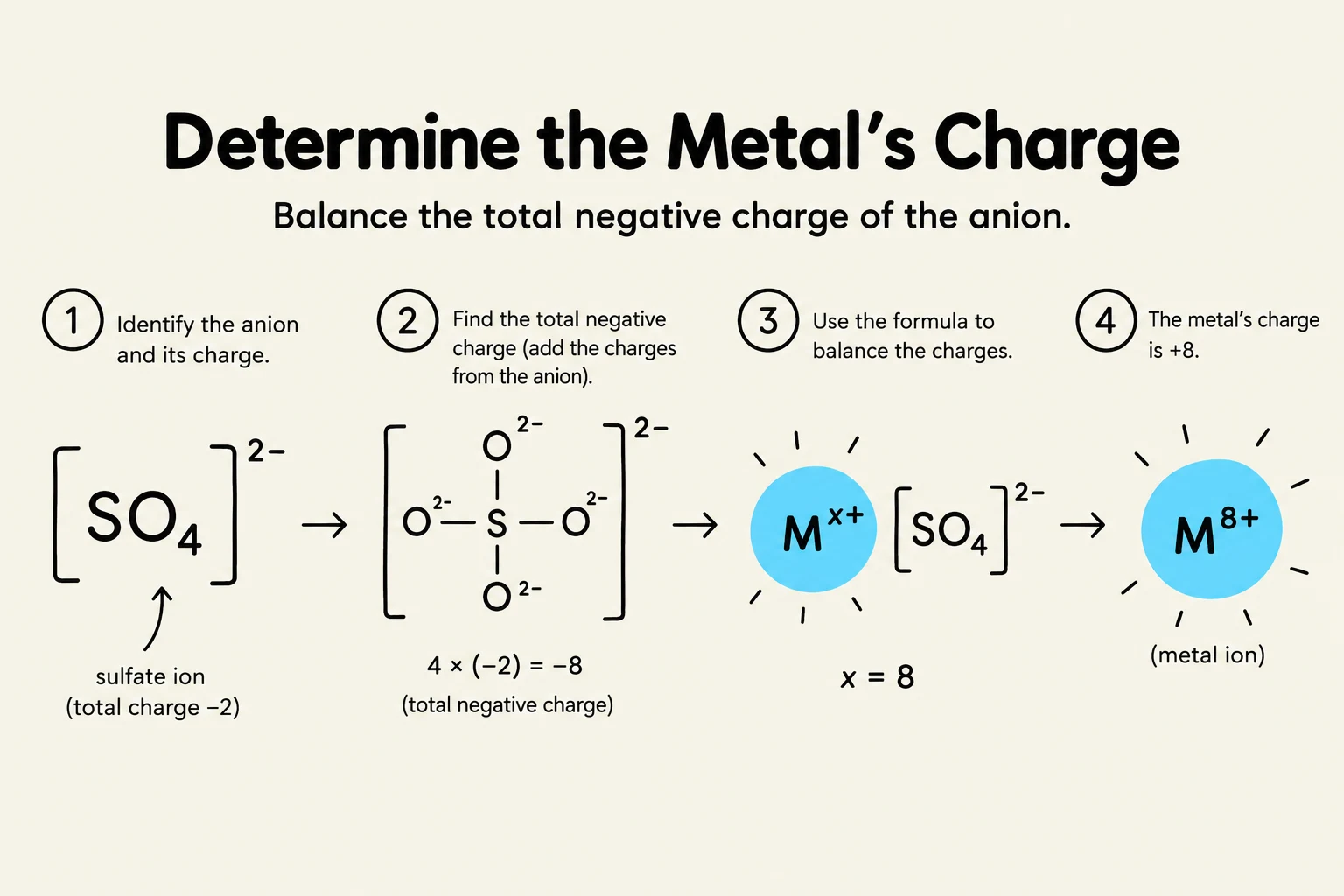
In the study of inorganic chemistry, naming compounds can sometimes feel like learning a new language. While many metals, such as Sodium () or Magnesium (), always carry the same charge, a specific group of elements behaves differently. These are the transition metals. Because these elements can lose different numbers of electrons depending on the chemical environment, they are referred to as multivalent. To prevent confusion in chemical nomenclature, we use a specialized system involving Roman numerals to specify exactly which charge a metal is carrying in a particular compound.
What Does "Multivalent" Mean?
The term "multivalent" comes from the Latin multus (many) and valentia (strength or capacity). In chemistry, "valence" refers to the capacity of an atom to form chemical bonds, which is directly related to the number of electrons it can lose or share.
Most main-group metals (like those in Group 1 or Group 2) have a fixed number of valence electrons and thus a fixed charge. However, transition metals—those located in the central block of the periodic table—have d-orbitals that allow them to lose varying numbers of electrons. For example, Iron () can exist as or . Without a way to distinguish these two, a chemist wouldn't know if a formula represents Iron(II) chloride or Iron(III) chloride.
Keep reading for free.
Create an account to finish this reading and make it part of your study routine.
Continue reading freeAlready have an account? Log in
Updated