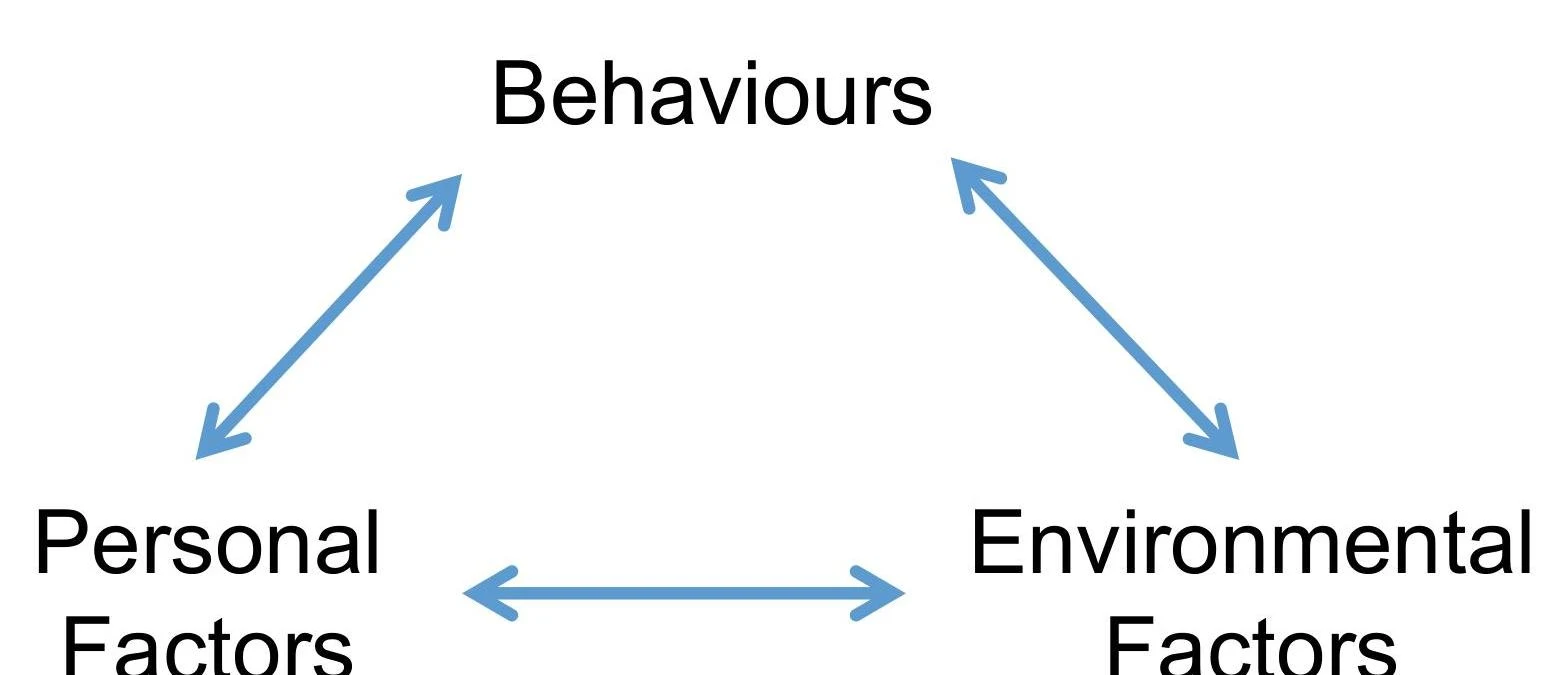
The Power of Self-Efficacy
Perhaps the most critical construct in SCT is self-efficacy. While people often use the term "self-confidence" interchangeably with self-efficacy, they are distinct in a psychological context:
- Self-Confidence is a general feeling of trust in one's overall abilities, qualities, and judgment.
- Self-Efficacy is a situation-specific belief in one's capability to execute the specific actions required to achieve a particular level of attainment.
For example, an athlete might have high general self-confidence but low self-efficacy regarding their ability to perform a specific technical skill, like a backflip, under high-pressure competition.
Exam Tip: When asked to differentiate between the two, remember that self-efficacy is context-dependent and focuses on specific tasks, whereas self-confidence is a global trait.
How to Change Self-Efficacy
Because self-efficacy is such a strong predictor of exercise adherence and performance, practitioners often focus on four ways to increase it:
- Mastery Experiences: Success in past performances of similar behaviors is the most powerful way to build efficacy.
- Vicarious Experience: Seeing "models" (people similar to oneself) succeed at a task.
- Social Persuasion: Receiving verbal or non-verbal encouragement from knowledgeable and significant others.
- Physiological and Affective States: Learning to interpret physical cues (like a racing heart or sweating) as signs of readiness rather than signs of fear or failure.
The Broader Landscape of Motivation Theories
While SCT is highly effective, it is part of a larger ecosystem of motivational theories used in Sport and Exercise Psychology (SEP):
- Self-Determination Theory (SDT): Focuses on the quality of motivation (intrinsic vs. extrinsic).
- Theory of Planned Behaviour (TPB): Examines how intentions are formed through attitudes and social norms.
- Mindsets: Explores whether people believe their abilities are fixed or can be grown.
- Non-Conscious Processes: Investigates how automatic, rapid, and often unaware mental processes drive behavior.
Mindsets: Fixed vs. Growth
Mindsets are the often-unconscious beliefs people hold about the nature of human ability.
- Fixed Mindset: The belief that qualities and abilities are innate and unchangeable. This is often linked to performance goals and lower intrinsic motivation.
- Growth Mindset: The belief that abilities are malleable and can be developed through effort. This is linked to task-oriented goals and higher intrinsic motivation.
Interestingly, research suggests that an individual might hold both a fixed and a growth mindset simultaneously in different areas of their sporting life.
The Affective-Reflective Theory (ART)
The Affective-Reflective Theory explains why we often struggle to act on our "good intentions" to exercise. It suggests that our decisions are influenced by a tug-of-war between two types of processing:
- Type I Processes (Affective): These are fast, automatic, and require minimal effort. They involve "automatic affective valuations"—the immediate, unconscious feeling (positive or negative) we associate with a stimulus, such as the feeling of being out of breath.
- Type 2 Processes (Reflective): These are slower, effortful, and consciously monitored. They involve deliberate evaluation and the creation of action plans.
The outcome of our behavior depends on whether these two processes are concordant (moving in the same direction) or discordant (moving in opposite directions). For instance, if your "action plan" is to go to the gym (Type 2), but your "action impulse" is to stay on the couch because you feel tired (Type 1), you are in a state of discordance.
Moving from Conscious to Non-Conscious
In sport, most behavior is initially driven by conscious (Type 2) processes. However, through repetition, these can become non-conscious (Type 1) habits.
Research shows that establishing an exercise habit can take as little as four bouts per week over a six-week period. To help bridge the gap between intention and action, psychologists recommend "cue interventions" such as implementation intentions (using "if-then" statements) and mindfulness training to help train these cognitive structures.
Summary Note: While SCT focuses on the beliefs that drive us (like self-efficacy), ART focuses on the internal conflict between our automatic feelings and our logical plans.