


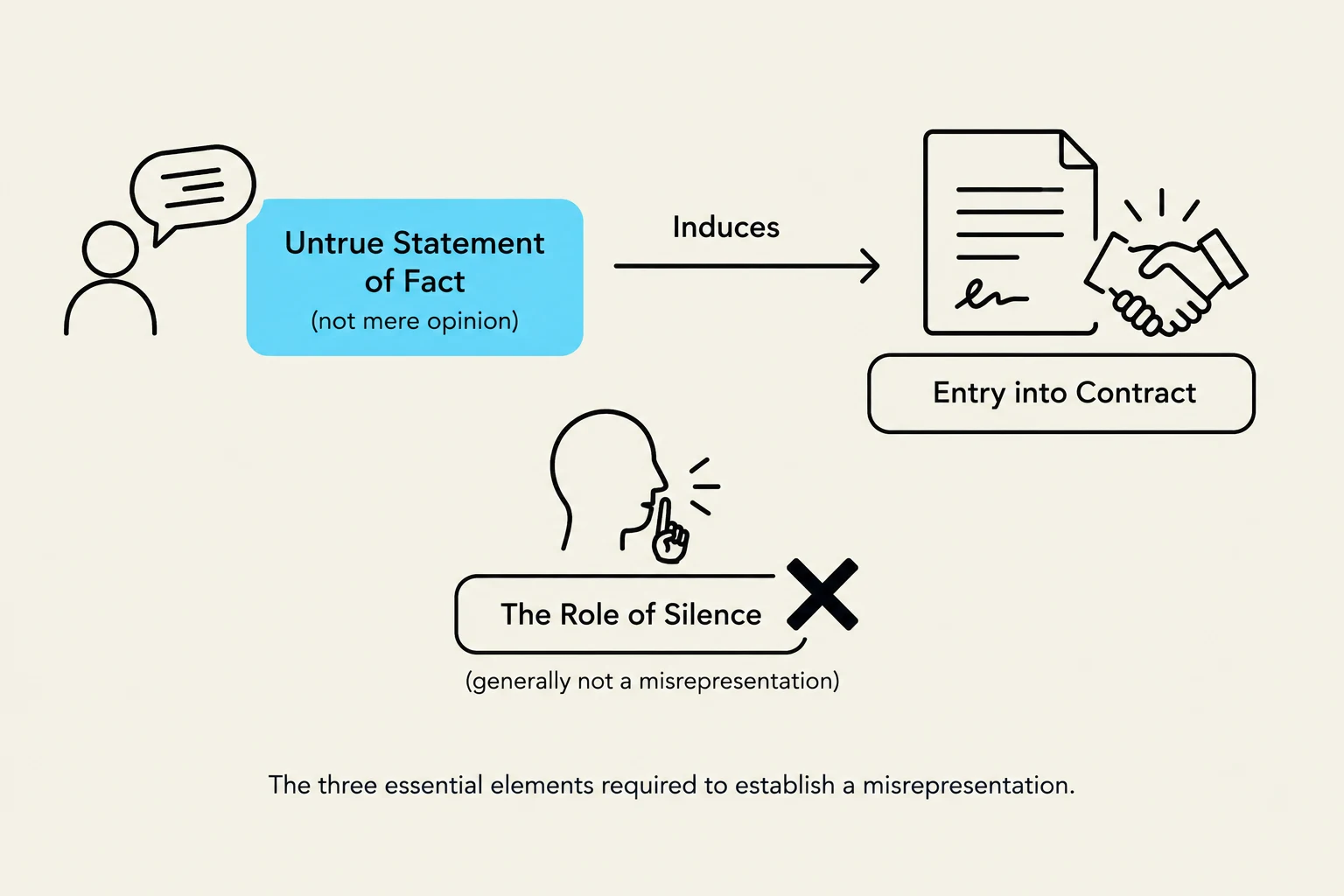
When parties negotiate a contract, they often exchange various statements regarding the subject matter of the agreement. However, not every statement made during negotiations carries legal weight. To navigate the complexities of contract law, one must be able to distinguish between harmless sales talk, binding contractual terms, and actionable misrepresentations. Understanding these distinctions is vital for determining whether a party has a claim for breach of contract or for the tort of misrepresentation.
Classifying Pre-Contractual Statements

1. Sales Puff
A "sales puff" refers to extravagant, exaggerated, or vague claims made by a seller to make a product appear more attractive. Because these statements are not intended to be taken literally and are not capable of being proven true or false, they are non-actionable in a court of law.
2. Contract Terms
A statement becomes a contract term if it is intended to form part of the actual agreement. If a statement is a term and it turns out to be untrue, the remedy is an action for breach of contract.
3. Representations
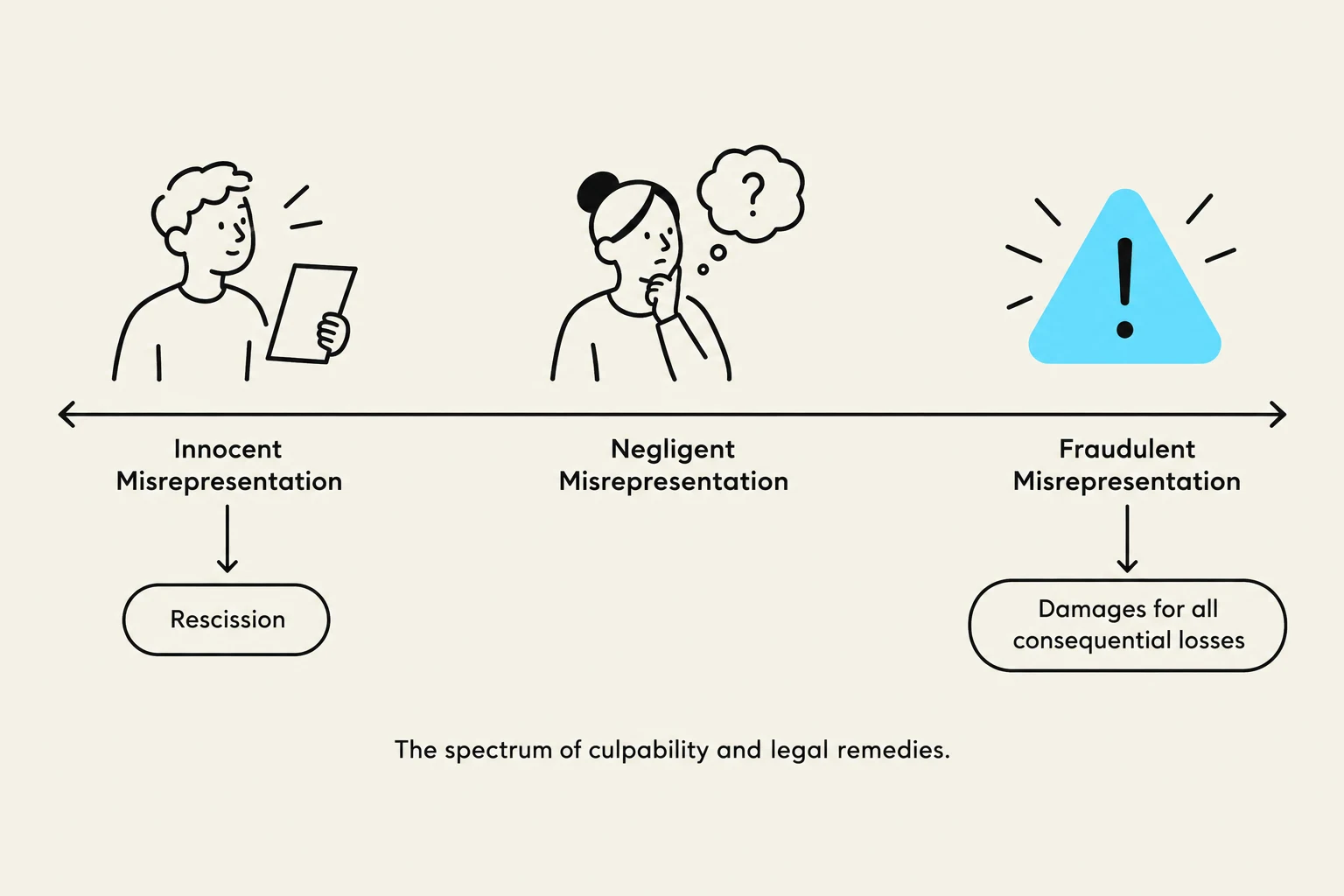
A representation is a statement that induces a party to enter into the contract but is not intended to be a formal term of the agreement. If a representation is untrue, the aggrieved party may claim for misrepresentation.
Exam Tip: Distinguishing Terms from Representations When faced with a problem question, look for these judicial guidelines to decide if a statement is a term or a representation:
- Common intention of the parties: Did they intend the statement to be binding?
- Relative skill or knowledge: Was the maker an expert compared to the recipient?
- Importance of the statement: Was the statement central to the deal?
- Lapse of time: How much time passed between the statement and the final contract?
- Written inclusion: Was the statement included in the final written document?
Keep reading for free.
Create an account to finish this reading and make it part of your study routine.
Continue reading freeAlready have an account? Log in
Updated