


Ménière disease is a complex disorder of the inner ear that affects both hearing and balance. Unlike many other vestibular disorders that may present with a single primary symptom, Ménière disease is characterized by a specific "tetrad" of clinical manifestations that occur in episodic patterns. Understanding the nuances of these symptoms is critical for distinguishing this condition from other forms of vertigo, such as Benign Paroxysmal Positional Vertigo (BPPV) or vestibular neuritis.
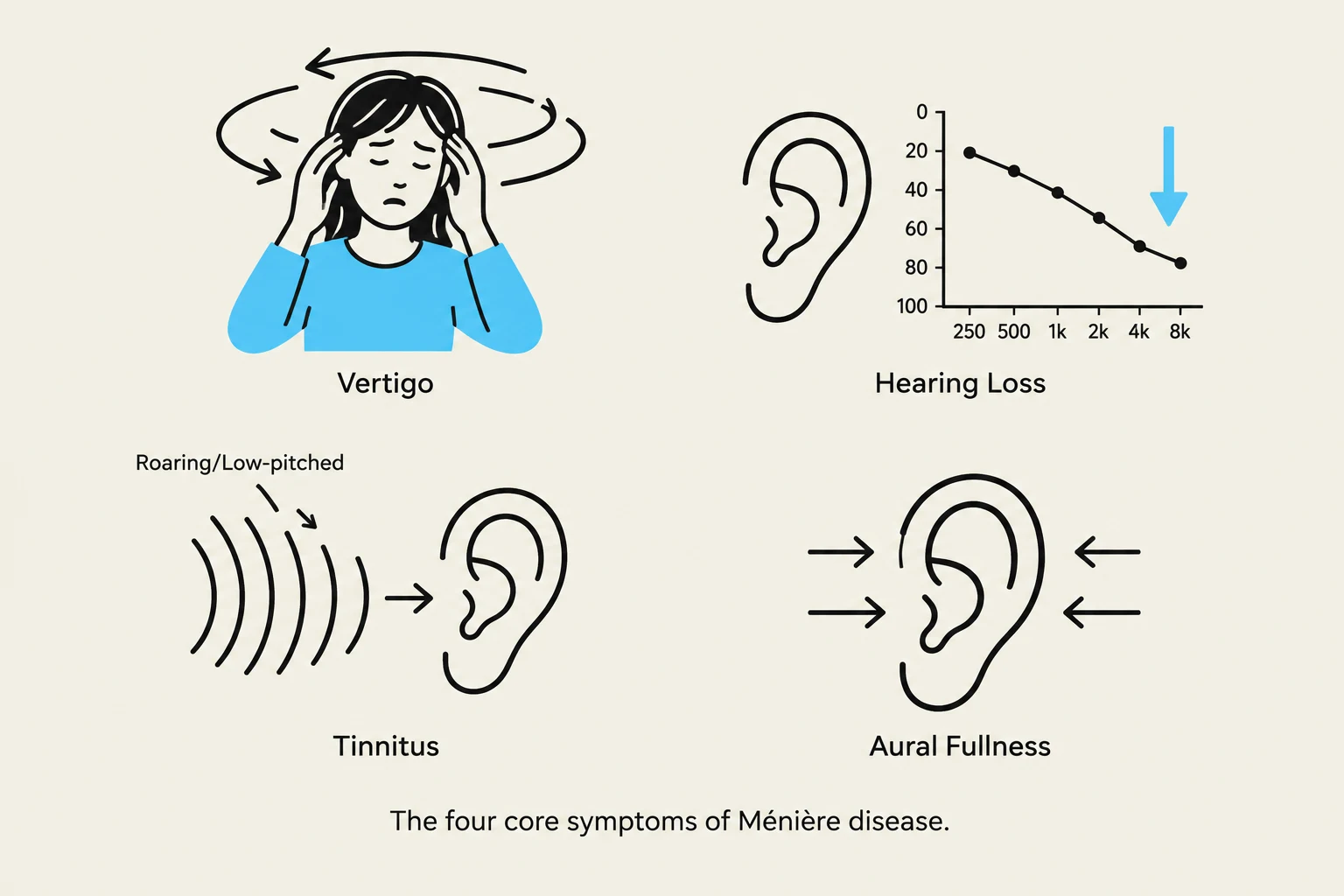
The Clinical Tetrad: Core Symptoms
The diagnosis of Ménière disease is primarily clinical, relying on the presence of a specific cluster of symptoms that reflect the underlying pathophysiology of the inner ear. While not every patient will experience all four symptoms simultaneously, the classic presentation involves the following four elements:
1. Episodic Vertigo
The hallmark of the disease is spontaneous, episodic vertigo. This is not merely a feeling of lightheadedness; it is a profound sensation of spinning or motion that is often violent and debilitating. These episodes typically last anywhere from 20 minutes to several hours.
2. Sensorineural Hearing Loss
Ménière disease causes fluctuations in hearing acuity. In the early stages of the disease, hearing loss is often episodic and may resolve between attacks. However, as the disease progresses, the hearing loss tends to become more permanent and can affect specific frequencies, typically the low frequencies initially.
3. Tinnitus
Patients frequently report tinnitus, which is a perceived ringing, buzzing, or roaring sound in the affected ear. In Ménière disease, this tinnitus is often described as "low-pitched" or "roaring" and may intensify immediately before or during a vertigo attack.
Keep reading for free.
Create an account to finish this reading and make it part of your study routine.
Continue reading freeAlready have an account? Log in
Updated