


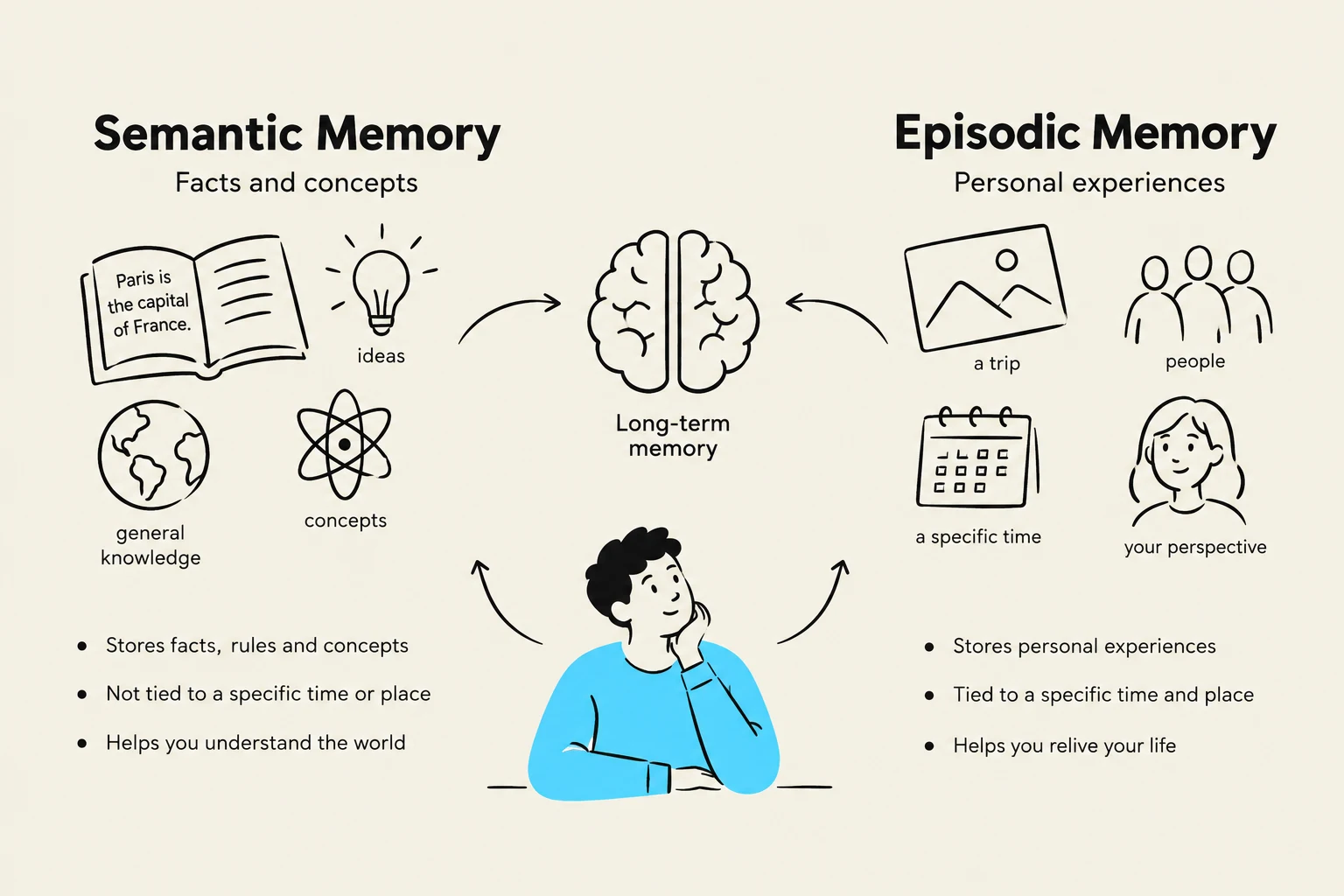
Have you ever wondered why you can remember a phone number just long enough to dial it, but struggle to recall what you ate for lunch three weeks ago? Or why you can explain the rules of a game perfectly, yet forget the specific moment you learned them? The answer lies in the complex, multi-layered architecture of the human memory system. Memory is not a single "recording device" in the brain; rather, it is a collection of distinct systems that differ in capacity, duration, and the type of information they process.
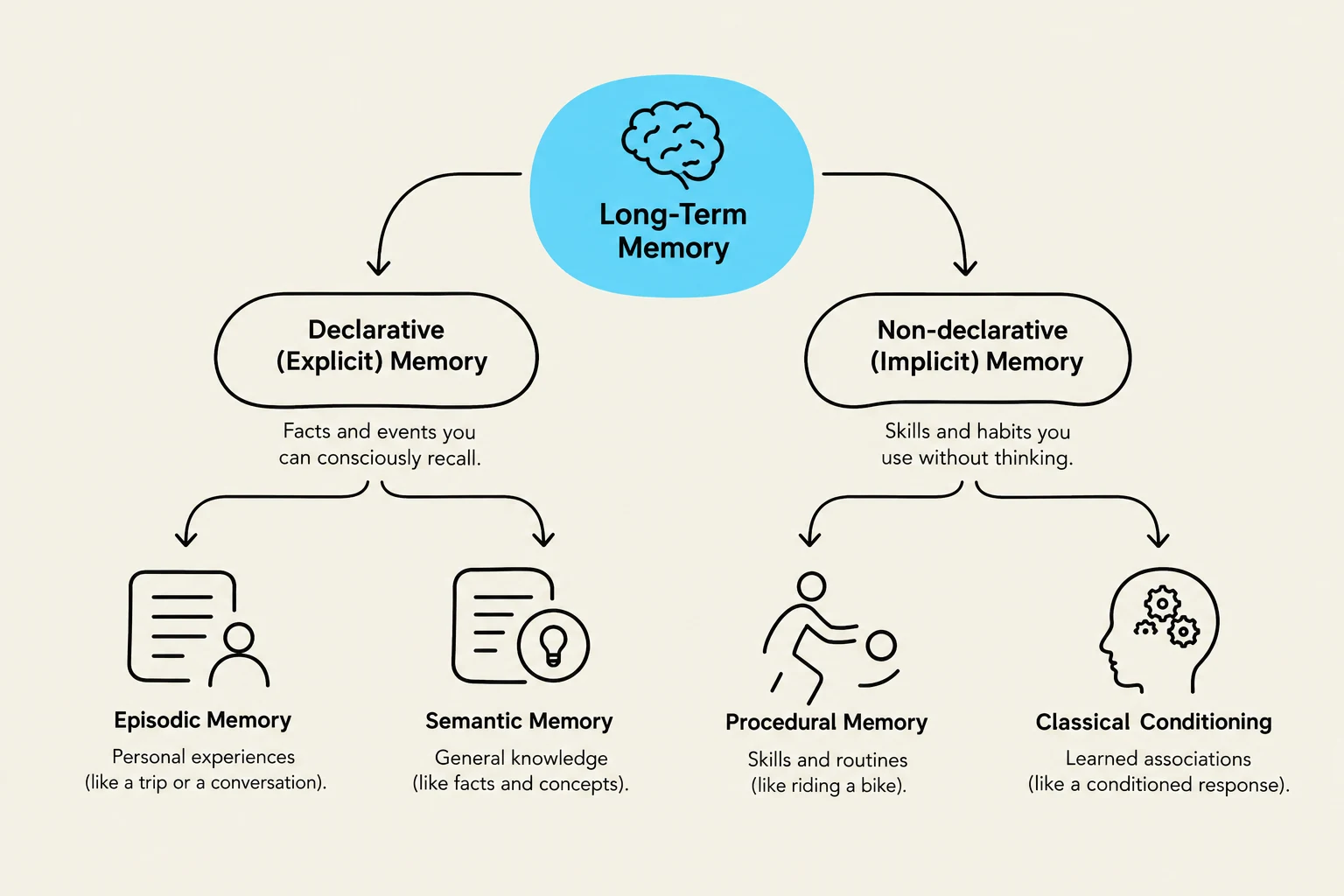
To master psychology and neuroscience, it is essential to differentiate between the temporal stages of memory—Short-Term and Long-Term—and the qualitative types of information stored within them, such as Episodic memory.
Short-Term Memory (STM): The Mental Workspace
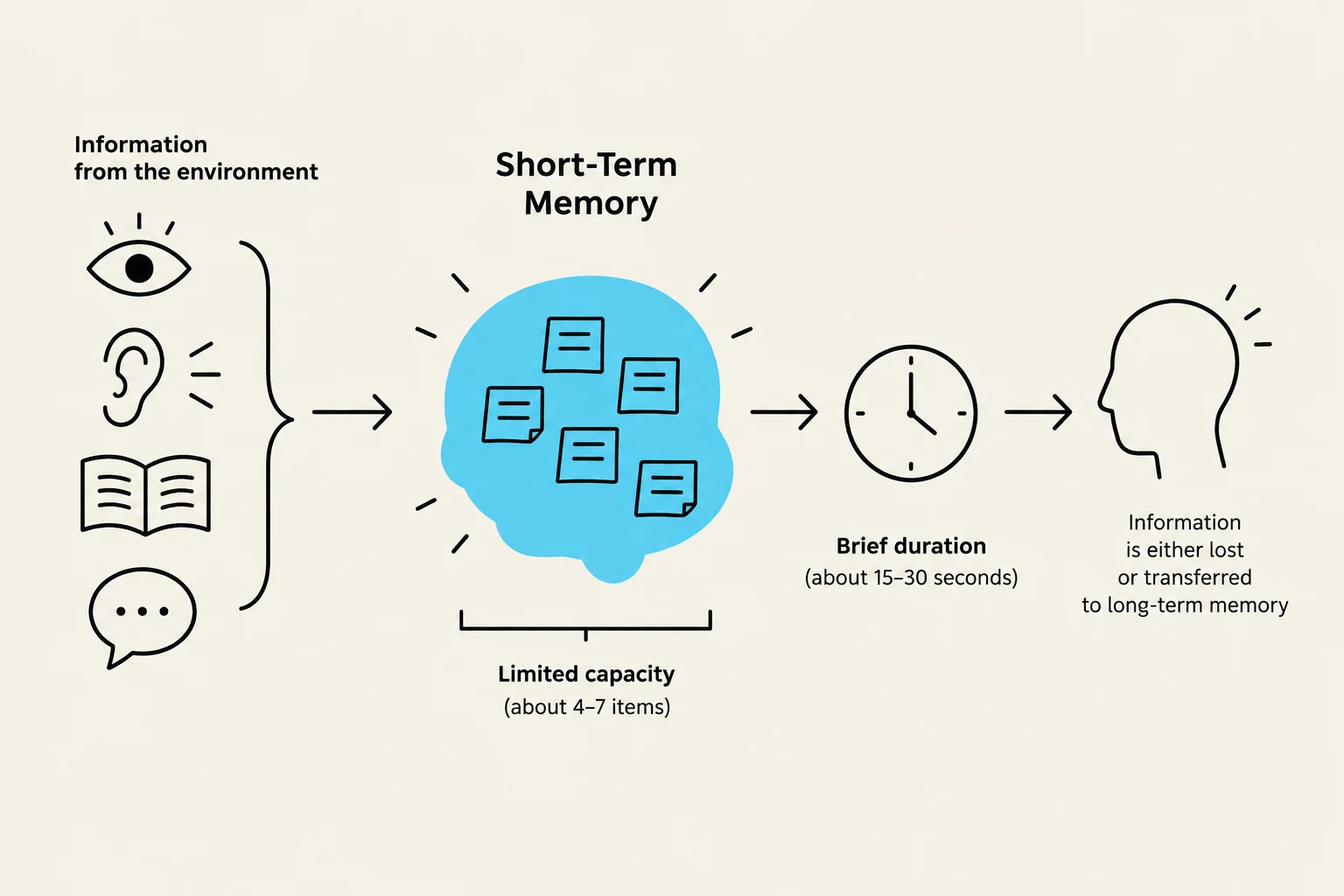
Short-Term Memory (STM) acts as the brain's immediate "workspace." It is the system responsible for holding a small amount of information in an active, conscious state for a very brief period. Think of it as a mental sticky note: it is incredibly useful for tasks happening right now, but if you don't "write it down" (transfer it to long-term storage), the information vanishes almost instantly.
The defining characteristics of STM are its limited capacity and limited duration. Most people can only hold about items in their STM at once. If you are trying to remember a sequence of digits, adding an eighth digit often causes the first one to be "pushed out" of your conscious awareness.
Keep reading for free.
Create an account to finish this reading and make it part of your study routine.
Continue reading freeAlready have an account? Log in
Updated