


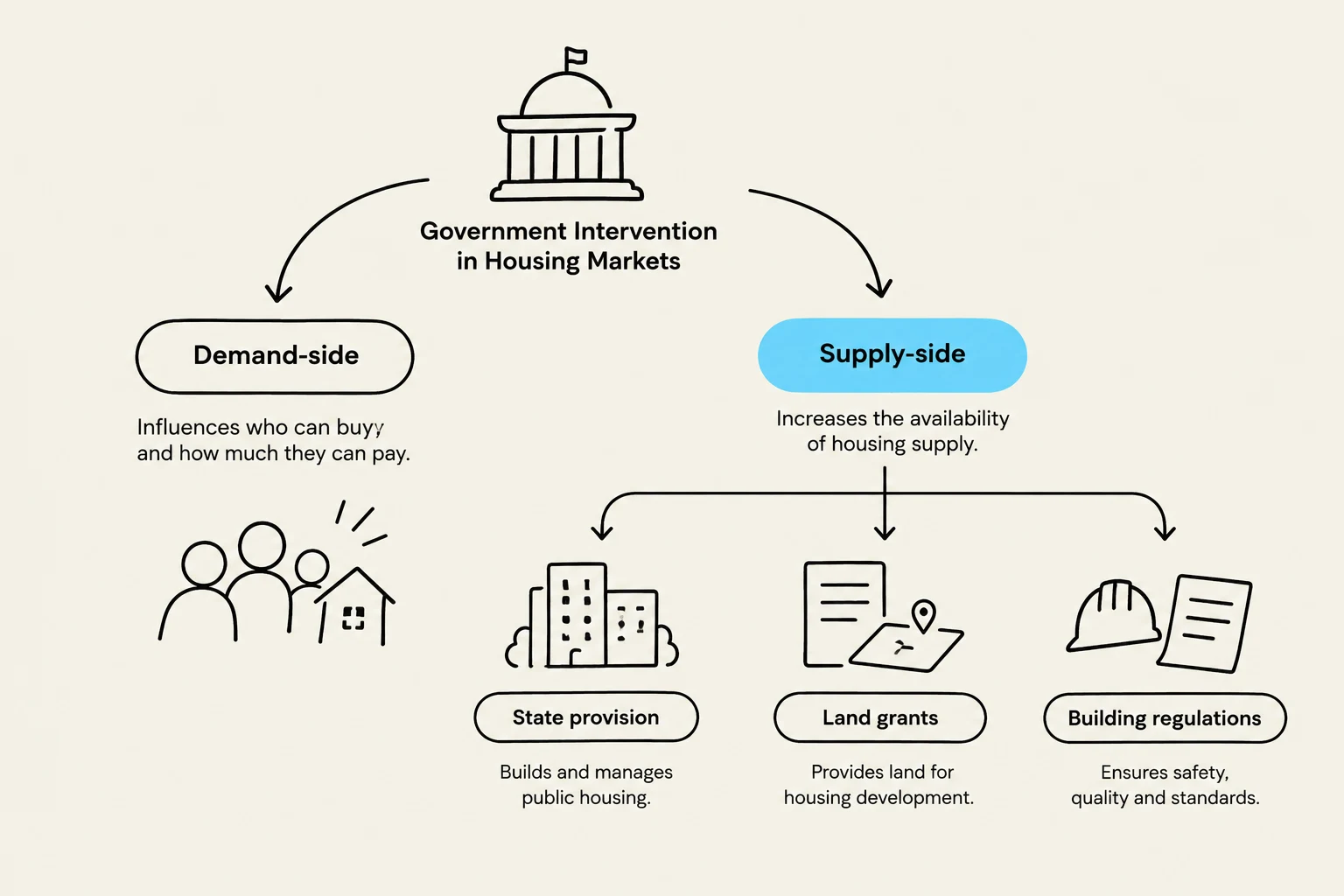
In a perfect market, the forces of supply and demand interact to allocate resources efficiently, ensuring that goods are produced and consumed at levels that maximize social welfare. However, real-world markets often fail to reach this "socially optimal" outcome. When markets deliver results that fall short of what is best for society, it is termed market failure. This inefficiency creates a fundamental question for policymakers: should the government step in to correct these failures, or should it allow the market to function autonomously? This article explores the theoretical foundations of market failure, the various rationales for government intervention, and the specific policy tools used to manage housing markets, with a particular focus on the Hong Kong context.
The Mechanics of Market Failure
Market failure occurs when the price mechanism fails to account for all costs and benefits associated with a transaction. There are three primary drivers of market failure:
- Economies of Scale and Monopoly: As production increases, some firms experience significant cost advantages, leading to economies of scale. This can result in a monopoly, where a single producer dominates the market. A monopolist can charge higher prices and produce at suboptimal levels, pushing competitors out of the market. In some cases, this leads to a natural monopoly, such as water utilities or postal services, where it is more efficient for one firm to serve the entire market.
- Public Goods: Certain goods possess characteristics that make them difficult for private markets to provide. These include nonexcludability (you cannot prevent people from using it), nonrivalry (one person's use doesn't reduce availability for others), and nonrejectability (people cannot easily opt out of using it). Because of these traits, individuals may attempt to free ride—enjoying the benefit without paying for it—which leads to under-provision by the private sector.
- Externalities: An externality occurs when the production or consumption of a good affects a third party who is not involved in the transaction. Good externalities (positive) occur when an action benefits others, such as a homeowner renovating their house, which improves the entire neighborhood's aesthetic and value. Bad externalities (negative) occur when an action imposes costs on others, such as pollution or traffic congestion. Without intervention, market signals are "wrong," often allocating too many resources to activities that create bad externalities and too few to those that create good ones.

Keep reading for free.
Create an account to finish this reading and make it part of your study routine.
Continue reading freeAlready have an account? Log in
Updated