Understanding Malware and Physical Security Threats
An overview of common malware types like viruses, worms, ransomware, and spyware, alongside an explanation of physical security threats and environmental attacks that can compromise IT systems.
In the field of information technology, security is a constant battle. Systems are under continuous assault from various actors using diverse methods to compromise data, disrupt services, or steal identities. To defend a network effectively, a security professional must understand both the digital threats—commonly referred to as malware—and the physical threats that can bypass digital defenses entirely.
Understanding Malware Types
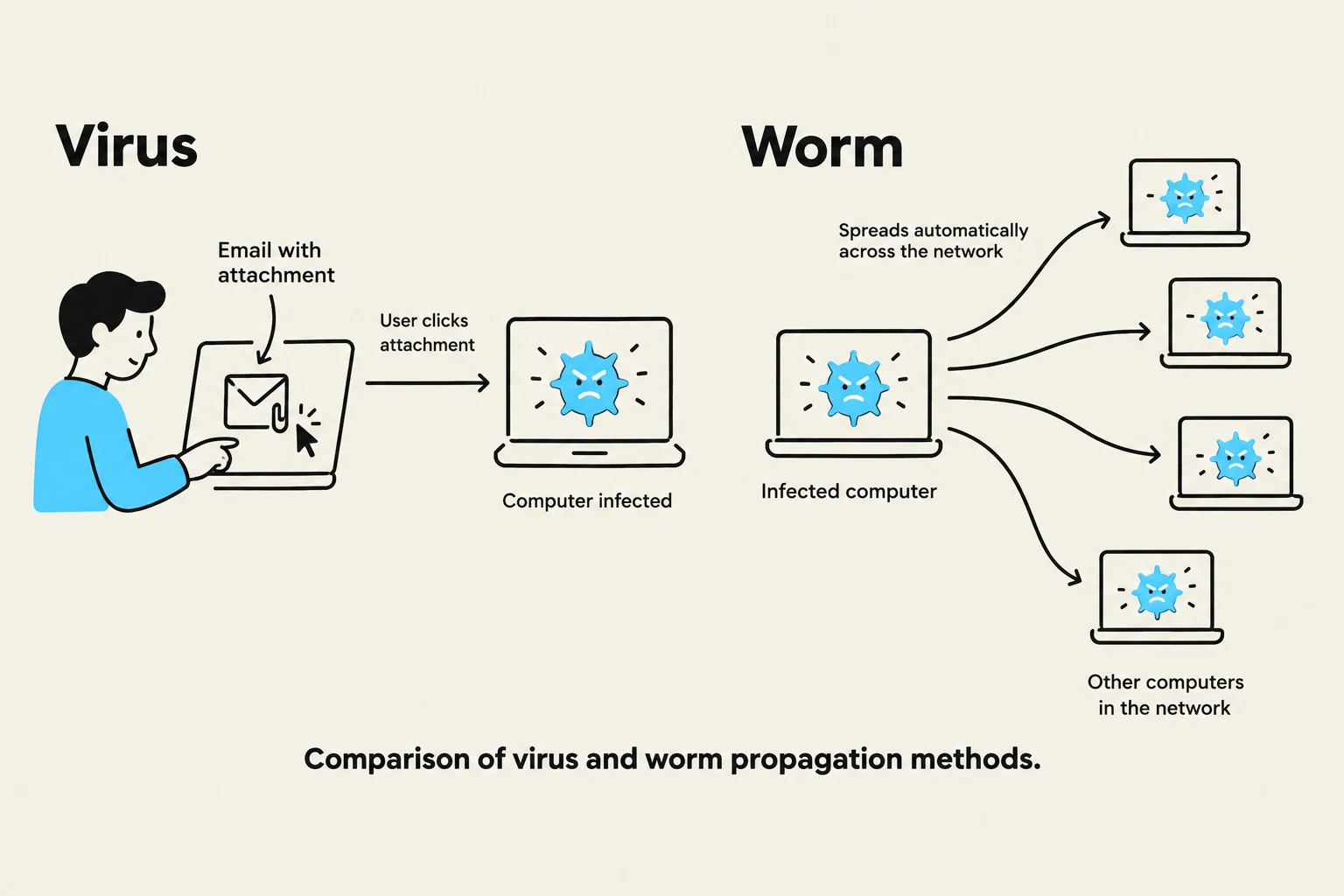
This illustration compares how computer viruses and worms spread. A virus typically requires user interaction, like opening an infected email attachment, to infect a computer. A worm, on the other hand, can spread automatically across a network from an infected computer to others.
Malware is a broad term for malicious software designed to perform unauthorized actions on a system, such as stealing information, displaying unwanted advertising, or disrupting critical operations. While many people use the term "virus" to describe all malicious software, there are several distinct categories of malware, each with unique methods of infection and propagation.
Viruses and Worms
The primary distinction between a virus and a worm lies in how they spread.
Viruses are pieces of code that require human intervention to reproduce and spread. For a virus to infect a system, a user must typically execute a program or open a file that contains the malicious code. Viruses can be categorized by how they attach to or infect systems:
Program Viruses: These infect executable files.
Boot Sector Viruses: These target the part of the hard drive that helps the computer start up.
Script Viruses: These are written in scripting languages and often target web browsers or other applications.
Macro Viruses: These are embedded in documents (like Word or Excel) and use the application's macro language to execute.
Fileless Viruses: A more advanced and stealthy subset that operates directly in the system's memory (RAM) rather than writing files to the disk, making them extremely difficult for traditional anti-virus tools to detect.
Worms, by contrast, are self-replicating. Unlike viruses, they do not need a human to click a link or run a program to spread; instead, they use the network as a transmission medium to find and infect other vulnerable systems automatically. This allows worms to compromise vast numbers of systems across a network in a very short amount of time.
Ransomware and Trojan Horses
Ransomware is one of the most financially damaging types of malware today. It works by encrypting a user's files, rendering them inaccessible until a ransom is paid in exchange for a decryption key. To mitigate this threat, organizations must rely on regular, offline backups and ensure all software is kept fully patched.
While not always listed as a standalone "type" in every context, the Trojan Horse is a fundamental concept in malware delivery. A Trojan disguises itself as legitimate or useful software to trick a user into installing it, at which point it executes its malicious payload.
Spyware, Keyloggers, and Rootkits
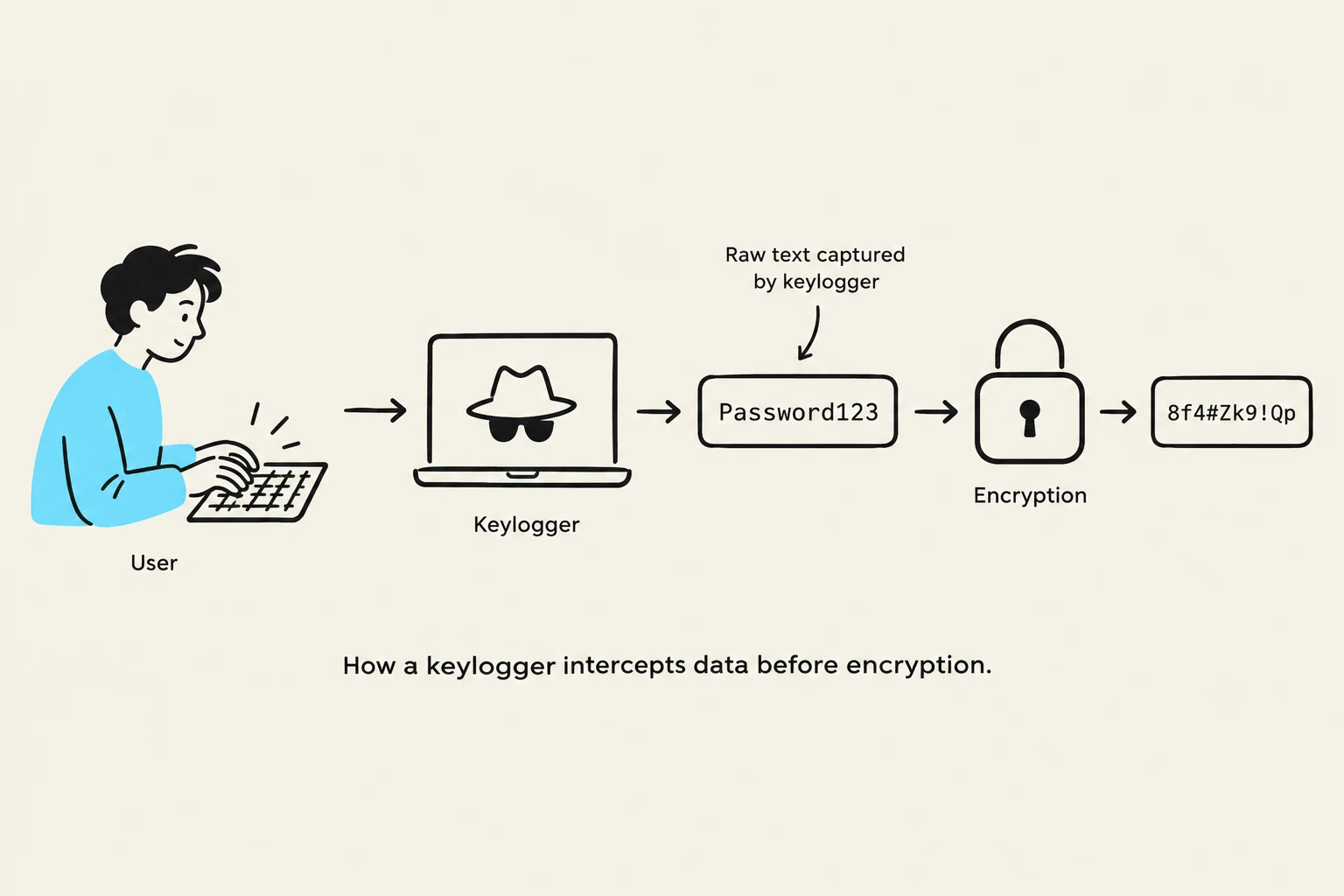
This diagram illustrates how a keylogger can capture user input, such as passwords, before it is encrypted.
Malware is often used for espionage and long-term persistence within a network.
Spyware: This software monitors user habits, browsing history, and personal information for the purpose of identity theft or fraud.
Keyloggers: A specific and highly effective form of spyware, keyloggers capture every single keystroke made by a user. This allows attackers to steal passwords and sensitive data, effectively bypassing even the strongest encryption because the data is captured before it is encrypted.
Rootkits: These are among the most dangerous forms of malware because they modify core system files or the operating system kernel. Because they operate at such a deep level, they are often invisible to the operating system and standard anti-virus software.
Other Malicious Code and Software
Logic Bombs: This is malicious code that remains dormant until a specific "trigger" occurs. This trigger could be a time bomb (a specific date or time) or a specific user action, such as a particular employee logging in.
Bloatware: While not always intentionally "malicious" in the sense of stealing data, bloatware refers to unwanted applications pre-installed by manufacturers. These consume storage space and system resources, degrading performance.
Exam Tip: When distinguishing between a virus and a worm, remember: Viruses need a human (to run a file), while worms move on their own (via the network).
Physical Attacks and Environmental Threats
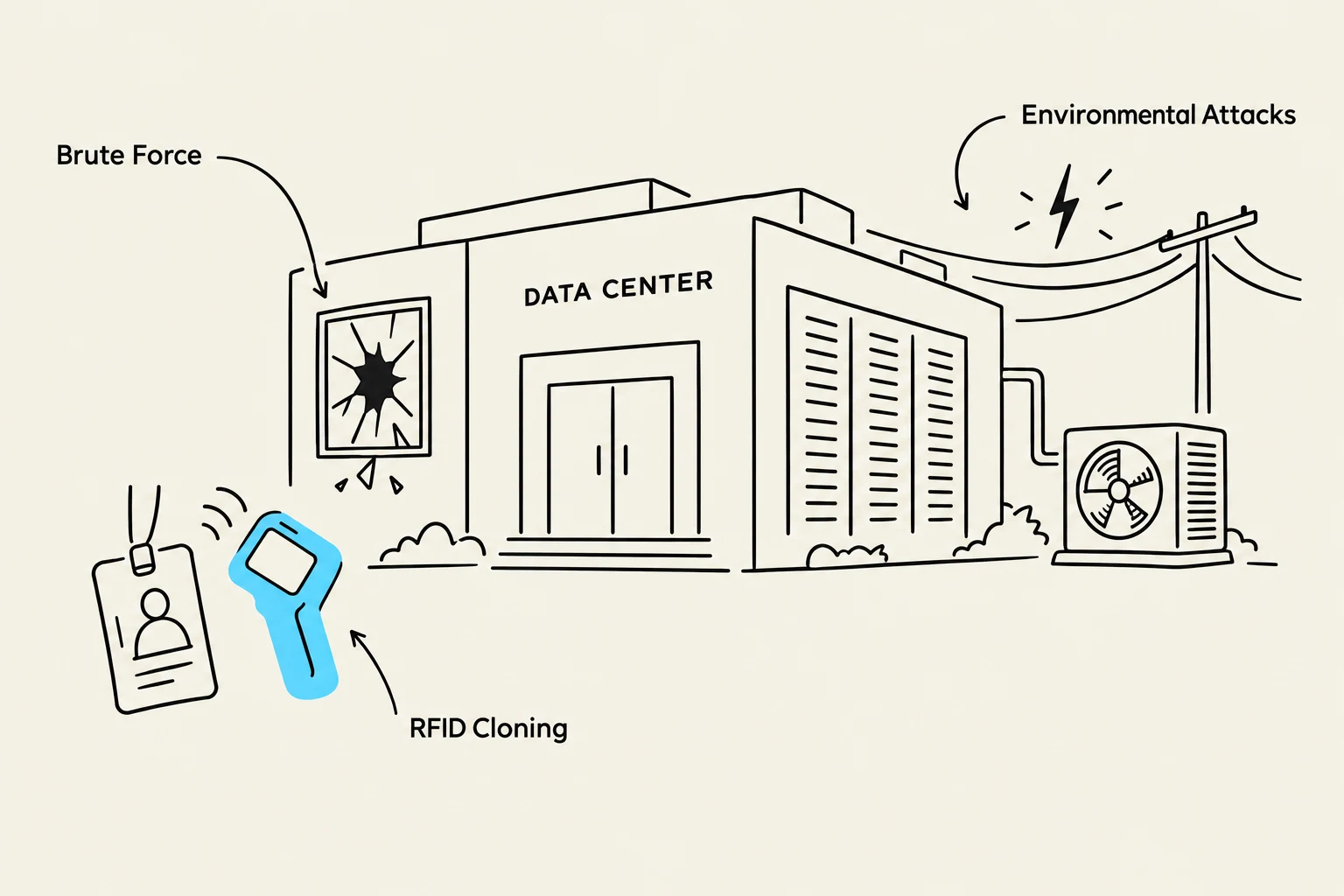
Illustration depicting various security threats to a data center, including brute force attacks, RFID cloning, and environmental attacks.
Digital security measures like firewalls and encryption are only effective if the physical hardware they protect is secure. If an attacker gains physical access to a server or a workstation, they can often bypass digital controls entirely to gain full control of the system.
Physical Breach Methods
Brute Force: In a physical context, this involves using physical strength or tools to bypass obstructions such as doors, windows, or locks.
RFID Cloning: Many modern facilities use access badges or key fobs that rely on Radio Frequency Identification (RFID). Attackers can use inexpensive, handheld duplicators to copy the data from these badges, allowing them to walk into secure areas unnoticed. This threat highlights why Multi-Factor Authentication (MFA) is critical; even if a badge is cloned, the attacker would still lack the second factor (like a PIN or fingerprint) required for entry.
Environmental Attacks
Security also involves protecting the infrastructure that keeps technology running. An attacker does not need to touch a computer to cause a Denial of Service (DoS); they can target the environment instead.
Power: Disrupting the electrical supply can shut down entire data centers.
HVAC (Heating, Ventilation, and Air Conditioning): Servers generate immense heat. If the temperature or humidity control systems are sabotaged, hardware can overheat and fail rapidly.
Fire Suppression: Disabling or triggering fire suppression systems can lead to either catastrophic hardware damage from fire or accidental damage from the suppression agents themselves.
By understanding these diverse vectors—from the stealthy fileless virus to the brute-force physical intruder—security professionals can build a more holistic and resilient defense strategy.
Keep reading for free.
Create an account to finish this reading and make it part of your study routine.