


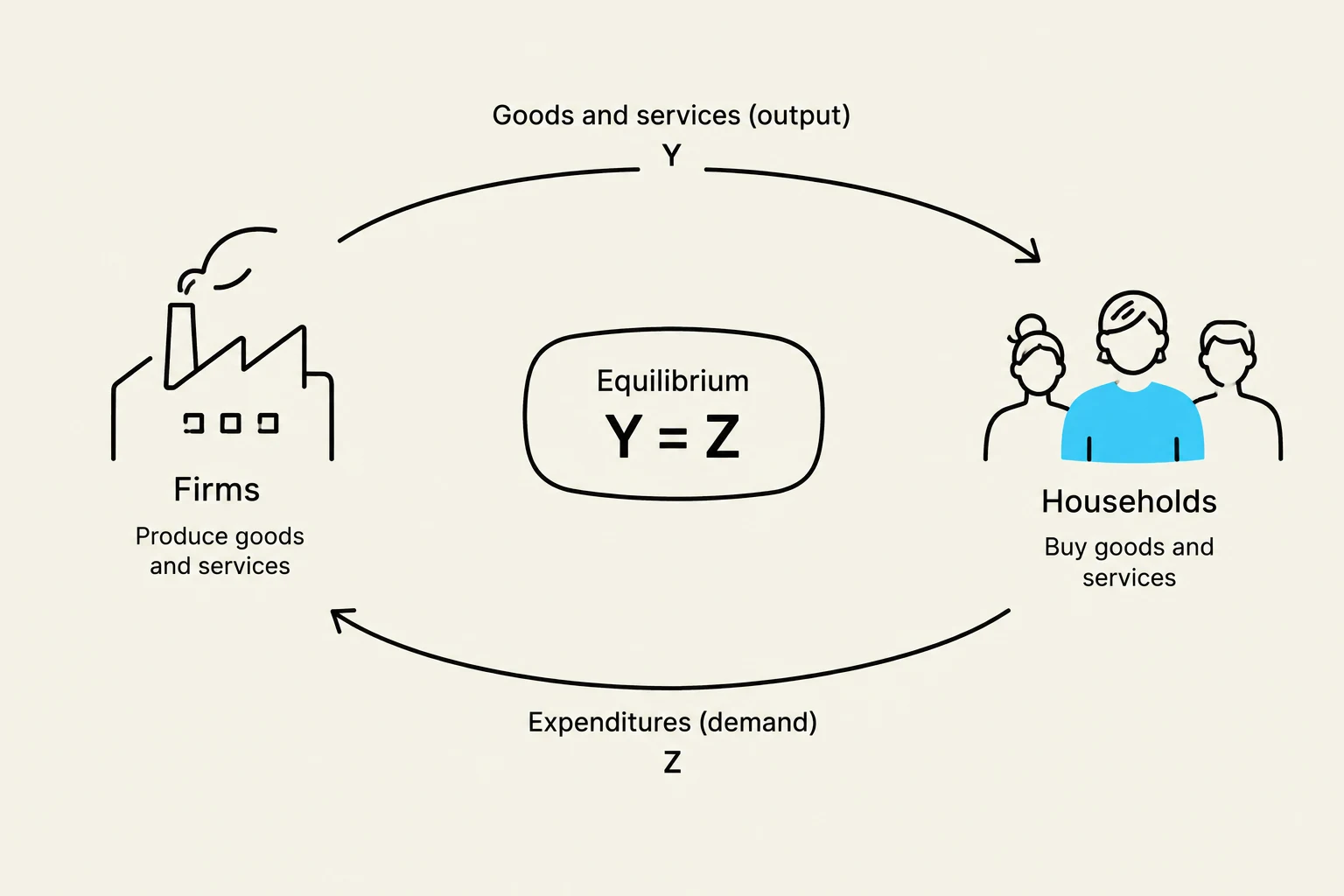
In macroeconomics, understanding how different sectors of an economy interact is essential for predicting stability and growth. One of the most fundamental ways to express this interaction is through equilibrium conditions. These conditions describe a state where the total output produced in an economy matches the total demand for that output, ensuring that there is no unintended buildup of inventories or shortages.
The Fundamental Equilibrium Conditions
At the most basic level, economic equilibrium can be expressed by the relationship between total output () and total demand (). When these two values are equal, the economy is in a state of equilibrium:
However, to understand why an economy reaches equilibrium, we must look deeper into the components of demand and how they relate to the flow of funds between households and the government. This leads us to a more detailed identity that balances the "leakages" from the circular flow of income with the "injections" into it.
Breaking Down the Variables:
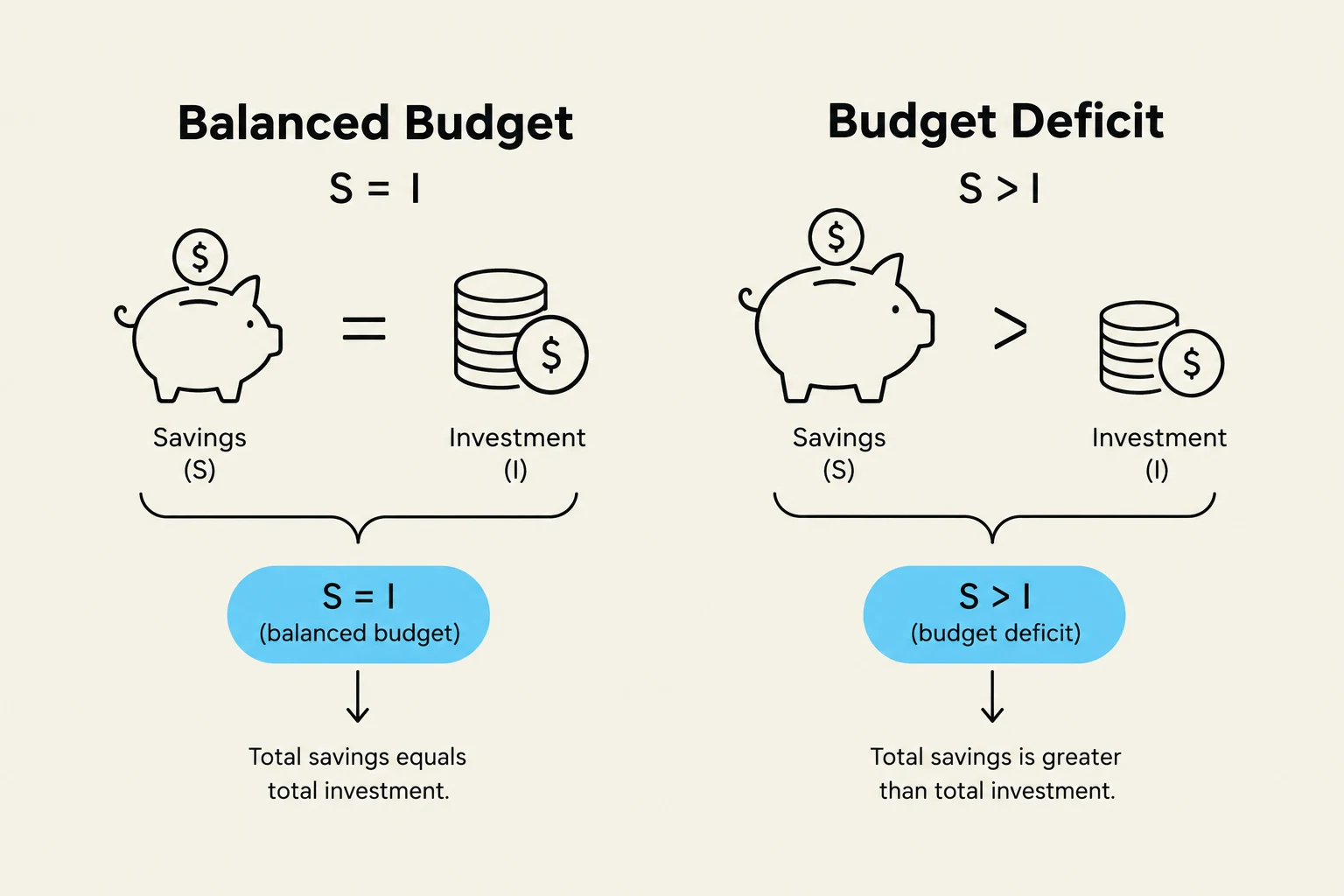
To analyze the stability of an economy, economists often use a specific identity that balances private and public sector flows. This equation is:
Each variable in this equation represents a critical component of macroeconomic activity. Let's define them individually:
1. Saving ()
Saving represents the portion of disposable income that households do not spend on consumption. In the context of the equilibrium equation, saving is considered a "leakage" from the circular flow of income because it is money that is not immediately being used to purchase goods and services.

Keep reading for free.
Create an account to finish this reading and make it part of your study routine.
Continue reading freeAlready have an account? Log in
Updated