Understanding Liability, Defenses, and Discharge on Negotiable Instruments
An overview of warranty liability, defenses, and discharge from liability in the context of negotiable instruments like checks and promissory notes, covering transfer and presentment warranties, universal and personal defenses, and the FTC's Holder-in-Due-Course Rule.
In the world of commercial law, a negotiable instrument—such as a check or a promissory note—serves as a substitute for money. Because these documents are designed to circulate easily, the law must establish clear rules regarding who is responsible when something goes wrong. While some liability is tied directly to a person's signature, much of the protection for those handling these instruments comes from a specialized concept known as Warranty Liability.
Understanding Warranty Liability
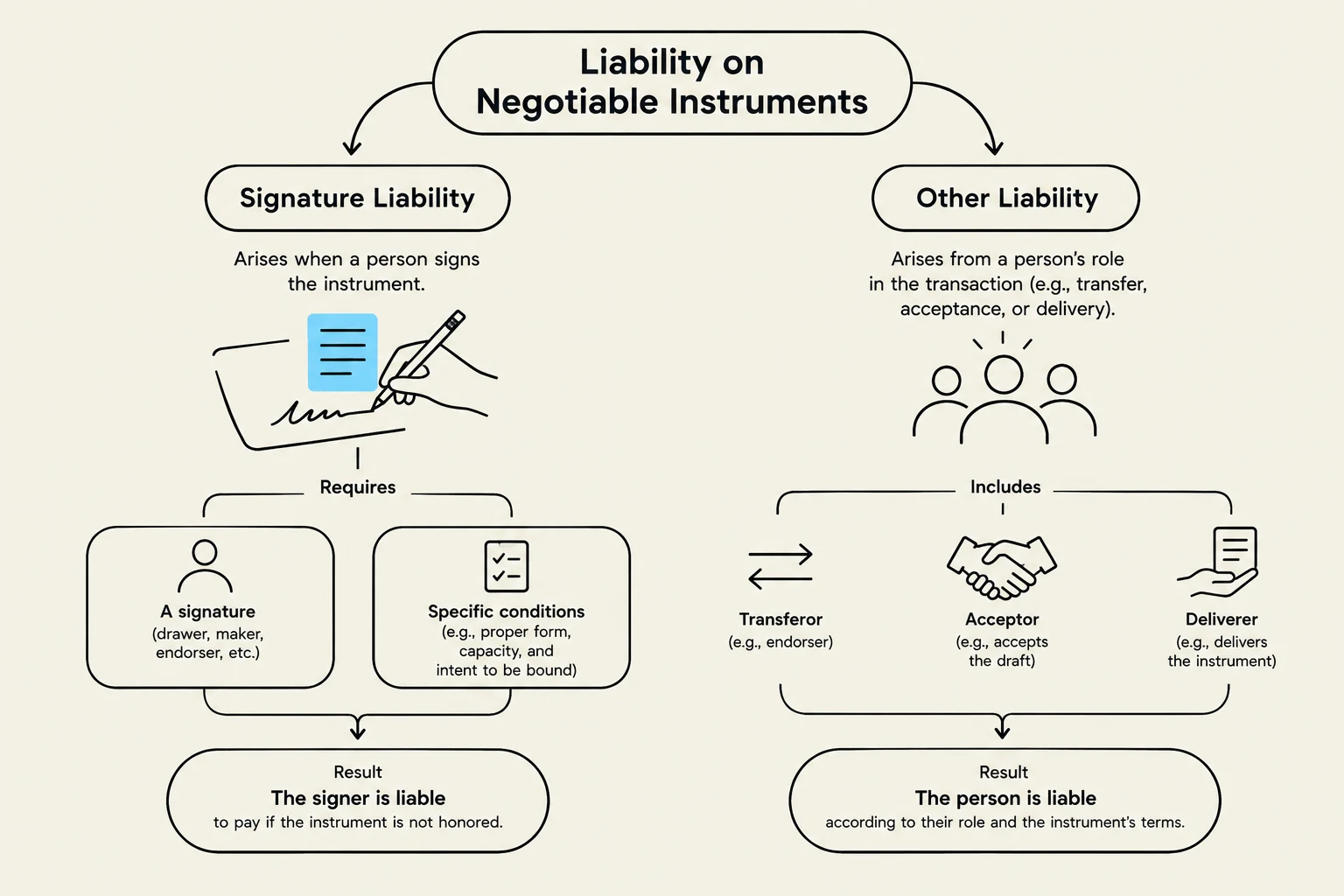
Liability on a negotiable instrument generally arises in two ways: signature liability and warranty liability. Signature liability is straightforward: a person is liable if they sign the instrument, either as a primary party (like a maker) or a secondary party (like an indorser).
However, Warranty Liability is unique because it does not require a signature. It also bypasses the traditional requirements for secondary liability, such as proper presentment, formal dishonor, or the timely giving of notice of dishonor. Instead, warranty liability is based on implied promises made by a person during the negotiation or presentation of the instrument. The fundamental goal of these warranties is to shift the burden of loss back to the party in the best position to prevent the wrongdoing.
This diagram illustrates the concept of liability on negotiable instruments, differentiating between signature liability and other forms of liability arising from roles in a transaction such as transferor, acceptor, or deliverer.
Types of Warranties
Warranties are categorized based on when and how they are triggered: during the transfer of the instrument or during the request for payment.
1. Transfer Warranties
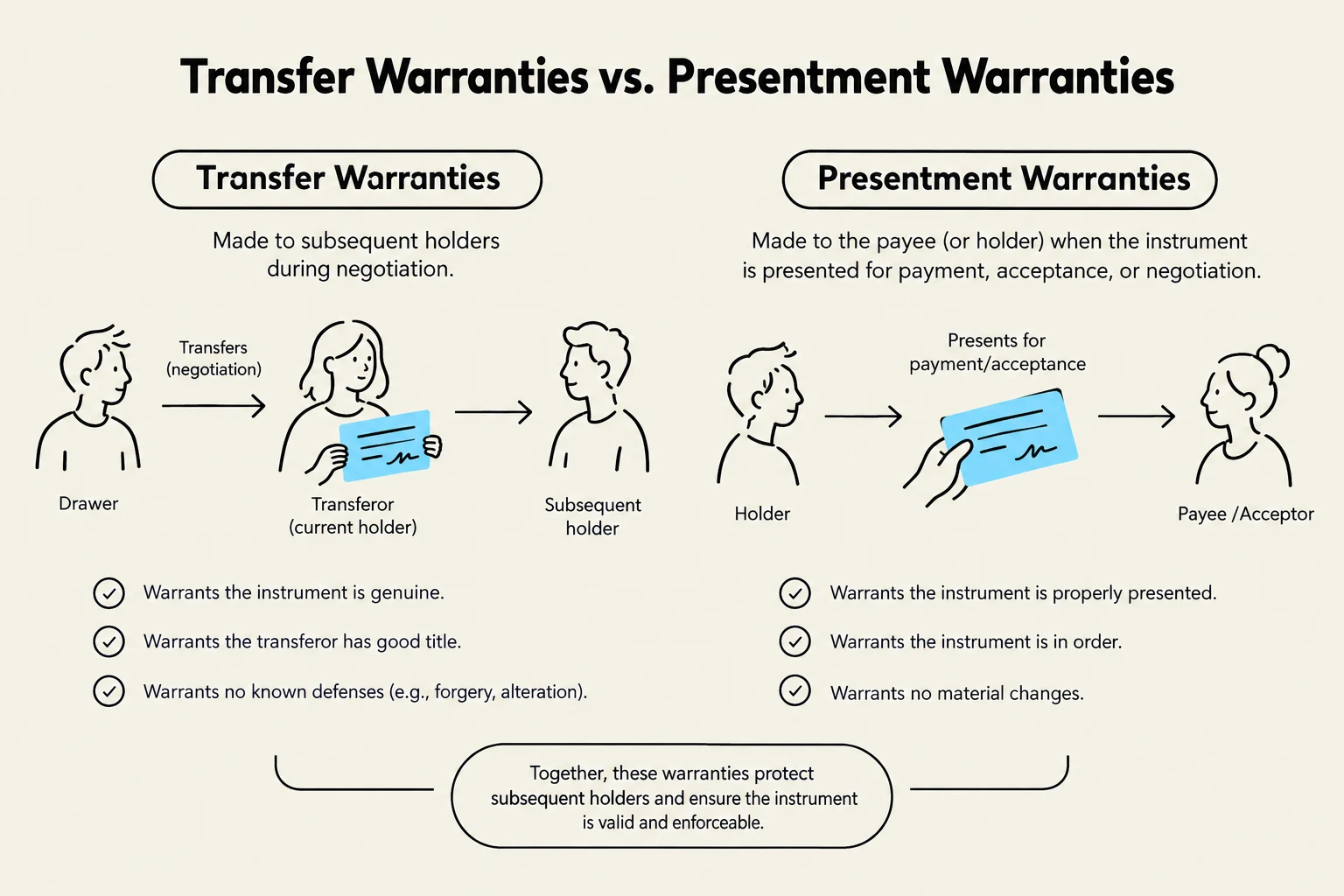
When a transferor (the person transferring the instrument) provides the instrument for consideration to a holder (the person receiving it), they make several implied warranties to all subsequent good-faith holders. These warranties include:
The transferor is entitled to enforce the instrument.
All signatures on the instrument are authentic and authorized.
The instrument has not been altered.
The instrument is not subject to any defense or claim that could be asserted against the transferor.
The transferor has no knowledge of any bankruptcy proceedings against the maker, acceptor, or drawer.
The scope of these warranties depends on the type of instrument. For an order instrument (one payable to a specific person) transferred via indorsement (signing the back), the liability extends to all subsequent good-faith holders. However, for a bearer instrument (one payable to whoever holds it) transferred without indorsement, the warranty extends only to the immediate transferee.
2. Presentment Warranties
These warranties are made by a person who presents an instrument for payment or acceptance to another person who pays or accepts in good faith. They are designed to protect the person paying the money. The three primary presentment warranties are:
The presenter is entitled to enforce the instrument (ensuring no missing indorsements).
The instrument has not been altered.
The presenter has no knowledge that the drawer's signature is unauthorized.
Exam Tip: Note the limitations on presentment warranties. They do not apply to makers, acceptors, or drawers regarding their own signatures or material alterations, as these parties are assumed to recognize their own handwriting and the terms they originally agreed to.
This diagram illustrates the differences between transfer warranties and presentment warranties in financial transactions, outlining the parties involved and the conditions each warranty covers.
Breach of Warranty and Recovery
If a holder discovers that a warranty has been breached, they may sue for damages. However, there are strict procedural requirements to ensure fairness to the warrantor.
The 30-Day Rule: A claimant must notify the warrantor of the breach within 30 days of discovering it. If the claimant fails to provide this notice, they are liable for any additional losses caused by their delay.
Damages: The amount a holder can recover is limited to the actual loss suffered, which cannot exceed the total value of the instrument. Damages may also include interest and related expenses.
Disclaimers: Parties generally have the freedom to disclaim warranties. For example, an indorser might write "without warranties" on the instrument. However, there is a major exception: warranties regarding checks cannot be disclaimed because banks rely heavily on them to function.
Defenses and the Holder in Due Course (HDC)
Not every claim against an instrument is successful. In negotiable instruments law, defenses are split into two categories: Universal Defenses and Personal Defenses.
Universal Defenses (Real Defenses)
These are powerful because they are valid against all holders, including a Holder in Due Course (HDC). Examples include:
Forgery of a signature.
Fraud in the execution (being tricked into signing the document itself).
Material alteration of the terms.
Discharge in bankruptcy.
Minority (infancy).
Illegality, mental incapacity, or duress (if the instrument is void).
Personal Defenses (Limited Defenses)
These defenses can be used to avoid payment to an ordinary holder, but they cannot be used against an HDC. Examples include:
Breach of contract or breach of warranty.
Lack of consideration.
Fraud in the inducement (being lied to about the underlying deal, but knowing you are signing a note).
Nondelivery of the instrument.
Consumer Protection: The FTC Rule
To prevent the "harsh effects" of the HDC doctrine on everyday consumers, the Federal Trade Commission (FTC) adopted the Holder-in-Due-Course Rule. This rule applies to consumer credit transactions for personal, family, or household use.
Under this rule, if a consumer credit contract contains a specific boldface notice, the HDC is treated like a contract assignee. This means the consumer can assert any defense against the HDC that they could have asserted against the original seller. Essentially, if you buy a defective refrigerator on credit and the bank holds the note, you can refuse to pay the bank based on the defective product.
Discharge from Liability
Finally, an instrument can be "discharged," meaning the legal obligation to pay is terminated. This can happen in several ways:
Payment: The party primarily liable pays the full amount due to the holder.
Cancellation: The holder intentionally cancels the debt, such as by writing "Paid" across the face of the instrument or tearing it up.
Material Alteration: If an instrument is materially altered, it may discharge the liability of the parties affected by that change.
Impairment of Recourse: If a holder does something that prevents an indorser from seeking reimbursement from someone else (releasing a party they had a right to sue), the holder may discharge that party's liability.
Keep reading for free.
Create an account to finish this reading and make it part of your study routine.