


At the heart of every employment relationship lies a fundamental concept: "work for pay". Without the provision of salary, an employment relationship cannot legally exist. While the relationship involves various parameters—such as working time, occupational health and safety, and the duty to cooperate in good faith—the salary component is the primary economic driver that defines the contract.
The Concept of Salary
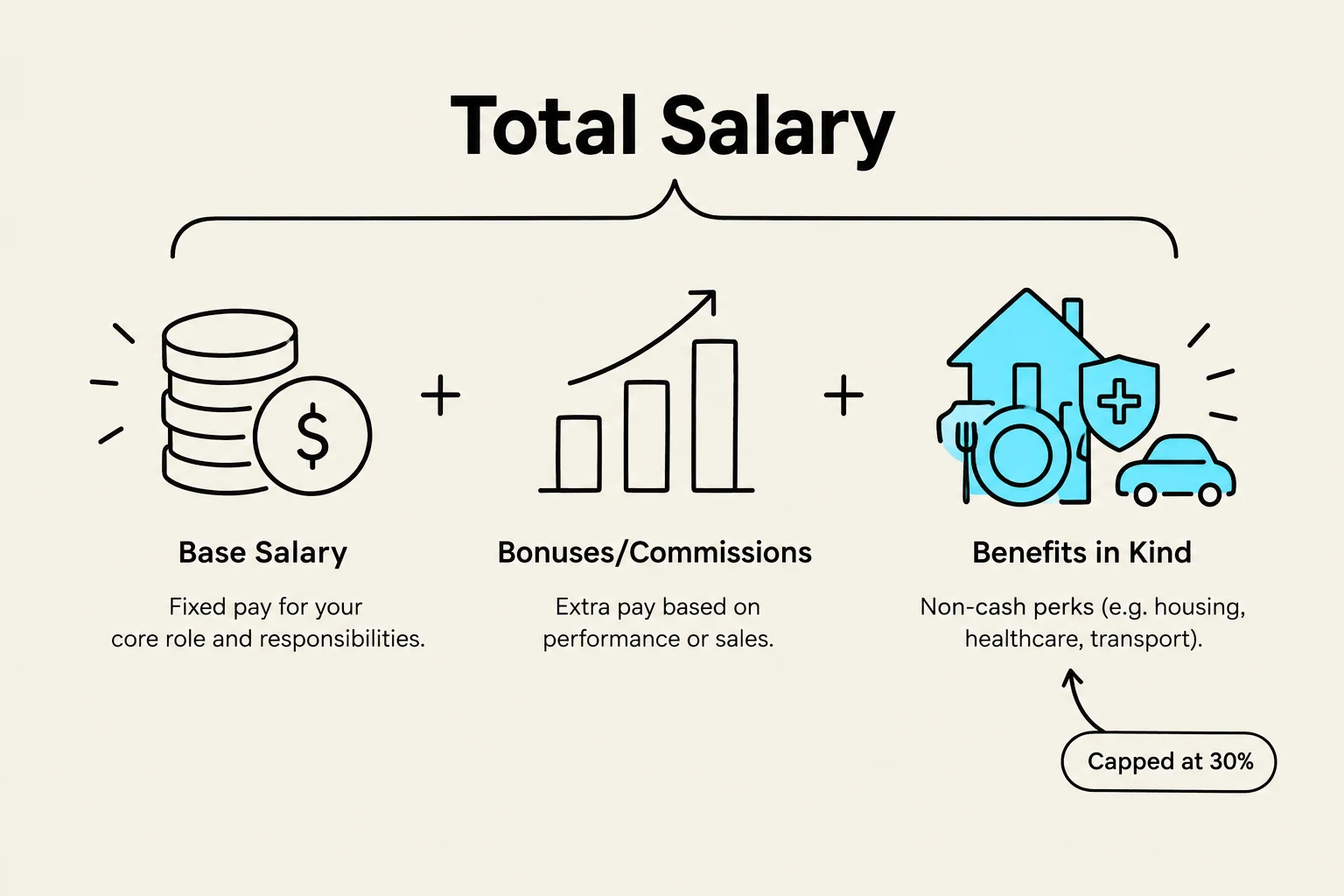
In legal terms, salary (or remuneration) refers to all forms of compensation received, whether in cash or in kind, as a direct consequence of an employment contract. It is important to note that "salary" is not limited to the monthly bank transfer; it encompasses the entire package of value provided to the worker.
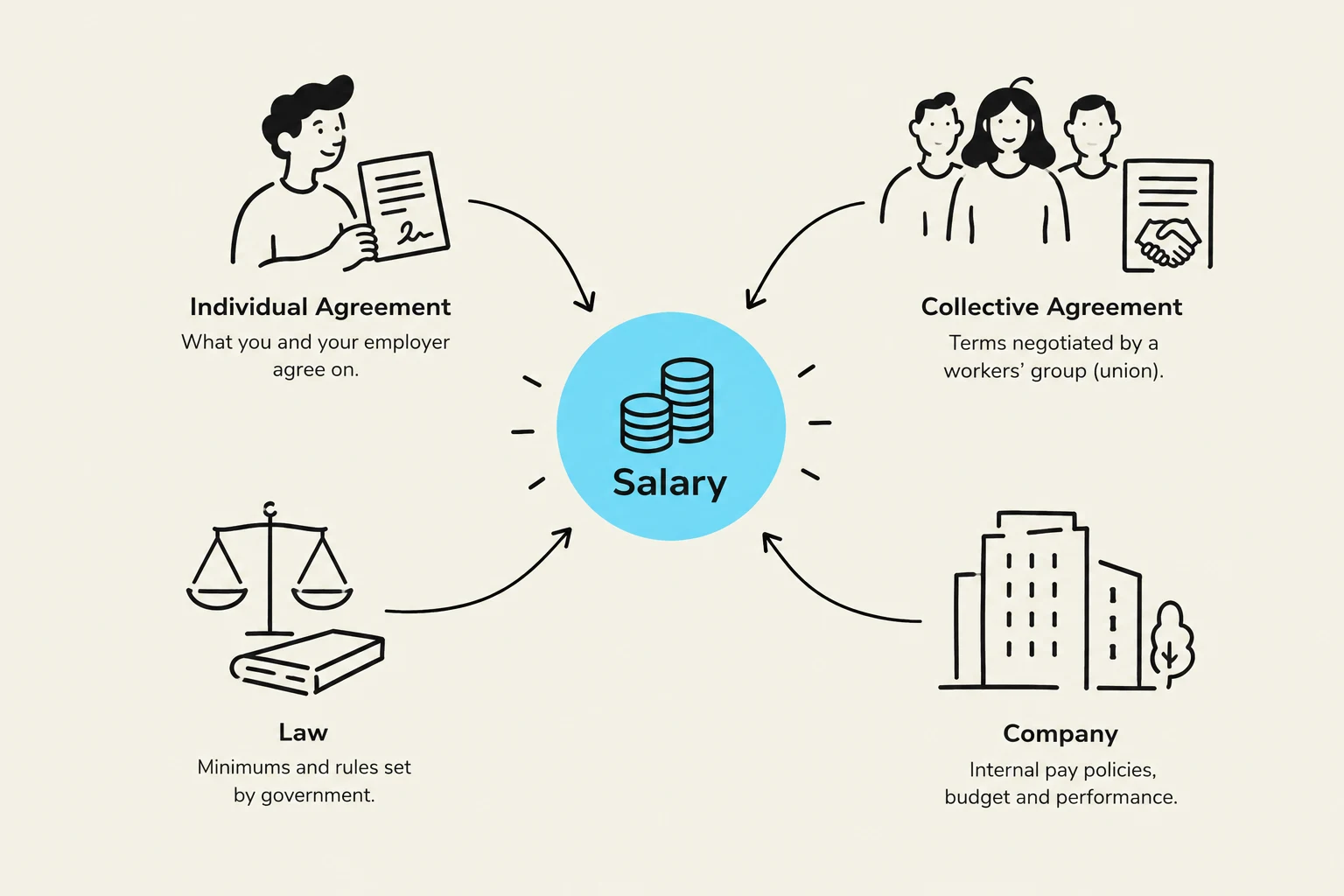
The amount and method of payment are determined by a hierarchy of sources:
- Individual labour agreements: Negotiated directly between the employer and the employee.
- Collective bargaining agreements: Negotiated by unions and employer associations.
- The Law: Such as the mandatory minimum wage.
- Company rules: Internal policies regarding bonuses or benefits in kind.
Exam Tip: If a question asks what constitutes "salary," remember it includes both cash and "in-kind" benefits (like a company car or housing), provided they follow legal limits.
Pay Structure: Base Salary vs. Other Components
A worker's total compensation is rarely a single flat number. Instead, it follows a specific structure that can vary significantly based on the job role, the company's size, and the worker's specific qualifications.
Base Salary
The base salary is the fixed amount of money paid to an employee for their work. It serves as the foundation upon which all other calculations (like overtime or bonuses) are often built.
Keep reading for free.
Create an account to finish this reading and make it part of your study routine.
Continue reading freeAlready have an account? Log in
Updated