Understanding IV Fluids, Hormonal Regulation, and TPN in Nursing
This guide explains the principles of IV fluid tonicity (isotonic, hypotonic, hypertonic), fluid volume imbalances (deficit and excess), hormonal regulation of fluids (RAAS, Aldosterone, ADH, ANP), and Total Parenteral Nutrition (TPN) administration and nursing care.
Mastering fluid and electrolyte management is a cornerstone of nursing practice. To succeed on your exam, you must move beyond simple memorization and understand the why behind physiological shifts. This review synthesizes the essential concepts of IV fluid tonicity, volume imbalances, hormonal regulation, and parenteral nutrition to provide a comprehensive study guide.
IV Fluids and Tonicity
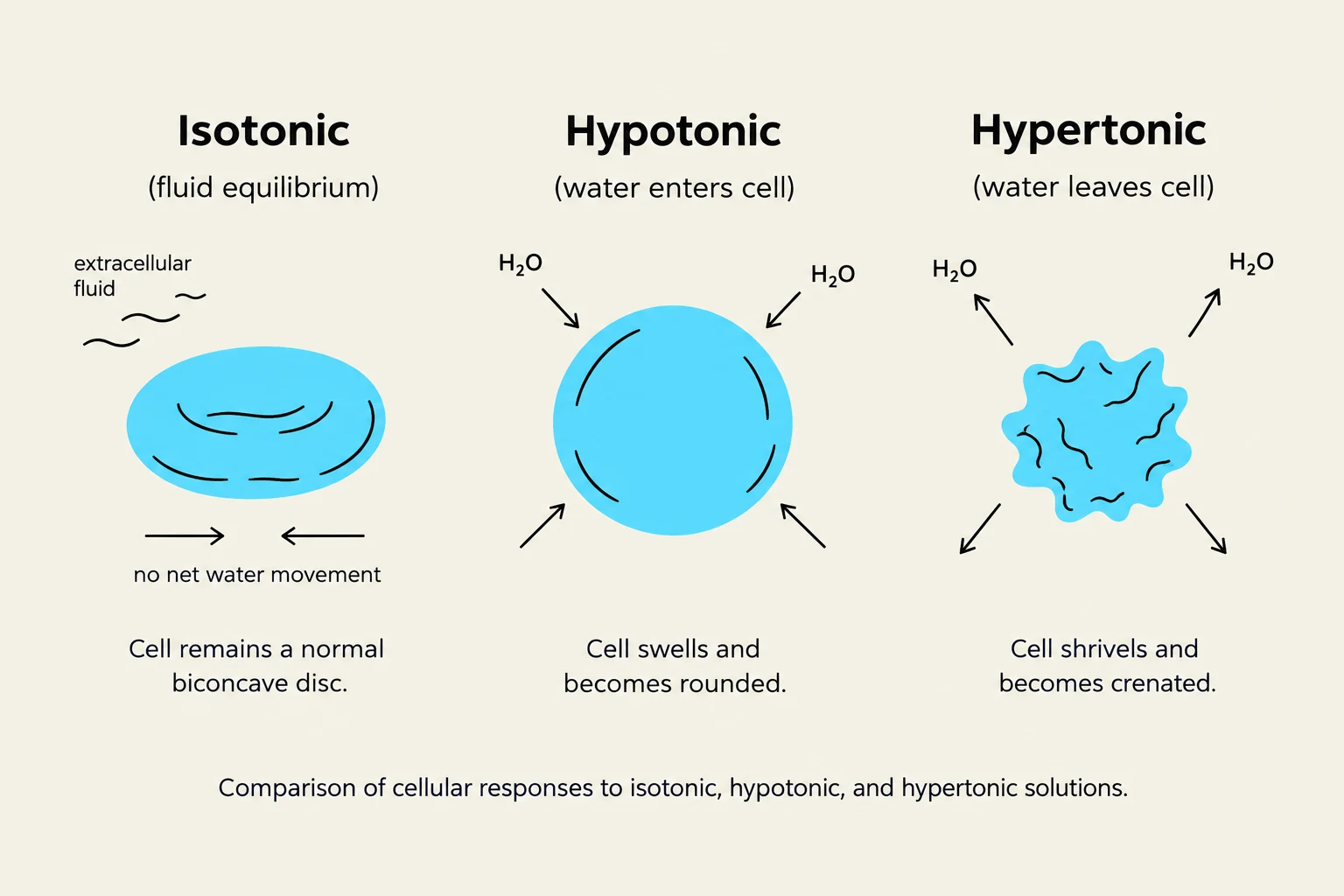
Comparison of cellular responses to isotonic, hypotonic, and hypertonic solutions.
Understanding how fluids move between the intravascular space and the cells is determined by osmolality—the concentration of solutes in a solution. Fluids are categorized into three types based on their effect on cellular volume through osmosis:
Isotonic Fluids
Isotonic fluids have the same osmolality as plasma, meaning they do not cause a major fluid shift between the intracellular and extracellular compartments. Their primary purpose is to expand intravascular volume.
Examples: 0.9% Normal Saline (NS) and Lactated Ringer’s (LR). Note that D5W can act isotonic initially but may become hypotonic once the dextrose is metabolized.
Clinical Use: Indicated for hypovolemia, hemorrhage, dehydration, vomiting, or diarrhea.
Nursing Alert: Monitor closely for fluid overload, especially in patients with heart failure or renal failure.
Hypotonic Fluids
Hypotonic fluids have a lower osmolality than plasma. Because the concentration of solutes is lower outside the cell, water is pulled into the cells, causing them to swell.
Examples: 0.45% NS (½ NS).
Clinical Use: Used to treat intracellular dehydration when cells are "dry".
Contraindications: Do not use in patients with cerebral edema or increased intracranial pressure (ICP), as the fluid will enter the brain cells and worsen swelling.
Hypertonic Fluids
Hypertonic fluids have a higher osmolality than plasma. This high concentration pulls water out of the cells and into the extracellular fluid (ECF), causing the cells to shrink.
Examples: 3% NS and D5NS.
Clinical Use: Used for hyponatremia and to reduce cerebral edema by pulling fluid away from swollen brain cells.
Nursing Alert: Watch for signs of fluid overload, pulmonary edema, and hypernatremia.
Memory Trick:
HYPO = HIPPO = Big, swollen cells.
Hyper = Cells shrink (think of a raisin).
Fluid Volume Imbalances
Fluid Volume Deficit (FVD/Hypovolemia)
FVD occurs when there is a loss of water and electrolytes from the vascular space.
Causes: Vomiting, diarrhea, hemorrhage, burns, or excessive sweating.
Labs: You may see an increase in Hematocrit, BUN, and Urine Specific Gravity as the blood becomes more concentrated.
Treatment: Isotonic fluids are typically the first line of defense. Monitor daily weights, as a change in weight is a direct indicator of fluid status:
1 kg=1 L of fluid.
Fluid Volume Excess (FVE/Hypervolemia)
FVE occurs when there is too much fluid retained in the body.
Causes: Heart failure, renal failure, SIADH, or excessive IV fluid administration.
Signs & Symptoms: Edema, weight gain, bounding pulses, Jugular Venous Distention (JVD), crackles in the lungs, dyspnea, and hypertension.
Treatment: Fluid restriction, diuretics, and a low-sodium diet.
Hormonal Regulation of Fluids
The body uses a complex feedback loop to maintain homeostasis. Understanding these four players is critical for exams:
RAAS (Renin-Angiotensin-Aldosterone System): This system is triggered by low blood pressure or decreased renal perfusion.
The kidneys release Renin, which converts to Angiotensin I.
ACE (primarily in the lungs) converts Angiotensin I into Angiotensin II.
Angiotensin II causes vasoconstriction and triggers the release of Aldosterone.
Aldosterone: Released by the adrenal cortex, this hormone promotes sodium and water retention while promoting potassium excretion. This increases blood volume and blood pressure but carries a risk of hypokalemia.
ADH (Antidiuretic Hormone/Vasopressin): Released by the pituitary gland, ADH causes water reabsorption only. This increases volume and dilutes the plasma, which can trigger thirst.
ANP (Atrial Natriuretic Peptide): This is the "counter-regulator." Released by the atria when they are stretched due to fluid excess, ANP inhibits the RAAS and promotes diuresis (increased urination) to lower blood pressure.
Total Parenteral Nutrition (TPN)
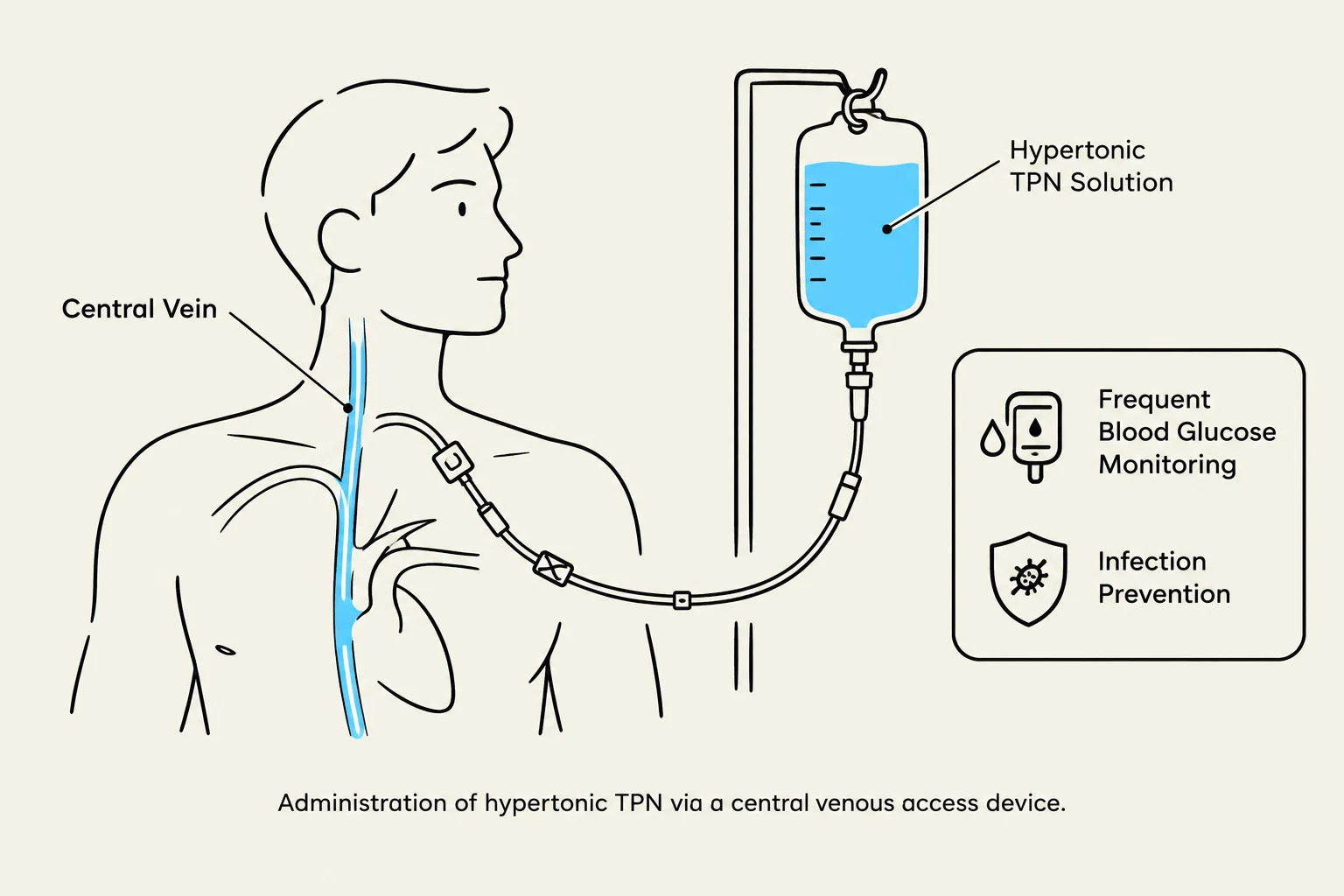
Administration of hypertonic TPN via a central venous access device, with notes on frequent blood glucose monitoring and infection prevention.
When a patient cannot use their gastrointestinal (GI) tract—due to a bowel obstruction, severe malnourishment, or long-term NPO status—TPN is utilized.
Nature of Solution: TPN is a hypertonic solution.
Administration: Because it is hypertonic, it can damage peripheral veins and must be administered via a central venous access device (such as a PICC line, CVC, or implanted port).
Nursing Care:
Glucose Monitoring: Because TPN is high in glucose, blood sugar (BG) must be monitored frequently (often every 6 hours).
Safety: Never stop TPN abruptly, as this can cause severe hypoglycemia; it must be tapered or changed per provider orders.
Maintenance: Use specialized TPN tubing and filters, and change the tubing every 24 hours.
Infection Control: Monitor for signs of infection, as central lines carry a high risk for CLABSI (Central Line-Associated Bloodstream Infection).
Exam Tip: If a question asks about the most important nursing intervention for a patient on TPN, look for answers involving blood glucose monitoring or infection prevention.
Keep reading for free.
Create an account to finish this reading and make it part of your study routine.