


In clinical practice, maintaining fluid and electrolyte balance is a fundamental aspect of patient care. Good health requires that both the volume and the osmolality of extracellular and intracellular fluids remain within a narrow, normal range. This balance is primarily managed by the kidneys, but when patients experience trauma, hemorrhage, or metabolic disturbances, healthcare providers must intervene using intravenous (IV) solutions.
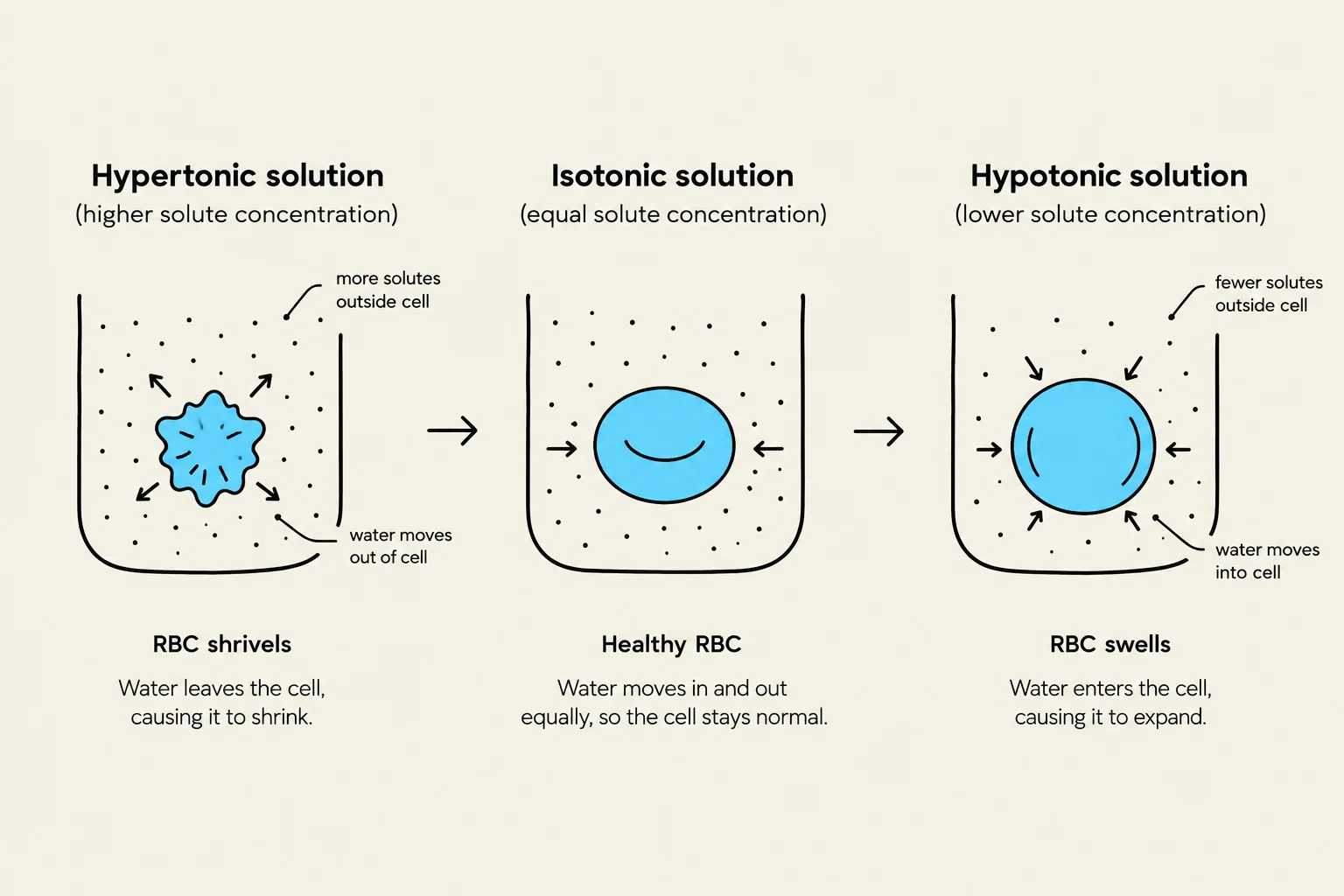
The movement of water in response to these solutions is driven by osmosis: water moves from areas of lower solute concentration to areas of higher solute concentration to dilute the solutes. A helpful clinical rule of thumb is that "water follows sodium"; areas with a higher effective sodium concentration are relatively "drier," causing water to shift toward them to restore equilibrium.
Understanding Tonicity and Cellular Response
The direction of water movement across cell membranes is determined by the tonicity of the IV solution—how much solute (like sodium) it contains relative to the plasma.
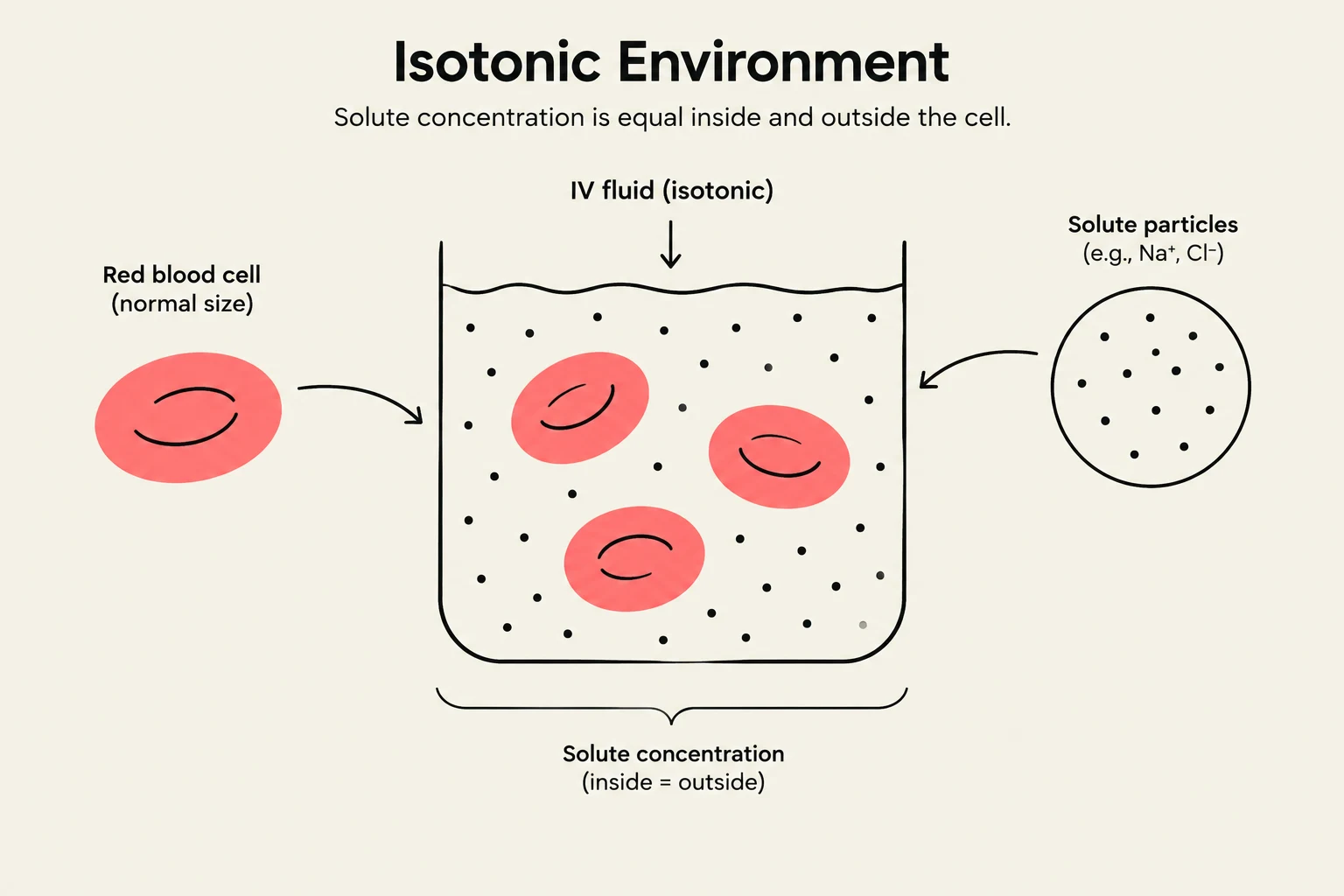
Isotonic Solutions
Isotonic solutions have the same effective solute concentration as plasma. Because the concentration is equal, there is no net movement of water into or out of the cells, meaning the cell size remains stable. These are often described as solutions that "stay where you put it".
Hypotonic Solutions
Hypotonic solutions have a lower solute concentration than the inside of the cell. Consequently, water moves from the extracellular space into the cells, causing them to swell and potentially rupture (a process known as lysis or hemolysis in red blood cells).
Keep reading for free.
Create an account to finish this reading and make it part of your study routine.
Continue reading freeAlready have an account? Log in
Updated