An in-depth exploration of informed consent in counseling and psychotherapy, covering its ethical underpinnings, practical procedures, and complexities related to client capacity and special contexts.
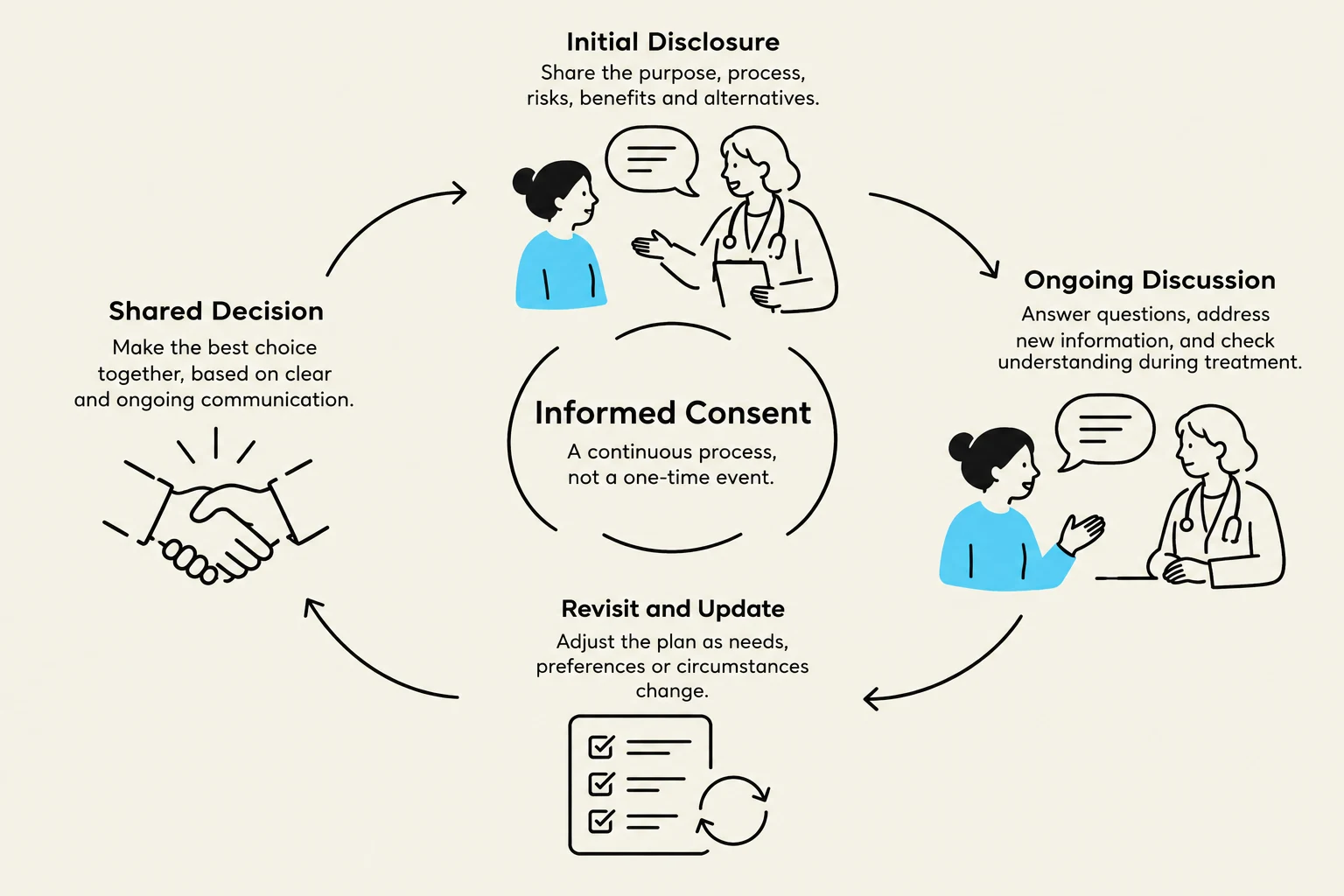
In the field of counseling and psychotherapy, informed consent is far more than a bureaucratic hurdle or a signature on a legal document. It is a fundamental ethical process rooted in the principle of respect for autonomy—the right of a client to self-determination. At its core, informed consent is an "empowered collaboration" where the practitioner provides the necessary information to allow the client to make reasoned, autonomous decisions about their own care. Rather than a one-time event at the start of treatment, ethical practice views informed consent as a continuous, ongoing dialogue that evolves alongside the therapeutic relationship.
Informed Consent Procedures and the "Law of No Surprises"
Effective informed consent procedures require the disclosure of relevant information that allows a client to decide whether to initiate or continue services. Mental health professionals have an obligation to provide "product information" because clients often enter therapy with erroneous presuppositions—such as believing a therapist will simply dispense advice or that a single session will resolve deep-seated distress.
To meet professional standards, practitioners should disclose:
The nature and anticipated course of therapy.
Fees, billing procedures, and the implications of using insurance.
Logistics, such as appointment scheduling and emergency contact protocols.
The limits of confidentiality and how grievances can be addressed.
Exam Tip: Remember that informed consent is a process, not an event. A common misconception is that signing a form at the first session completes the requirement. In reality, consent must be revisited as new treatment options or risks emerge.
This diagram illustrates the process of informed consent in healthcare, emphasizing it as a continuous dialogue between healthcare providers and patients, involving initial disclosure, ongoing discussion, shared decision-making, and periodic updates.
Risks, Alternatives, and Indirect Effects
A critical component of ethical disclosure is the communication of both risks and alternatives. Practitioners must avoid the temptation to withhold information about potential negative outcomes, even if they believe a client has "little to lose". Furthermore, the "reasonable person standard" dictates that practitioners must provide the information a reasonable person would need to make an intelligent decision.
This includes discussing:
Alternatives to Counseling: Such as group therapy, medication, or self-help groups.
Risks of Treatment: Including the potential for unsettling emotional interruptions or temporary distress.
Indirect Effects: These are secondary consequences, such as how a client's improved mental health might unexpectedly strain a family relationship or change social dynamics.
Complexities in Capacity: Minors and Severe Disorders
Ethical dilemmas frequently arise when a client's ability to provide "free consent" is in question.
Assent versus Consent in Minors
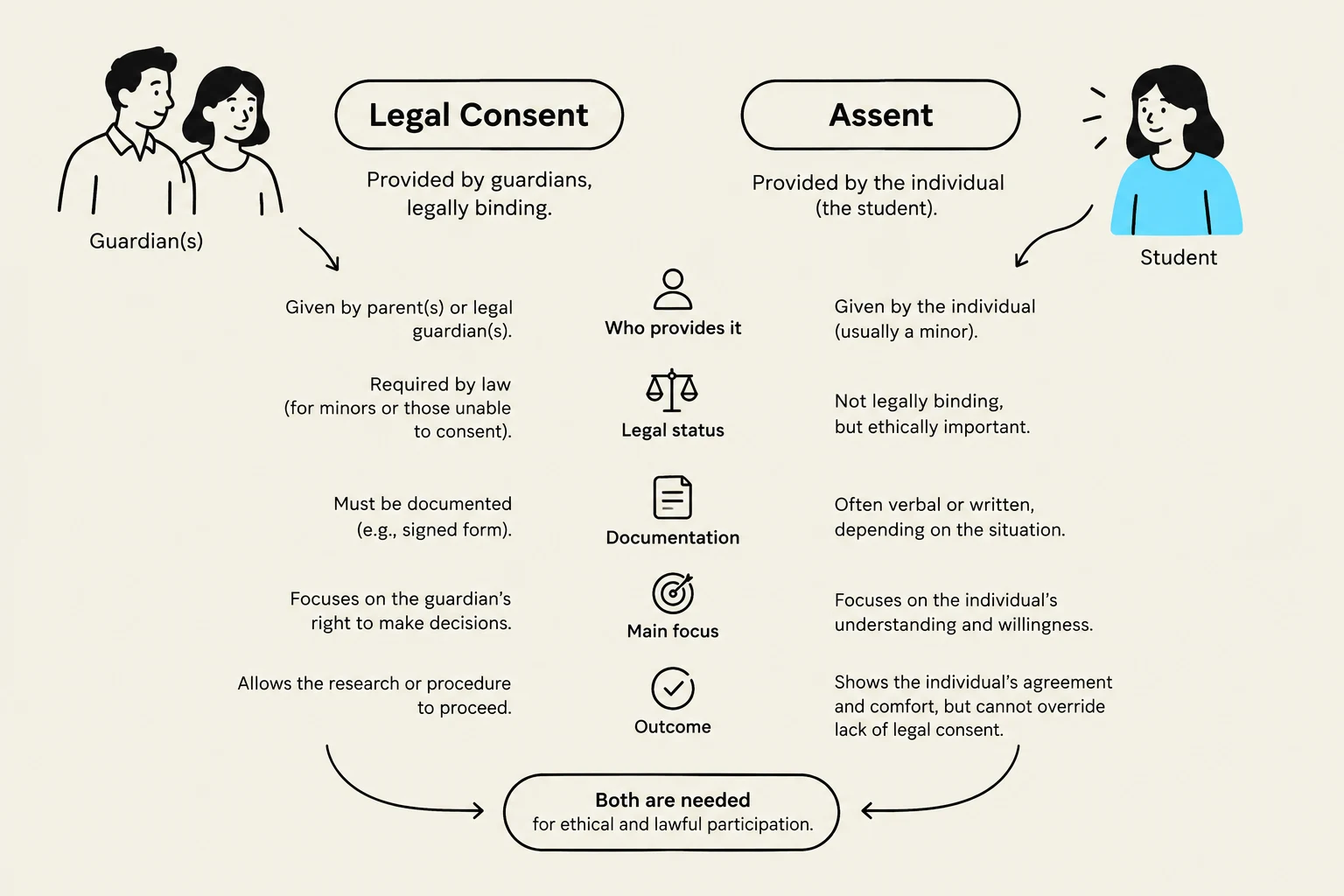
When working with adolescents, a distinction must be made between legal consent (provided by a parent or guardian) and assent (the minor's agreement to participate). A significant challenge for practitioners is balancing a parent's legal right to direct care against a minor's refusal to engage in private discussions.
Severe Mental Disorders and Refusal
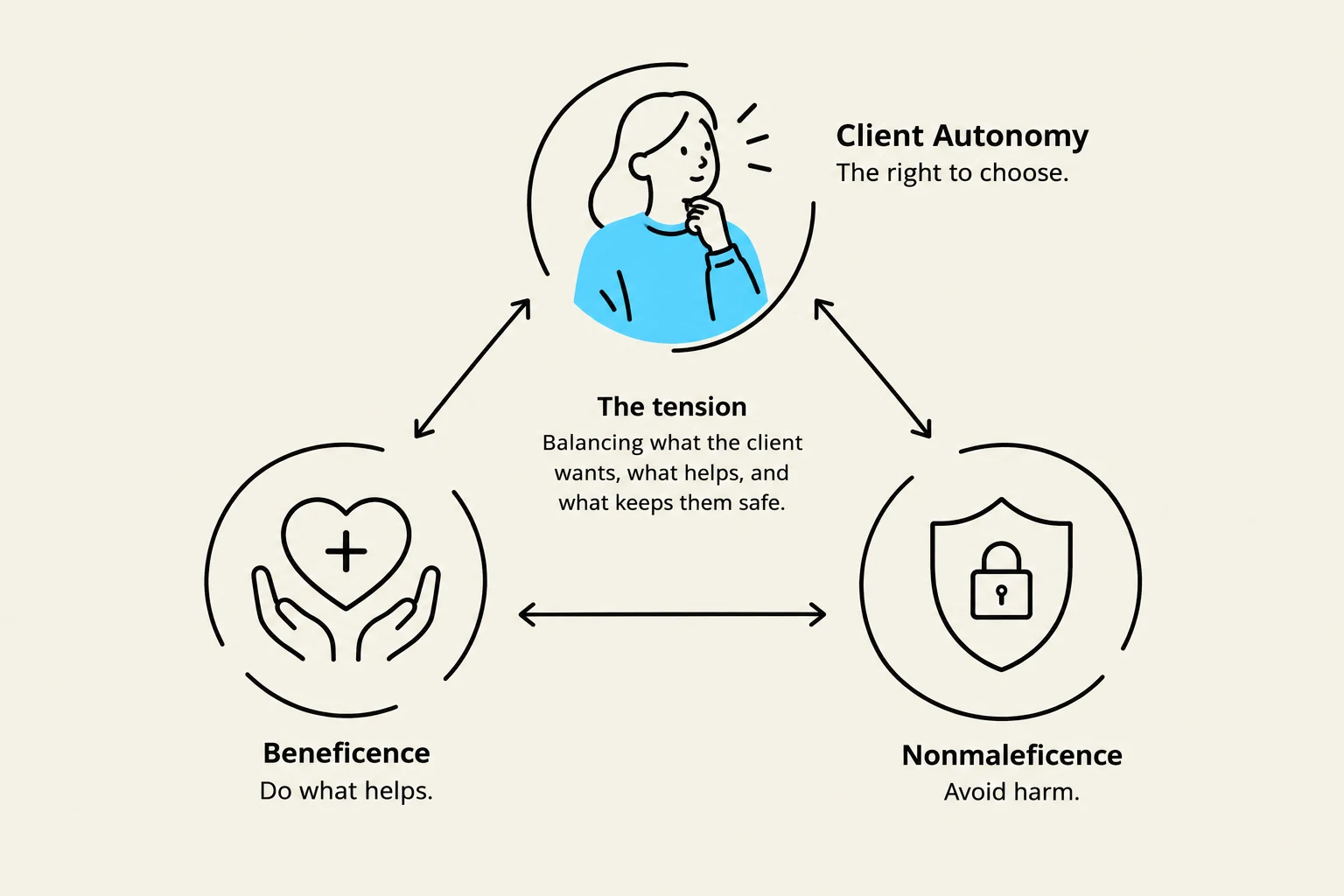
For clients with severe mental disorders, such as schizophrenia, determining whether a refusal of treatment is truly "informed" is difficult if the disorder clouds cognitive processing. This creates a tension between the client's right to bodily autonomy and the professional's duty to provide necessary care.
This diagram illustrates the differences between legal consent, provided by guardians and legally binding, and assent, given by an individual and ethically important but not legally binding. Both are necessary for ethical and lawful participation.
Delegation and Professional Responsibility
While administrative tasks like scheduling or collecting forms can be delegated to non-professional staff, the ethical responsibility for ensuring the client truly understands the consent process remains solely with the professional. Relying on clerical staff to explain complex clinical documents or the limits of confidentiality is a violation of professional standards.
Special Contexts: Court-Mandated and Digital Practice
Court-Mandated Situations
In forensic or court-mandated scenarios, the authenticity of consent is often compromised because the client may be "going through the motions" to satisfy legal requirements. In these cases, transparency regarding the limits of confidentiality is paramount; the therapist must be clear about their duty to report progress to legal authorities.
Social Networking and E-Therapy
The rise of digital practice introduces new ethical frontiers:
Social Networking: Some trainees have been found to look up clients on social media without permission, an action inconsistent with ethical standards.
E-Therapy: Practitioners providing online services must disclose the risks of technology failure, their specific training in online counseling, and use encryption to ensure security.
Ethical Reporting and Family Dynamics
In family therapy, the complexities of informed consent extend to how information is shared among members. Practitioners must navigate the nuances of ethical reporting, particularly when one family member's disclosure might impact the others. This is especially relevant when discussing the limits of confidentiality, which should be treated as a "psychological Miranda warning" so that clients understand the consequences of their disclosures before they occur.
This diagram illustrates the ethical tension in client care, balancing client autonomy (the right to choose), beneficence (doing what helps), and nonmaleficence (avoiding harm).
Summary Note: Ultimately, the goal of informed consent is to move away from medical paternalism—the "doctor knows best" attitude—and toward a model of shared decision-making where the client is an active, informed partner in their own healing.
Keep reading for free.
Create an account to finish this reading and make it part of your study routine.