


In the complex machinery of modern government, the legislative branch writes laws, and the executive branch enforces them. However, many laws are written in broad, technical terms that require specialized knowledge to implement. This is where independent regulatory agencies come into play. Agencies such as the Environmental Protection Agency (EPA) and the Food and Drug Administration (FDA) act as specialized experts, stepping into the gap between general political willpower and the technical realities of public health and environmental safety.
The Necessity of Expertise
Most modern problems—ranging from the toxicity of a new pharmaceutical compound to the parts-per-billion concentration of a pollutant in a river—are too complex for members of Congress to manage through direct legislation alone. Instead, Congress delegates authority to specialized agencies. This delegation allows for "rule-making," a process where experts create specific, enforceable standards that fulfill the intent of a broad law.
For example, while a law might state that "air quality must be safe," it is the regulatory agency that determines exactly what "safe" means in terms of chemical measurements. This specialization ensures that decisions are grounded in scientific data rather than purely political considerations.
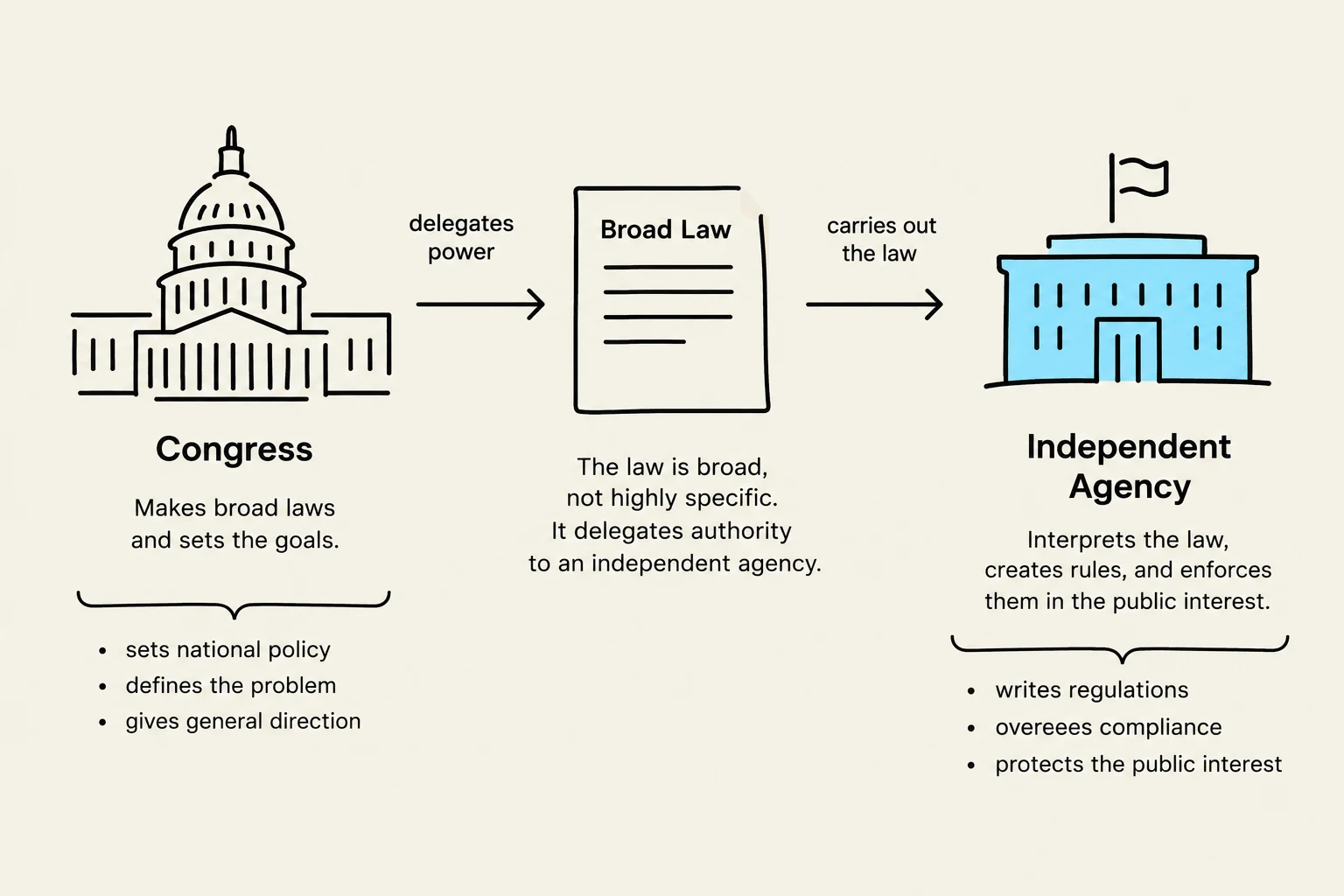
Exam Tip: If a question asks why Congress delegates authority to agencies like the FDA, look for answers involving "technical expertise," "specialization," or "administrative efficiency."
The Principal-Agent Problem in Bureaucracy
While these agencies are essential, their existence introduces a fundamental challenge in political science known as the Principal-Agent Problem.

Keep reading for free.
Create an account to finish this reading and make it part of your study routine.
Continue reading freeAlready have an account? Log in
Updated